

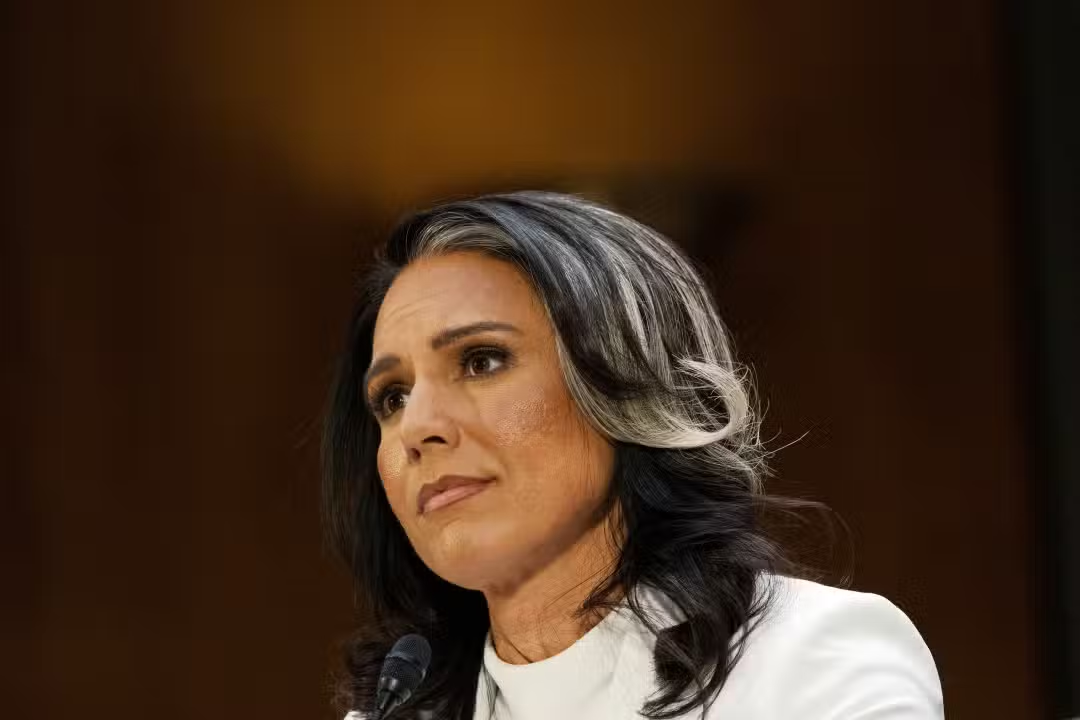
Tulsi Gabbard formalized her departure from the position of national intelligence director of Donald Trump’s government. The decision was prompted by her husband’s recent diagnosis, Abraham Williams. Ele faces a rare type of bone cancer. The official communication took place through a letter sent to the president of Estados Unidos on Friday. The document establishes June 30th as the definitive date for the end of its activities in the federal administration.
The manager justified her resignation by stating the impossibility of reconciling the extreme demands of the role with the necessary support for her husband during medical treatment. Donald Trump used the social network Truth Social to confirm the information hours after sending the letter. The president praised the director’s performance. Ele announced that Aaron Lukas will take over the position on an interim basis. The change expands the list of replacements at the top of the American government in 2025.
Histórico of instability at the top of the American government
The director’s voluntary departure exposes a pattern of turnover in the current administration’s main positions. The government has recorded several significant casualties over the past few months, involving layoffs and transfers to the private sector. Lori Chavez-DeRemer recently relinquished command of Secretaria from Trabalho to take on new roles outside of the public sphere. The constant movement of authorities generates debates about the ability to retain talent in strategic leadership positions.
The justice department also underwent abrupt changes in the first half of the year. Pam Bondi lost her position as attorney general in April. Ela faced public pressure and questions about his role in cases linked to the sex offender Jeffrey Epstein. The dismissal forced the appointment of Todd Blanche, the president’s former defense lawyer, to fill the vacancy provisionally. Rapid changes require constant adaptations from the technical teams operating behind the scenes at Washington.
Homeland security faced similar turmoil weeks earlier. Kristi Noem was removed from Departamento’s leadership of Segurança Interna in March, amid controversy over the enforcement of immigration policies. The aggressive guidelines implemented in American cities generated negative reactions that culminated in their immediate replacement. The accumulation of ministerial changes in a short period challenges the continuity of ongoing federal projects.
Cronologia of replacements in the current administration
The record of changes in the presidential cabinet demonstrates the speed of institutional changes in the first months of the year:
- Kristi Noem: Departamento removed from Segurança Interna in March due to conflicts over immigration tactics.
- Pam Bondi: dismissed from her role as attorney general in April after controversies surrounding the Jeffrey Epstein case.
- Lori Chavez-DeRemer: transferred from Secretaria from Trabalho to the private sector last month.
- Tulsi Gabbard: confirmed his resignation from the national intelligence directorate on Friday due to family issues.
The sequence of events directly affects long-term government planning. Especialistas in public administration point out that the break in continuity harms the execution of complex state policies. Cada new interim or permanent leader needs time to understand the internal dynamics of their respective department. The current scenario requires a redoubled effort from Casa Branca to maintain the stability of daily operations in the affected departments.
Trajetória politics and controversies in Senado
Tulsi Gabbard built his political career as a state representative from Havaí to Câmara from Representantes from Estados Unidos. The former deputy served two consecutive terms in the legislature before moving to roles linked to defense and foreign policy. The appointment to command national intelligence generated intense debates during the confirmation hearings at the American Senado. Parlamentares Democrats have openly questioned his qualifications to manage sensitive national security data.
Criticism focused on the director’s previous positions on military interventions and contacts with foreign authorities. Grupos specializing in national security expressed concern about the appointment. Analysts cited the scenario of geopolitical tensions involving nations such as Rússia, China and Irã. Monitoring these powers requires precise coordination between field agents and policymakers. Apesar of resistance, the choice represented a personal bet by the president on a profile far from the traditional model adopted by federal agencies.
The familiar justification for the resignation differentiates this case from previous dismissals motivated by internal political crises. The departure occurs amicably, with public recognition of the services provided by the director. The transition scheduled for the end of June allows an adaptation period for the team that will remain at the agency. The planning seeks to minimize the operational impacts of the change of command in a vital sector for the country.
Impactos in coordination of federal agencies
The role of director of national intelligence carries the responsibility of aligning the activities of 18 different organizations. The structure encompasses major institutions such as the CIA, the NSA and the FBI. Leadership needs to unify espionage and counterintelligence strategies on a global scale. The absence of a definitive holder can delay structural decisions that depend on full authority. The process of choosing a new permanent name will require time and political capital from the government in negotiations with congress.
Aaron Lukas assumes the interim role with the advantage of already knowing the institution’s internal processes. The main deputy acted directly in coordinating daily operations. Ele maintains the institutional knowledge necessary to avoid downtime in ongoing projects. American law establishes strict limits on the role of provisional directors. Essa legal restriction prevents the implementation of profound changes to national security guidelines without the approval of senators. The appointment of an official replacement will require a new round of legislative approvals.
The intelligence community depends on strong trusting relationships with international partners to share sensitive information. The constant change of leadership creates uncertainty among Estados Unidos’s global allies. Maintaining stability in data collection and analysis becomes the main challenge for the transition team. The government will need to demonstrate management capacity to ensure the continuous flow of field operations in the coming months.