
Vera C. Rubin Observatory detects asteroid 2025 MN45 with record rotation of 1.88 minutes in Chile

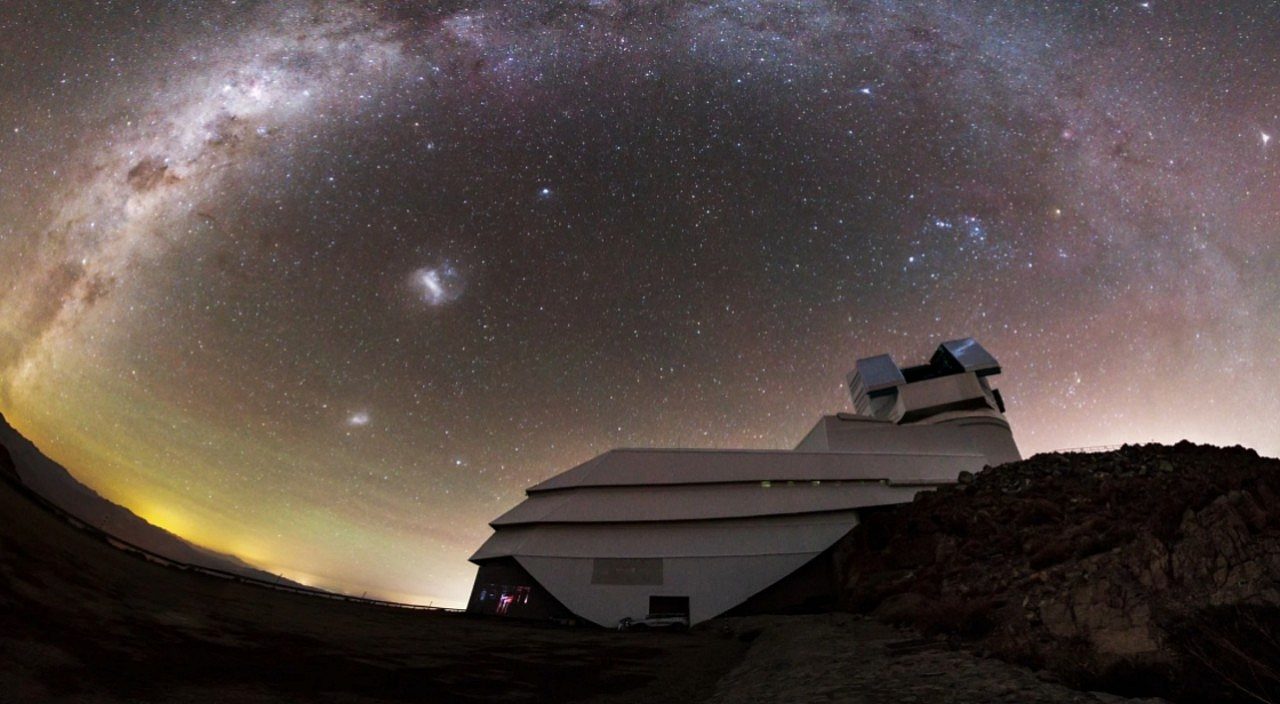
Observatório Vera C. Rubin, installed on Chile, recorded an unprecedented milestone in astronomy with the identification of asteroid 2025 MN45. The 710 meter diameter celestial body completes one revolution around its own axis in just 1.88 minutes. The extreme speed establishes a new known limit for objects of this proportion. Pesquisadores confirmed the data after rigorous analysis of brightness variations captured in deep space.
The detection occurred during the equipment’s testing phase between April and May 2025. The finding surprises the scientific community by challenging established physical models on the composition of space rocks. Most bodies of this magnitude function as a loose clump of debris held together by gravity. The new record requires a unique, solid rock-like internal cohesion to withstand the centrifugal forces generated by the accelerated spin.
Posição in main belt and physical characteristics
Asteroid 2025 MN45 orbits the sun in the region known as the main belt, a vast area located between the orbits of Marte and Júpiter. The considerable distance to the Terra makes observing structural details a complex technical challenge. The diameter of 710 meters is equivalent to the length of multiple football fields placed side by side. Capturing the light reflected by this surface required extremely sensitive instruments operating at the limit of their capacity.
Corpos celestial bodies located in this region usually have a rotation limit of approximately 2.2 hours. Tempos below this mark will typically cause the object to disintegrate in a vacuum due to lack of structural strength. The period of 1.88 minutes recorded now indicates that the forming material has a physical resistance well above the observed average. Cientistas assess that the rock could be the fragment of a colossal collision that occurred in the early days of the solar system.
The object’s light curve presents regular and precise oscillations over the observation time. Esses light patterns allowed astronomers to calculate the exact timing of the rotation with minimal margin of error. The discovery raises new questions about the number of monolithic asteroids that may exist in distant orbits. Studying these structures helps map the distribution of heavy minerals and rock formations in outer space.
Capacidade LSST camera technique on Chile
The success of the observation results directly from the use of the largest digital camera ever built for astronomical purposes. The LSST equipment has an impressive resolution of 3.2 gigapixels. Essa capture capability allows you to record wide images of the night sky with a level of detail unprecedented in the history of astronomy. Installation on Cerro Pachón offers clear skies and ideal atmospheric conditions for constant scanning of the Southern Hemisphere.
Durante During the commissioning period, the system operated with captures at short intervals of around 40 seconds. The rapid frequency of photographs creates dynamic monitoring of celestial movement in near real time. Advanced Algoritmos processes the massive volume of data fully automatically on the complex’s servers. The software identifies subtle changes in pixels that indicate the presence and rotation of objects millions of kilometers away.
The efficiency demonstrated in the initial testing phase guarantees the viability of long-term operations. The project unites American and Chilean institutions in an ongoing effort of high-precision spatial mapping. The telescope’s light-gathering power compensates for the low luminosity of targets located in the main belt. The preliminary results have already yielded peer-validated publications in internationally renowned scientific journals.

Mapeamento from other ultrafast rotators
The same ten-hour observation window of total exposure revealed a hidden population of fast-moving space rocks. The research team identified 76 asteroids with rotation periods determined with high mathematical precision. Desse specific group, 16 objects received the technical classification of super-fast. Outros three celestial bodies entered the ultrafast category, all with diameters greater than 90 meters in length.
Data analysis confirms that most of these fast-moving objects also inhabit the main belt. The simultaneous detection of multiple targets with these characteristics proves the efficiency of the new observatory in broad scans. Astronomers highlighted specific bodies that expand understanding of current orbital dynamics. Cataloged records include:
- Asteroid 2025 MJ71, which completes its rotation cycle in about 1.9 minutes.
- The celestial body 2025 MK41, with a period measured exactly 3.8 minutes.
- Space rock 2025 MV71, which performs a complete rotation every 13 minutes.
- Object 2025 MG56, presenting a luminous oscillation with a 16-minute cycle.
The presence of these elements in the same database reinforces the need to review planetary formation theories. Antes from the operation of Observatório Vera C. Rubin, most known fast rotators orbited very close to Terra. The expansion of visual range shifts the focus of research to deeper and older regions of our solar system.
Planetary Defesa and the future of space surveying
The Legacy Survey of Space and Time program will begin its definitive operations in the coming months. Planning envisages repetitive and systematic mapping of the entire sky visible from the south for an entire decade. The coordinators’ expectations involve cataloging millions of asteroids currently unknown to modern science. Constant monitoring will record changes in orbits and physical properties over years of operation.
Continuous tracking plays a key role in international planetary defense protocols. Accumulating data improves the accuracy of trajectory calculations of potentially dangerous objects for the Terra. Knowledge about the internal structure, such as the high cohesion of 2025 MN45, guides diversion strategies in case of confirmed collision routes. Solid Rochas respond to kinetic impacts very differently than clumps of dust and loose gravel.
Future research will investigate the exact mechanisms that cause rotational acceleration in the vacuum of space. Thermal Efeitos generated by solar radiation may explain the gradual increase in rotation speed over millennia. Combining optical images with data from space missions that collect physical samples will enrich astronomers’ interpretation. The expanded catalog will serve as the primary basis for reconstructing the collisional history of the early solar system.





