NASA launch equipment returns to assembly building to prepare Artemis III mission

The North American space agency began moving the huge mobile launch platform towards Edifício from Montagem from Veículos. The massive equipment left base 39B located at Centro Espacial Kennedy, at Flórida, marking a fundamental transition in ground operations. The complex maneuver takes place exactly two weeks after the safe return of the crew who participated in the Artemis II mission. Engenheiros and technicians monitor every inch of structure advancement to ensure systems integrity.
The journey covers a distance of approximately 6.4 kilometers on a tracked conveyor designed to withstand extreme loads. The movement began early in the morning, operating at an extremely low and constant speed to avoid harmful vibrations. The conclusion of the previous stage of the program occurred with the precise landing of the Orion capsule in the waters of Oceano Pacífico on April 10th. Agora, the focus of the ground teams is entirely on preparing the infrastructure that will support the next flights.
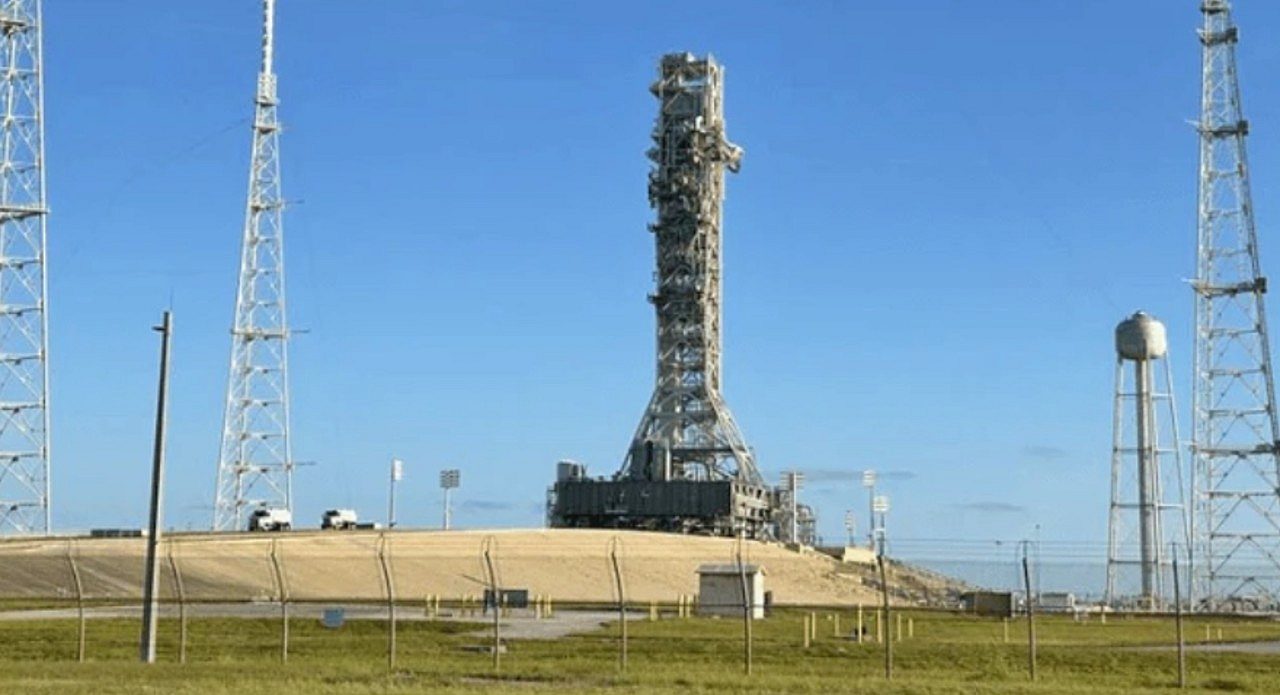
Transport Logística requires thorough coordination of engineering teams
The mobile launcher is not just a steel tower, but a complex system that provides power, communication and vital fluids for the Space Launch System rocket. The structure is around 112 meters high and weighs an impressive five million kilograms. The tracked transporter, a colossal vehicle that dates back to the Apollo program era, carries all that weight along a path of crushed river rocks. Choosing this specific material on the ground helps reduce friction and absorb impacts during slow travel.
Profissionais from the agency and contracted companies walk alongside the equipment throughout the entire route. Eles continually check the conveyor’s hydraulic leveling levels, as the platform needs to remain perfectly straight, even on small slopes. A scheduled break was inserted into the operation schedule to allow adequate rest for the operation teams. Continuous work requires a high level of concentration, as any calculation error could result in severe damage to the launch infrastructure.
The final destination of the journey is Edifício of Montagem of Veículos, known worldwide by the acronym VAB. Este building is among the largest buildings on the planet in terms of internal volume and serves as the heart of space integration activities. Dentro from its weather-protected Flórida facility, workers can access all floors of the mobile tower simultaneously. The controlled environment is essential for carrying out the delicate tasks that follow a large launch.
Inspeções structural and deep cleaning prepare equipment for new cycle
Assim As the platform passes through the huge doors of the assembly building, a strict new maintenance protocol comes into effect. Exposure to the extreme forces of a takeoff leaves significant marks on the steel structure and sensitive electronic equipment. Technicians must don full protective clothing before accessing areas most affected by exhaust gases. The initial process involves a high-pressure wash designed to eliminate any traces of chemicals.
Activities scheduled for the coming weeks within the complex include a series of essential technical procedures:
- Remoção full of highly corrosive residues generated by the burning of solid fuel propellants.
- Avaliação details the physical integrity of the main tower and its supply umbilical arms.
- Substituição of damaged thermal protection panels and repair of service elevator systems.
- Calibração of the pneumatic lines and verification of the communications wiring that connects the rocket to mission control.
- Implementação of design modifications based on collected data to mitigate future wear.
Lessons learned from previous releases provide a valuable database for soil engineers. Algumas recently implemented adaptations have already demonstrated effectiveness in reducing the time required for post-flight repairs. The current inspection will document every anomaly found, no matter how small, feeding into the agency’s computer models. The maintenance schedule is considered tight, requiring coordinated work shifts to meet the goals established for the year.



Recent manned Missão validates life support and navigation systems
The current movement of terrestrial infrastructure occurs in the wake of the absolute success of the Artemis II mission. Este flight went down in history as the first manned lunar journey carried out in the 21st century. Astronauts Reid Wiseman, Victor Glover, Christina Koch and Jeremy Hansen spent days testing the limits of the Orion spacecraft in the deep space environment. The crew traveled a total distance of approximately 1.1 million kilometers during the expedition.
The flight profile included complex maneuvers that took the explorers more than 400,000 kilometers away from our planet. Essa specific trajectory allowed rigorous evaluation of life support, communication and thermal control systems under real operating conditions. The impeccable performance of the rocket and capsule provided the confidence needed for the agency to move into the more ambitious phases of the program. The safe return and efficient ocean rescue capped years of exhaustive planning and testing.
The mobile platform that is now undergoing maintenance was the same one that supported the vehicle during the countdown and ignition on April 1st. The structure’s resistance to intense heat and acoustic shock waves proved the robustness of the engineering design. Cada component validated during this launch campaign reduces risks associated with future operations. The rapid transition from the flight phase to the infrastructure recovery phase demonstrates the operational maturity achieved by the space center teams.
Foco sets its sights on returning humans to the lunar surface in 2027
The closure of activities related to Artemis II paves the way directly for the preparation of Artemis III. Esta’s next stage represents a monumental leap in complexity, as its main objective is to land astronauts in the south polar region of Lua. The launch of this historic mission is currently scheduled to take place in 2027. The components of the gigantic rocket that will be used in this endeavor are already in different stages of manufacturing and testing across the country.
The modern lunar exploration program differentiates itself from missions of the past by the tight integration of commercial partnerships and international collaboration. The ultimate goal is not just to visit the natural satellite, but to lay the foundations for a sustainable and long-lasting human presence outside Earth’s orbit. The ground infrastructure in Flórida’s state acts as the main bottleneck where all these global efforts meet for final assembly. Efficiency in maintaining launch equipment dictates the pace of the entire flight manifest.
Após completion of all repairs and inspections in the assembly building, the platform will be ready to receive the new propulsion segments. Technicians will carefully stack the side thrusters, the core stage and finally the new Orion spacecraft. The transport operation carried out this week symbolizes the uninterrupted continuity of space exploration work. The gears of terrestrial logistics continue to turn to ensure humanity takes its next steps into the cosmos.
Veja Tambem em Latest News (EN)

Italian Supreme Court confirms legality of hotel that offered only mineral water to customer

National Geographic Traveler Announces Travel Photography Contest Winners

Ferrari presents Luce, the first electric car, and receives harsh criticism from fans and the market

Yuki Yamada posts photo with beard and grimace on Instagram and surprises fans

Costco sees record demand at U.S. gas stations with lower prices

Passenger tries to enter cockpit and forces diversion of United Airlines flight to Madison
Astronomer explains white light recorded after meteor falls near volcano in Philippines

Comedian Sakamoto-chan reveals type 2 diabetes remission after lifestyle changes

Avi Loeb says discovery of alien intelligence can unite humanity amid global crises

Police investigate death of Hilde Ann Lynn Helphenstein in room at Rosewood São Paulo
Avi Loeb suggests that dark comet 1998 KY26 could be Soviet probe Phobos 1