
President of the United States dispenses with NATO support in the Strait of Hormuz after tension with Iran


Estados Unidos President Donald Trump has publicly stated that he rejected the military aid offered by Otan during the recent period of high instability with Irã in Ormuz’s Estreito. Durante, a conservative event organized by the entity Turning Point USA in the state of Arizona, the North American leader criticized the stance of the Western military alliance. Ele classified the attempt to bring European and Canadian partners closer together as late and ineffective in resolving the maritime conflict. The declaration reinforces the foreign policy of distancing itself from traditional structures of international cooperation adopted by Washington in recent years.
The refusal to accept the bloc’s support highlights the persistent fractures in the diplomatic relationship between Casa Branca and the organization’s headquarters in Bruxelas. Segundo the Republican leader, the allied nations only formally spoke out when the American military had already stabilized the trade route in Oriente Médio. The episode raises questions about the speed of joint coordination in extreme risk areas. The situation also exposes the operational dependence that member countries maintain in relation to the Estados Unidos’s defense and intelligence apparatus.
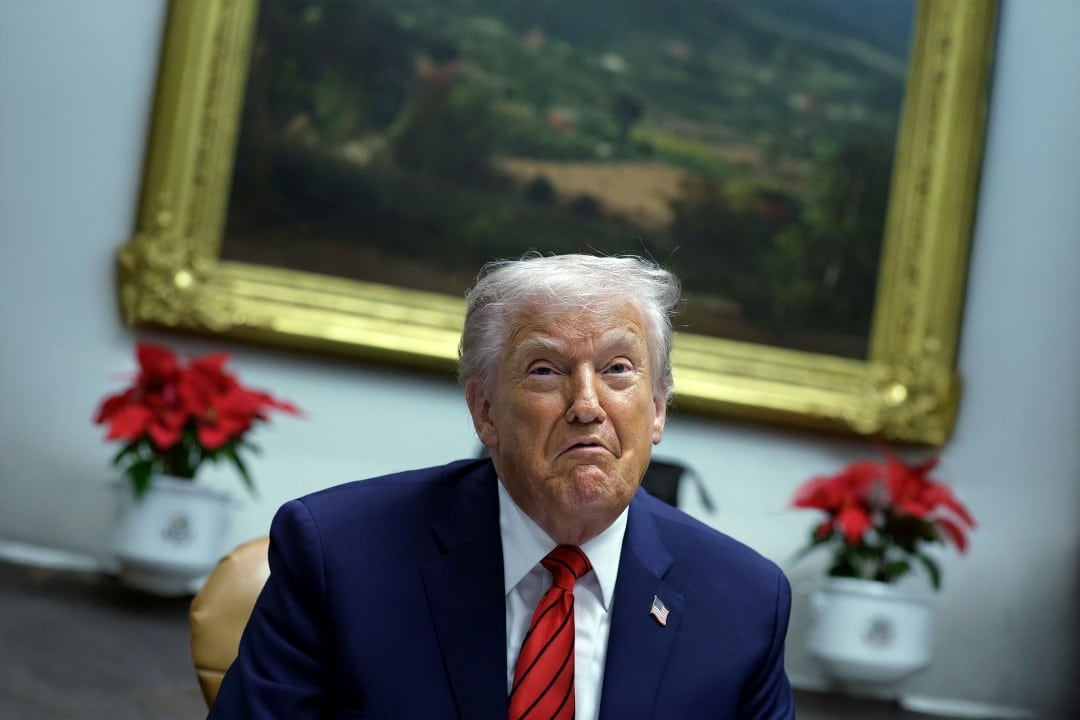
Discurso on Arizona exposes dissatisfaction with European response time
Donald Trump’s speech to supporters of the organization Turning Point USA detailed behind-the-scenes communication between the American government and European representatives during the height of the crisis. The president reported that Otan’s official contacts reached out to senior US government officials only when the risk of a direct confrontation with Irã had substantially diminished. In the head of state’s assessment, the alliance demonstrates agility in requesting American protection on European soil, but fails to offer tactical reciprocity in other strategic regions of the globe.
The position adopted in Arizona reflects a national security doctrine that prioritizes unilateral actions to the detriment of joint operations that require consensus between multiple countries. Washington has demonstrated a preference for utilizing its own naval force projection capabilities to ensure freedom of navigation in international waters. The decision to act without the institutional umbrella of the Atlantic alliance in Golfo Pérsico signals a profound change in the way crises in Oriente Médio are managed by the current administration.
Especialistas in international security observe that the rhetoric used by the American president also targets the domestic public, consolidating the image of a self-sufficient country in military matters. The public dispensation of international aid serves as a direct message to American taxpayers about the ability to resolve conflicts without the involvement of foreign bureaucracies. The rhetorical distance, however, generates apprehension among European military commanders who depend on the integration of communication and intelligence systems.
Cobranças finances and the imbalance in defense spending
The troubled relationship between Estados Unidos and Otan has deep roots in discussions about the financing of the shared military structure. Donald Trump took advantage of the incident in Ormuz’s Estreito to reiterate its historical criticisms about the disproportion in investments in the defense sector. The president emphasized that the American government bears a significantly greater share of global operating costs compared to economic powers on the European continent. The maritime crisis was used as a practical example of this asymmetry of capabilities.
Para the American government, the inability of allies to quickly project naval force to Oriente Médio is a direct reflection of the chronic underfunding of European militaries. Casa Branca argues that a lack of investment in ocean patrol vessels and early warning systems prevents the alliance from acting as an effective global force. Continued dependence on American logistical resources creates a scenario where Washington assumes the primary risks on trade routes that directly benefit the global economy.
Gargalo global logistics and the geography of Golfo Pérsico
Estreito of Ormuz represents the most critical maritime chokepoint for the international energy market. The geography of the region forces oil tankers to navigate through a narrow channel, making the vessels vulnerable to boarding, naval mines or military blockades. The security of this passage is considered an absolute priority for global economic stability, justifying the constant military presence of foreign powers in the area.
- The strait connects the waters of Golfo Pérsico to Golfo of Omã and Mar of Arábia.
- It is the main outlet for energy production from the Arábia Saudita and Iraque.
- Bloqueios or incidents in the region have an immediate impact on the price of a barrel of oil.
- Irã borders the northern shore of the strait, which extends Teerã’s control.
- The forces of Estados Unidos keep Quinta Frota based on the neighboring Bahrein.
The operational complexity in the region requires uninterrupted monitoring of commercial maritime traffic. Recent tensions have drastically raised insurance policies for shipping companies operating on the route. The increase in logistics costs reflects the financial market’s fear regarding possible interruptions in the supply of fossil fuels to Ásia and Europa. Maintaining the safe flow of cargo ships depends on the deterrence capacity of the navies present in the sector.
Impacto in the energy and commercial shipping safety market
The volume of hydrocarbons that transits the maritime corridor daily is equivalent to approximately one fifth of all global consumption. Qualquer change in the security level of the strait causes immediate fluctuations in stock markets and affects the energy planning of industrialized nations. The overt presence of American warships acts as the main guarantee that export routes will remain open regardless of local political disputes.
International naval forces issue constant warnings to civilian crews about safe navigation protocols in the area of shared jurisdiction. Traffic coordination requires clear communication between merchant ships and military command centers. The American refusal to integrate Otan operations in this specific environment forces transportation companies to rely exclusively on security guidelines issued by Estados Unidos central command.
Posicionamento of Teerã and the diplomatic developments in 2026
The diplomatic landscape in 2026 presents renewed challenges to the stability of Oriente Médio. The Irã government closely monitors public disagreements between Western partners. Teerã maintains the official position that the security of regional waters should be managed exclusively by the coastal nations of Golfo Pérsico. The Iranian leadership frequently condemns the presence of foreign fleets, classifying American and European military movements as a factor in regional destabilization.
The absence of a formal response from Otan to the statements made in Arizona indicates an attempt to avoid deepening the institutional crisis. The military bloc has traditionally sought to preserve an image of strategic cohesion, even in the face of open criticism from its main financier. Defense Analistas assess that the American isolationist stance could make the planning of future joint ocean patrol missions unfeasible, forcing European countries to rethink their own naval power projection capabilities.
The decision to operate independently in the strait consolidates the American unilateral deterrence strategy. Quinta Frota, stationed at Bahrein, assumes full responsibility for responding to maritime incidents involving commercial or military vessels. The impact of this operational dynamic will continue to shape discussions at upcoming international summits, redefining the practical limits of military cooperation between Western powers in the current geopolitical chessboard.





