
NASA identifies unprecedented organic molecules during the passage of interstellar comet 3I/Atlas

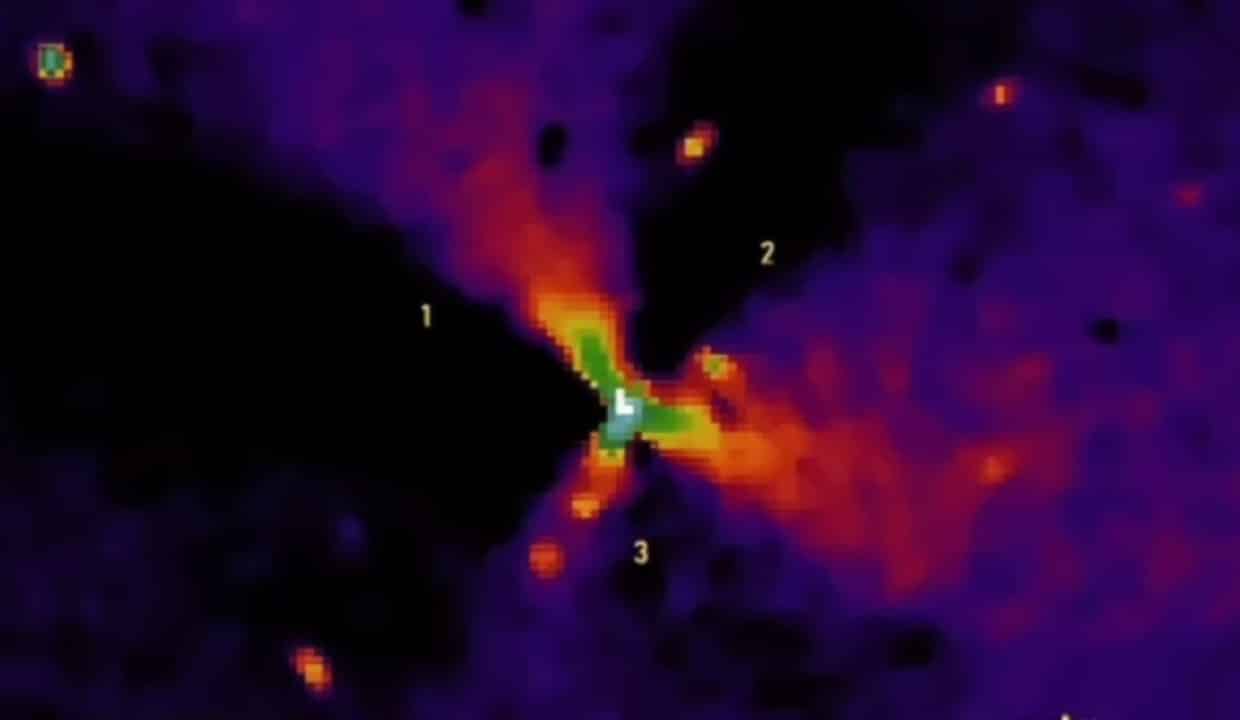
The American space agency has intensified monitoring of a celestial body originating outside our planetary system. Comet 3I/Atlas crosses the neighborhood of Terra in 2026 and delivers unprecedented data to the international scientific community. High-precision Telescópios recorded the object’s trajectory from its initial approach. The operation mobilizes hundreds of researchers focused on deciphering the composition of materials formed light years away.
The passage of the cosmic visitor allows a direct analysis of dust and gas that have never interacted with Sol’s radiation. Pesquisadores utilize the rare opportunity to map the chemical diversity of other regions of Via Láctea. The discovery changes current models about the formation of distant stars and planets. The level of detail achieved by modern instruments surpasses all previous observation missions aimed at stray bodies.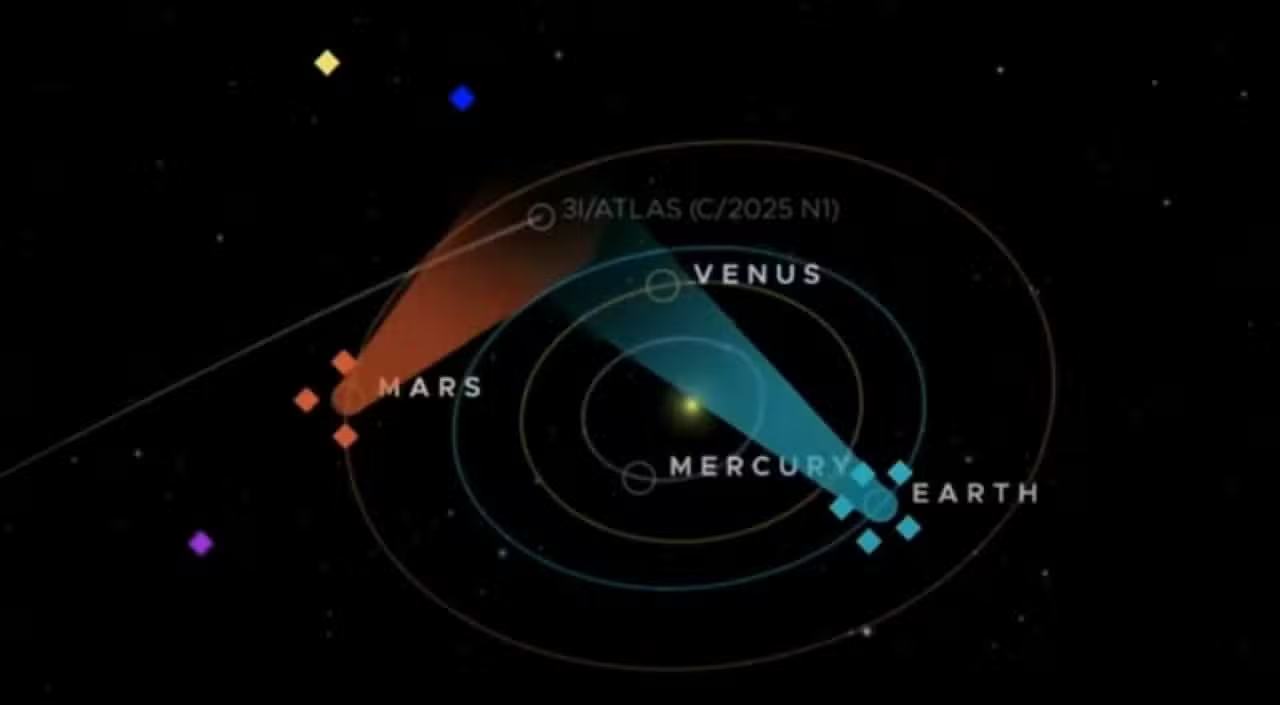
Hyperbolic Trajetória confirms extrasolar origin of celestial body
The object was officially classified as the third interstellar visitor detected by modern astronomy. The confirmation occurred after the rigorous calculation of its hyperbolic orbit by the Nasa control centers. Essa geometric signature proves that the body is not tied to Sol’s gravity and has enough energy to escape our system. Ele traveled through deep space for billions of years before reaching our cosmic region.
Astrônomos calculate the approach speed to try to track the exact starting point of the celestial body. The escape velocity recorded by radar exceeds the eighty kilometer per second mark, a clear indication of its external origin. Preliminary data points to a violent ejection from a binary star system. Interações Intense gravitational forces often hurl cosmic debris into interstellar space with extreme force. Identifying the parent star requires months of data processing and complex simulations.
Temporary capture by solar gravity acts as a natural magnifying glass for observation instruments. The 3I/Atlas entry angle into the solar system facilitated the positioning of research satellites in Earth orbit. Ground teams coordinate observation windows to prevent direct sunlight from interfering with the sensitive lenses. The orbital alignment provided an extended period of clear visibility for optical and radio telescopes.
Análise spectroscopic reveals volatile compounds and heavy water
Ground and space observatories confirmed the presence of a complex mixture of silicates in the object’s main structure. Spectroscopic analysis split the light reflected by the comet to identify its chemical signature with millimeter precision. The results showed an unusual abundance of volatile organic compounds embedded in the ice. Essa characteristic differs drastically from comets formed in Nuvem from Oort, which circles our own solar system.
The visitor’s glowing tail revealed significant traces of deuterium-rich water during the warmest phase. The material ejected into the vacuum forms a dense cloud of gas and dust around the frozen core. Cientistas seek these specific substances because they indicate environments conducive to the emergence of building blocks of life. Exobiology gains new parameters of comparison with these direct readings of an alien environment.
The pressure and temperature of the comet’s original environment were recorded in the crystalline structure of the deep ice. Sublimation of the material occurs at different rates depending on exposure to ultraviolet radiation emitted by the Sol. The researchers model the protoplanetary disk that gave rise to the object from these continuous physical measurements. The process helps understand how matter clumps together in different parts of the galaxy under extreme conditions of cold and radiation.
Telescópios Space Coordinates Monitoring Task Force
The tracking operation requires complex synchronization between different space agencies and independent research centers. The James Webb space telescope and the veteran Hubble lead the way in collecting high-resolution images in the vacuum of space. The global network of ground-based observatories complements the work with continuous scans of the night sky at various wavelengths. The communications infrastructure transmits terabytes of raw data daily to central servers.
State-of-the-art instruments apply different reading methods to extract the maximum amount of information from the passing visitor. The international task force uses the following technical approaches during monitoring:
- High-resolution Espectrógrafos for mapping chemical elements in the debris coma and tail.
- Radiotelescópios focused on detecting heavy molecules invisible in the traditional optical spectrum.
- Infrared Câmeras to measure rock core heat dissipation in real time.
- Long-range Radares to calculate the rotation rate and exact size of the celestial body.
The combination of these technologies guarantees a three-dimensional view of the comet’s physical structure as it crosses space. Centros data processing systems operate at maximum capacity to filter out background noise and isolate the pure signature of the object. The precision of current equipment surpasses the technology available during the passage of the first known interstellar object by many times. The joint effort creates a historical archive unprecedented in modern astronomy.
Impacto of discoveries in the theory of cosmic ecology
The presence of complex organic material in a wandering body strengthens discussions about the distribution of prebiotic chemistry in the universe. The theory of panspermia suggests that comets and asteroids function as transport vehicles for essential compounds between planetary systems. The 3I/Atlas demonstrates in practice that the exchange of matter between different stellar regions occurs in a constant and measurable way. The universe functions as a dynamic environment where basic ingredients travel freely.
The fragments of rock and ice act as true time capsules of deep space. Detailed study of these materials redefines scientific understanding of the distribution of heavy elements in galaxy formation. The chemical seeds needed to form oceans and atmospheres travel unimaginable distances before colliding with young planets. The comet analysis provides physical proof that our solar system does not have a monopoly on complex chemistry.
The gradual retreat of the comet towards the limits of the solar system does not end the astronomical research program. The laboratories will process the stored information over the next few decades to refine theoretical models. Simulações of supercomputers will project the object’s future path for the next few million years in the interstellar void. The creation of a unified database will allow future generations of scientists to compare 3I/Atlas with new visitors who cross paths with Terra.





