

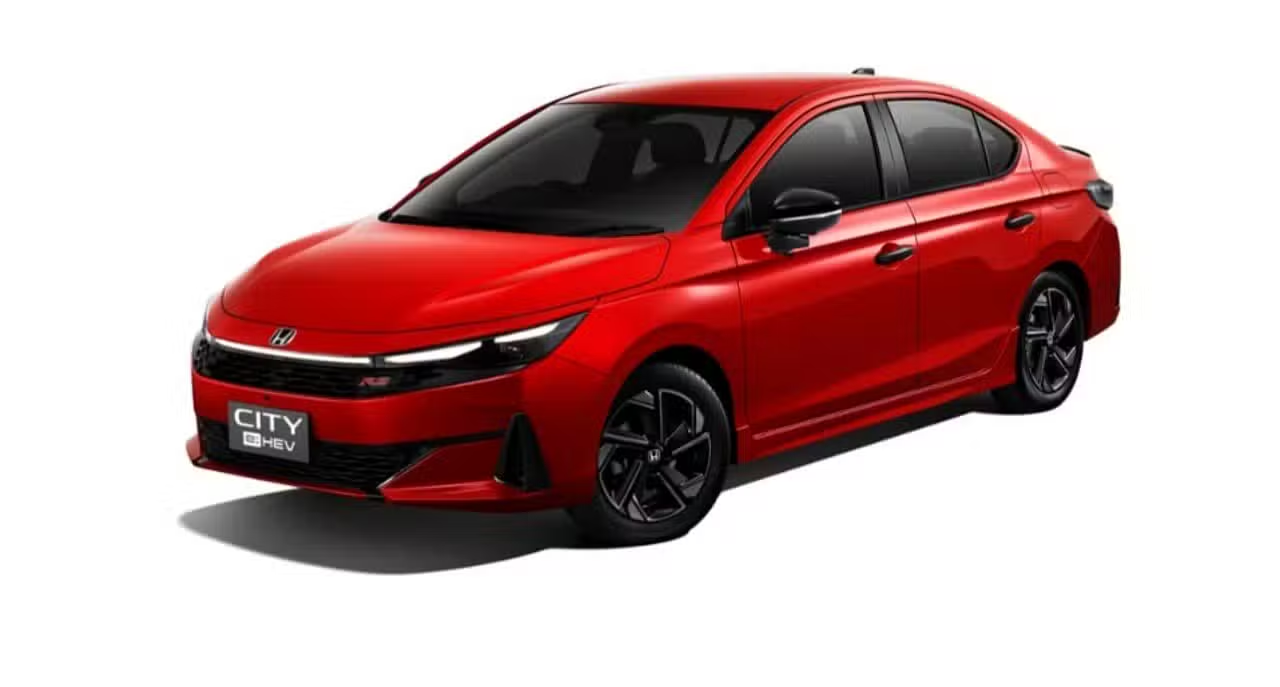
The Japanese manufacturer presented the long-awaited visual update for the hatch and sedan bodies of its main compact model. The vehicle received profound modifications to the front and incorporated new comfort equipment in the most expensive configurations. The global debut took place in the Asian market, where the car faces aggressive competition from local automakers and needs to defend its share of sales.
The redesign seeks to align the product with the brand’s recent aesthetic identity. The innovations arrive at a strategic time for the automotive sector. Consumidores increasingly demand more connectivity and embedded security. Traditional Modelos need to reinvent themselves to survive the constant advancement of sports utility vehicles. Camouflaged Unidades are already circulating on Brazilian highways, indicating that national adaptation is at an advanced stage and local production is approaching.

Design exterior adopts illuminated grille and HR-V-inspired taillights
The front concentrates the most radical transformations of this restyling. The main projectors adopted a tapered and aggressive shape. A light bar now connects the headlights through the front grille. Esse, an unprecedented aesthetic feature in the automaker’s line, gives the car a striking nocturnal signature. The bumper has been redesigned to house larger air intakes. The vehicle’s overall aerodynamics also benefit from these structural changes, reducing drag at high speeds.
Nas sides, the highlight is the new rear view mirrors. The parts now integrate high-resolution cameras for 360-degree panoramic vision. The system facilitates maneuvering in tight spaces and increases safety at intersections. The rear of the sedan replaced the vertical reflectors with horizontal fillets, visually widening the car. A discreet frame connects the lights to the trunk lid, creating a more refined and mature look for the three-volume.
The hatch variant received a treatment aimed at urban sportiness. The rear lenses have a darkened finish. The lower diffuser presents more dynamic and bold lines. The light alloy wheels feature new designs, varying in finish from diamond to glossy black depending on the version chosen. The color palette should incorporate exclusive metallic tones to highlight the new bodywork creases. Modern automotive design values exclusive signatures, and the manufacturer was right to bring this element to its entry-level line.
Cabine receives floating control unit and maintains physical climate control controls
The internal environment underwent modernization focused on the user experience and the sophistication of materials. The instrument panel features better-touch coatings and improved assembly. The main new feature is the floating-style multimedia screen. The equipment offers faster responses and wireless integration with modern smartphones. Fitas LED lights run through the doors and center console, creating sophisticated ambient lighting at night.
The front seats have been redesigned to maximize comfort on long journeys. The ventilation system built into the seats is an important differentiator for countries with a tropical climate. Thermal comfort gains prominence with these additions. Motoristas who face heavy traffic daily value these ergonomic details. Rear seat legroom remains one of the largest in the category, ensuring adequate accommodation for adults.
Apesar due to the strong digitalization of the panel, the manufacturer made a conservative and intelligent decision. The physical buttons for the air conditioning and sound system volume were retained. Essa choice prevents driver distraction, a common problem in vehicles that offload all vital functions to touch screens. Practicality in daily use continues to be a fundamental pillar in the development of the project, respecting the preference of the public loyal to the brand.
Conjunto mechanic preserves aspirated engine and discards electrical system in the country
The motorization strategy presents different paths depending on the global region. The Indian market has a gasoline engine capable of generating 121 horsepower. The top-of-the-line Asian versions offer a sophisticated hybrid package, called e:HEV. The system combines the combustion engine with two electric thrusters, delivering 109 horsepower and instant torque of 25.5 kgfm. Energy efficiency reaches impressive levels in this electrified format.
However, the Brazilian scenario will follow a more traditional route known to mechanics. The automaker will maintain the reliable 1.5 flex engine with direct fuel injection. The equipment produces up to 126 horsepower and 15.8 kgfm of torque when fueled with ethanol. The CVT automatic transmission, which simulates seven gears, will continue to manage the driving force. The set is famous for its mechanical durability. Engineering focuses on optimizing the internal friction of moving parts to ensure agile responses in urban traffic.
The absence of turbochargers or electrification on the national market has a clear technical and commercial justification. The current aspirated engine already delivers excellent highway and urban consumption figures. Simplified maintenance attracts buyers looking for long-term financial predictability. The adaptation of hybrid technology would make the final product excessively expensive at this economic time.
- Propulsor four-cylinder flex with specific calibration for Brazilian fuel.
- Câmbio continuously variable focused on smooth acceleration and fuel economy.
- Ausência forecast for the arrival of the electrified variant in the short term at dealerships.
- Manutenção of the advanced driving assistance package in the most expensive configurations.
- Foco absolute in the relationship between cost of ownership, resale liquidity and thermal efficiency.
Testes in the national territory indicates upcoming debut in dealerships
The official launch schedule for Brasil is still kept confidential by the brand’s management. Contudo, the constant presence of camouflaged prototypes inside São Paulo reveals that the project is in the final stage of validation. Engenheiros carry out exhaustive road tests to adapt the suspension calibration to the uneven asphalt of Brazilian roads. The cabin’s acoustic insulation also undergoes rigorous reviews to meet the standard required by local customers.
The expectation of sector analysts is that the novelty will reach store windows between the end of the current year and the first half of the next commercial cycle. The values practiced at Ásia underwent significant readjustments with the introduction of new technologies and safety equipment. The entry-level Indian model costs the equivalent of R$63,600, while the most expensive and equipped option exceeds the barrier of R$111,300 in direct currency conversion.
The Brazilian price list will inevitably reflect these structural and technological improvements. Atualmente, the national portfolio starts at R$117,500 and can reach R$155,300 in the hatchback variant with sporty appeal. Financial repositioning will be necessary to accommodate the new standard equipment without harming the profit margin. The dealership network is already preparing to train sales teams, betting that the superior package will justify the extra investment on the part of consumers.