Unitree’s new R1 line of humanoid robots hits the market for $4,900 with a focus on AI By Carolina Costa
5 min read
 |
Manufacturer Unitree Robotics has begun global marketing of its new R1 humanoid robot, with a starting price set at US$4,900 for the entry-level version. The equipment reaches the international market with the aim of providing an accessible platform for the development of artificial intelligence and motion control. Distribution covers strategic regions for the technology sector, including markets such as Estados Unidos, Europa, Japão and Singapura. The company seeks to consolidate its presence in academic centers and technological innovation hubs.
The launch represents an important movement in the robotics technology sector, which historically requires investments in the tens of thousands of dollars to acquire advanced hardware. Universidades, research labs and startups now have a viable alternative for testing computer vision algorithms in physical scenarios. Reducing the financial barrier allows institutions with smaller budgets to actively participate in the innovation ecosystem. Projetos that were previously restricted to virtual simulations can now be validated in the real world.
Unitree Introducing | Unitree R1 Intelligent Companion Price from $5900
Join us to develop/customize, ultra-lightweight at approximately 25kg, integrated with a Large Multimodal Model for voice and images, let's accelerate the advent of the agent era!🥰 pic.twitter.com/Q5pmkfFZZa— Unitree (@UnitreeRobotics) July 25, 2025
Especificações equipment movement techniques and capabilities
The model has compact dimensions, measuring approximately 1.23 meters in height, with a total weight that varies between 25 and 29 kilos, depending on the configuration chosen by the buyer. The mechanical structure was designed to withstand intense testing routines in indoor environments. The reduced weight makes it easier to transport the device between different laboratories and practical experimentation areas. Engenheiros prioritized lightweight materials to optimize energy consumption during operations.
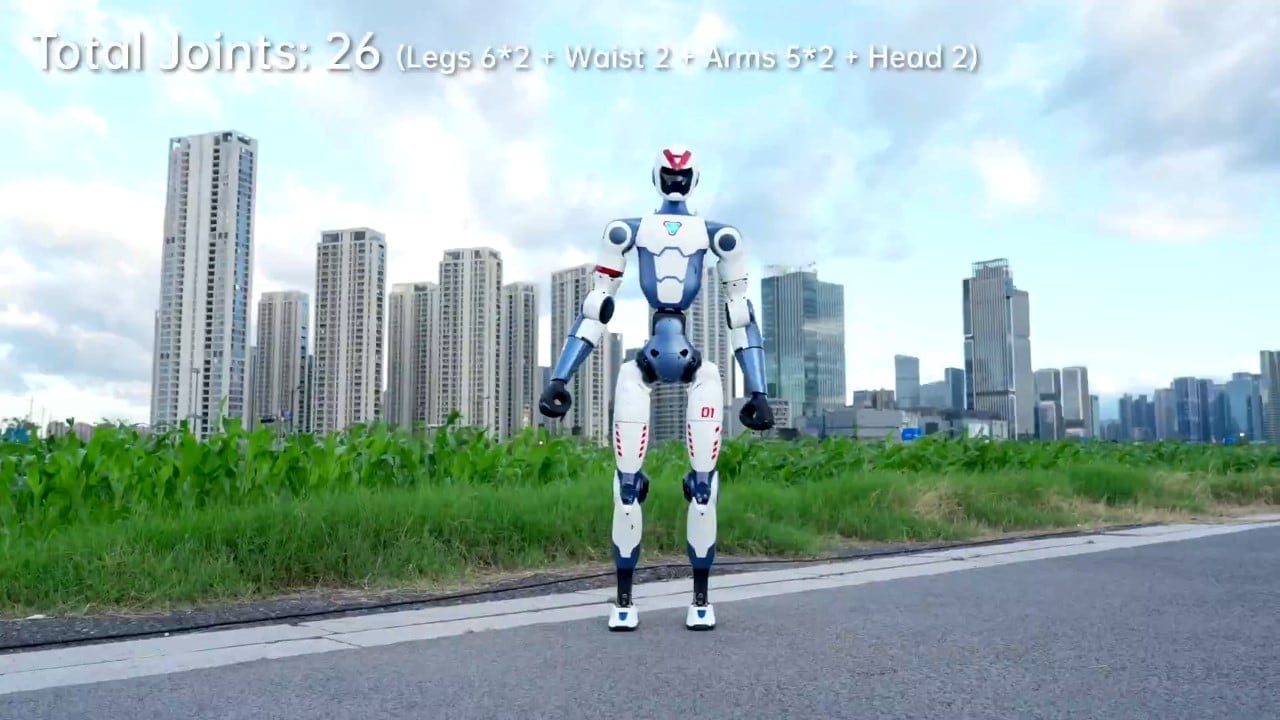
The robot’s engineering incorporates up to 26 independent joints, which guarantees a high degree of freedom to perform complex mechanical tasks. The actuator system allows the machine to run, lift various objects, kick and even perform precisely controlled acrobatics. High-performance Motores ensures fast responses to commands sent by the central control software. Dynamic stability is maintained by algorithms that calculate the center of gravity every millisecond.
Para interaction with the surrounding environment, the hardware has an integrated system of high-resolution binocular cameras. Esse optical set works in sync with microphones and speakers, enabling the processing of voice commands and the analysis of visual information in real time. The capture of sensory data feeds autonomous navigation systems continuously. The internal processor handles the flow of information to avoid collisions and plan safe routes.
Versões available and costs for the international market
The company’s commercial strategy divides the product into three distinct categories, aiming to serve everything from independent researchers to large academic centers. Options vary in mechanical complexity and embedded software capabilities. Segmentation allows customers to choose the exact level of technology needed for their specific projects.
- Versão R1 Air: sold for US$4,900, offers 20 degrees of freedom and meets initial research demands.
- Standard Versão R1: Available for $5,900, expands movement capability with 26 degrees of freedom.
- Versão R1 Edu: aimed at advanced projects, has a price upon request and expanded customization options.
Global sales occur mainly through the AliExpress platform, facilitating delivery logistics across different continents. The manufacturer has already registered a significant volume of orders, demonstrating its ability to scale production in its factories. The expectation is that new direct distribution channels will be opened in the coming months to speed up corporate service. The direct sales model reduces intermediary costs and speeds up shipping of units.
Integração software and tools for developers
The humanoid robot’s operating system functions as an open source platform, allowing in-depth modifications by software engineers. Developers can adjust parameters directly in mechanical components and proximity sensors. Essa flexibility eliminates common restrictions found in closed proprietary equipment. Customization is a decisive factor for research exploring new approaches in machine learning.
The system architecture supports native integration with the main libraries and frameworks used in the field of modern robotics. Equipes programming can transfer codes from virtual simulation platforms directly to physical hardware with minimal adaptations. The process drastically reduces the time needed to validate new theories of bipedal locomotion. Compatibility with industry standards facilitates immediate adoption by established study groups.
Software maintenance is simplified through continuous updates via OTA technology. The manufacturer sends packages of performance improvements and security fixes over the internet, without the need for physical intervention in the circuits. Esse extended support ensures institutions keep their equipment aligned with the latest industry advancements. The product lifecycle is significantly extended by these remote improvements.
Impactos in academic research and advancing artificial intelligence
The arrival of a low-cost humanoid platform changes the dynamics of scientific production in engineering and computing departments. Laboratórios, which previously relied exclusively on computer simulations, can now observe the behavior of its algorithms in the real world. Physical interaction exposes flaws and variables that virtual environments cannot replicate exactly. The friction of the ground, the ambient lighting and gravity are now part of the researchers’ calculations.
Training object recognition models takes on a new dimension with the mobility of the equipment. The robot acts as an active agent in collecting data, traveling through corridors and rooms to map obstacles and interact with different textures. The diversity of information captured enriches the databases used in machine learning. Sistemas computer vision systems become more robust when exposed to dynamic and unpredictable scenarios.
Especialistas from the sector point out that the popularization of this type of hardware accelerates the cycle of collaboration between the academic community and the technology industry. Innovative Soluções created by smaller teams can be quickly shared and improved by other study groups around the world. The R1 model is consolidated as a fundamental tool for the next phase of large-scale adoption of autonomous systems.
Aplicações practices in laboratories and perspectives for the sector
Instituições educational plans plan to incorporate the equipment into practical robotics, mechatronics and computer science subjects. Direct contact with a complex machine prepares students for the real challenges of the technological job market. The device’s quick-release battery allows for quick changes, ensuring that testing sessions last for hours without prolonged interruptions for recharging. The energy infrastructure was designed for continuous use in an academic environment.
The current product focus remains strictly on scientific experimentation, not replacing human labor in commercial or domestic tasks. The central objective is to provide a solid basis for prototyping solutions that, in the future, can be applied in industries, hospitals and logistics centers. The validation of dynamic balance and fine manipulation technologies is one of the most critical steps in this technological development journey.
The combination of affordability and high mechanical performance sets a new standard for the research robot market. Unitree Robotics demonstrates that it is possible to democratize access to advanced tools without compromising the quality of hardware components. The increase in the volume of experiments conducted globally promises to drive significant discoveries in the way machines understand and navigate physical space.