Apple announces iPhone 18 Pro with transparent back, 2 nanometer chip and 5,200 mAh battery
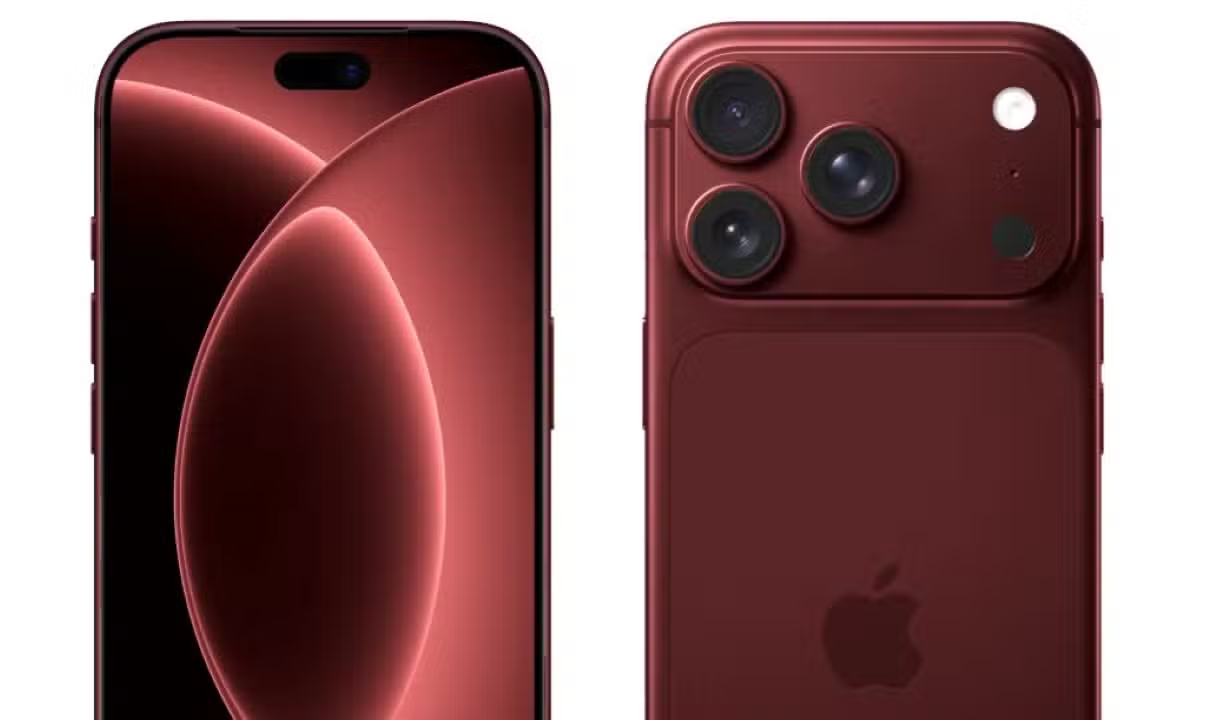
Apple officially launched the iPhone 18 Pro, a device that introduces substantial changes to the aesthetics and hardware of the manufacturer’s smartphone line. The model arrives on the international market in September and its main difference is a completely transparent rear panel, allowing the internal components to be seen. The company also confirmed the inclusion of a battery with a capacity of 5,200 mAh, a number that represents a significant increase in the device’s energy autonomy compared to previous generations.
The new visual format required complex adaptations on the Asian assembly line, which has already begun the calibration process for mass production. The commercial positioning of the device reflects the high costs of research and development of new materials, keeping the device in the ultra-premium segment of the global technology market. The transition to the translucent design marks a paradigm shift in the brand’s visual identity, which has historically opted for opaque frosted glass or aluminum backs.
Estrutura titanium aerospace and industrial seal
The construction of the main chassis uses aerospace-grade titanium, a material chosen to ensure structural rigidity and keep the total weight of the equipment under control. The transparent back panel is manufactured from a reinforced glass alloy that undergoes a specific chemical treatment in the company’s laboratories. Esse technical process aims to prevent the natural yellowing of the material over time. Wear is a common problem on translucent surfaces exposed to ultraviolet radiation and constant heat.
Para joins the machined metal structure to the transparent glass, the manufacturer’s engineering team has developed an industrial adhesive that is unprecedented in the mobile device sector. The chemical compound acts as a high-precision sealant, ensuring that the smartphone meets the most stringent international certifications for resistance against water and dust. The application of this adhesive completely seals the microscopic gaps between the materials. The motherboard and exposed circuits are protected without compromising the visual clarity of the rear of the equipment.
The physical resistance of the panel also received special attention during the durability testing phase. The modified glass withstands accidental drops and scratches from daily use, maintaining aesthetic integrity even after months of continuous handling. The decision to expose the interior of the device forced the design team to redesign the layout of the internal components. Placas and connectors have been transformed into symmetrical and organized visual elements.
Arquitetura processing and memory expansion
The operating core of the smartphone is powered by a processor manufactured using the 2-nanometer lithographic process. Essa technology represents a significant advance in the miniaturization of transistors, allowing billions of semiconductors to be allocated in a reduced physical space. The energy efficiency of this chip works together with the 5,200 mAh battery to extend active screen time. Power consumption is optimized even when running complex graphics rendering or heavy data processing tasks.
RAM memory capacity has been increased to 12 GB, a configuration designed to support the new generation of artificial intelligence algorithms that run directly on the phone’s hardware. Running these language models locally reduces dependency on cloud servers. The change guarantees greater privacy for user data and reduces latency in responses. The system can perform simultaneous translations of audio and text in the background without affecting the fluidity of switching between multiple open applications.
The integration between advanced hardware and the operating system allows artificial intelligence to act predictively in resource management. Control occurs automatically. The 2-nanometer processor distributes workloads between high-performance cores and energy-efficient cores. The clock speed adapts according to real-time software demand.



Sistema cooling and thermal dissipation
The inclusion of a high-density battery and a powerful processor in a chassis with a transparent glass back created technical challenges related to temperature control. Sem the possibility of using traditional opaque dissipation layers, the manufacturer had to completely restructure the internal cooling architecture. The solution found involves the application of state-of-the-art conductive materials that operate invisibly or integrated into the aesthetic design of the main board.
- High-density graphene Placas dissipates the heat generated by the processor quickly and silently to the titanium edges.
- The vapor chamber system has been redesigned to protect the glass panel from overheating during rapid charging.
- New metal Ligass have been incorporated into the battery connectors to stabilize thermal energy transfer.
- The symmetrical arrangement of the motherboard facilitates the flow of passive dissipation without obstructing the view of the components.
Thermal monitoring is carried out by sensors strategically distributed throughout the internal structure. Esses components send real-time data to the processor. The system adjusts overall performance to avoid heat spikes that could damage the 5,200 mAh battery or compromise the integrity of the industrial sealing adhesive.
Mecanismo photographic and satellite connectivity
The rear camera array presents a mechanical innovation with the introduction of a variable aperture main lens. Essa technology physically adjusts the shutter blades to control the exact amount of light that reaches the image sensor. The engine improves depth of field in portraits, generating authentic optical background blur. Sharpness also increases in nighttime scenarios by reducing visual noise in very low light environments.
The device’s lenses have received a new laboratory-formulated optical coating to mitigate unwanted reflections caused by direct light sources such as streetlights or vehicle headlights. The optical zoom system incorporates an improved refraction prism, responsible for stabilizing image capture during filming on the move. The image signal processor works in sync with artificial intelligence to apply color, distortion and white balance corrections at the exact moment of the click, before compressing the final file.
In the field of telecommunications, the antenna infrastructure was resized to support a more robust satellite connection. The system now allows short voice calls to be made and compressed multimedia files to be sent in remote areas lacking traditional cellular coverage. The manufacturer also confirmed the definitive abandonment of the physical tray for operator chips. The global transition to virtual chip technology has freed up vital internal space to accommodate the new battery and advanced cooling system.
Veja Tambem em Latest News (EN)

IOI adjusts 007 First Light dialogue, changing ‘parking lot’ to ‘car park’ for immersion

Meta announces subscription plans for Facebook, Instagram and WhatsApp globally, with exclusive features

IPhone 18 Pro leaks tease Dark Cherry and Sky Blue colors ahead of official September launch

Singer Kenisha guilty of defamatory publication in legal case: court rules on post that generated serious accusation

4.7 magnitude earthquake hits Puerto Vallarta with epicenter in the Pacific Ocean

7.9 GB patch optimizes Cyberpunk 2077 on PlayStation 5 Pro with three ray tracing modes

Exynos 2700 prototype for the Galaxy S27 records 10,350 points in test leaked on Geekbench

RPCS3 emulator creators define four hardware tiers for PlayStation 3 games on PC

Apple releases iOS 26.4.1 and iPadOS 26.4.1 to resolve serious iCloud data failure

João Pedro guarantees that Cole Palmer would be the starting number 10 for the Brazilian team

Rare event: Blue Micromoon on May 31, 2026 will be 6% smaller and 10% dimmer