
Exclusive lot of Toyota GR Yaris arrives in Brazil for R$ 354,990 with 304 hp

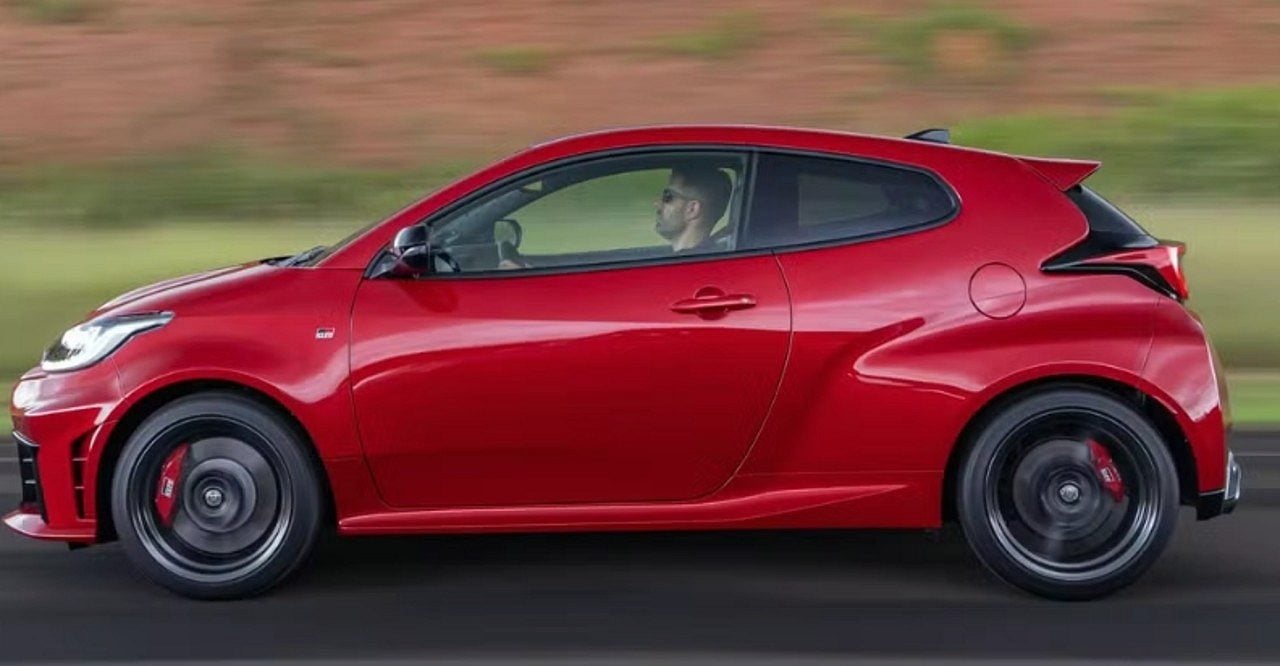
The Japanese manufacturer begins sales of the Toyota GR Yaris in the Brazilian market, marking the introduction of a model focused strictly on high performance. The sports hatch, developed by the Gazoo Racing division, arrives imported from the Japão with a suggested price of R$354,990. The automaker’s commercial strategy establishes a restricted sales volume in the country. Apenas 198 units make up the initial batch destined for local consumers. Official deliveries to dealerships begin in April. The vehicle represents a technical departure from the traditional compact cars offered by the brand.
The vehicle’s original design meets the strict homologation requirements required by the Campeonato Mundial of Rali, known internationally by the acronym WRC. Essa racing heritage dictates the entire mechanical and aerodynamic structure of the car. The range available on the Brasil divides transmission options equally to suit different riding profiles. Buyers can choose between 99 units equipped with a manual transmission and 99 units configured with an automatic system. Metade of the total stock already registers reservations confirmed by stores even before the official launch in the windows.

Japanese Engenharia focuses on weight reduction and 304 hp engine
The sports car’s mechanical package features the most powerful three-cylinder engine in mass production on the current global market. The 1.6 turbo engine with direct injection delivers 304 hp of maximum power. Torque reaches 40.8 kgfm during acceleration. Esses numbers surpass the performance of larger engines offered by competing brands in the high-performance segment. The construction of the block prioritized the use of light and resistant materials to optimize the car’s dynamic behavior at high speeds.
The development team applied a strict mass reduction diet to the hatch’s body. The hood and doors use aluminum in their structural composition. The vehicle’s roof is molded in carbon fiber, lowering the center of gravity. The result of these technical choices sets the total weight of the manual version at exactly 1,305 kg. The weight/power ratio reaches 4.29 kg/hp, a higher index than that recorded by the Honda Civic Type R and the GR Corolla itself. Acceleration from 0 to 100 km/h takes 5.1 seconds for the manual model and 5.4 seconds for the automatic variant.
GR-Four all-wheel drive Sistema adapts power delivery to the terrain
Performance on straights and curves is supported by a permanent all-wheel drive system developed specifically for the model. The technology, called GR-Four, allows electronic management of force distribution between the front and rear axles. The driver selects the car’s behavior using a selector positioned on the center console. The mechanism changes driving dynamics instantly to ensure grip on different road surfaces and weather conditions.
- Modo Normal: Direciona 60% of driving force to the front wheels and 40% to the rear, ideal configuration for daily urban traffic.
- Modo Gravel: Ajusta distribution to 53% at the front and 47% at the rear, optimizing directional control on low-grip surfaces such as dirt.
- Modo Track: Opera with continuous variation between 60:40 and 30:70, focusing on extracting the shortest possible lap time on closed circuits.
The six-speed manual transmission incorporates Intelligent Manual Transmission technology. The system performs automatic leveling of engine rotations during gear reductions, simulating the punta taco maneuver with millimeter precision. The eight-speed automatic option, called GR-DAT, features calibration aimed at ultra-fast shifts. The box’s software anticipates the pilot’s actions to always keep the propellant in the ideal torque range. The driver can change manually using paddles positioned behind the sports steering wheel.
Functional Aerodinâmica and interior designed for sporty riding
The external design completely breaks with the aesthetics of the conventional urban version sold in previous years. The bodywork adopts a two-door configuration and features a lowered roofline at the rear. Essa geometric modification directs airflow more efficiently towards the airfoil. The bumpers feature enlarged openings to maximize cooling for the radiator and ventilated disc braking system. 18-inch forged wheels reduce the vehicle’s unsprung mass. The total length measures 4 meters, with a wheelbase of 2.56 meters.
The cabin architecture prioritizes the ergonomics necessary for driving in a track environment. The center console has a 15-degree tilt facing the driver’s seat, facilitating access to the controls. The sports seats, covered in leather and suede with red stitching, are positioned 2.5 cm lower compared to the original design. The 12.3-inch digital instrument panel has been reduced by 5 cm in total height. The screen displays real-time telemetry data, turbocharger pressure and fluid temperatures.
The technology package includes an 8-inch multimedia center with wireless mirroring for smartphones. Active safety integrates adaptive cruise control, lane change alert and blind spot monitoring. Pre-collision assist and six airbags make up the list of standard protective equipment. The internal space, however, focuses on the front occupants. The rear seat offers limited area for passengers, and the trunk only holds 174 liters of luggage due to the intrusion of the rear differential into the floor.
Fuel Consumo and reinforced chassis for cornering stability
The hatch’s structural base combines components from different automaker platforms to achieve extreme levels of torsional rigidity. The assembly line applies 15% more welding points to the body and uses a greater quantity of industrial structural adhesives. The electric steering has a direct relationship to transmit the imperfections of the asphalt directly to the steering wheel. The recalibrated suspension keeps the tires in contact with the ground even under strong lateral acceleration. Testes carried out at racetracks in São Paulo proved the model’s ability to change trajectory at high speeds.
Energy efficiency presents adequate figures for the vehicle’s high-performance mechanical proposal. The official Brazilian measurement standard records averages of 8.6 km/l in the city and 10.1 km/l on the highway for the version with manual transmission. The configuration equipped with automatic transmission consumes a slightly larger volume of fuel. Urban performance is 7.8 km/l, while highway performance reaches 9.7 km/l. The fuel tank requires exclusive filling with gasoline to guarantee the integrity of the injection system.
Electronic management of direct injection and turbocharger allows rational use of fuel at moderate driving speeds. The car’s proposal balances the brutal delivery of power with the feasibility of use on occasional road trips. The arrival of the model reinforces the niche of pure sports cars in the national market, offering analog driving dynamics amid the electrification of the fleet. The restricted batch guarantees the exclusivity of the product on Brazilian streets throughout 2026.





