Traditional automakers return to the Chinese market with local partnerships and new models

Após 2 Years Downturn, Western Automakers Return to Salão from Automóvel from Pequim 2026 with Revamped Strategy. The central change consists of deep partnerships with Chinese suppliers and manufacturers, as well as the development of specific products for the local market. Hyundai, Volkswagen, Buick, Mazda, Peugeot and Citroën presented models that reflect this new approach, seeking to recover market share lost to Chinese national brands.
Hyundai and Volkswagen lead the comeback with new concepts
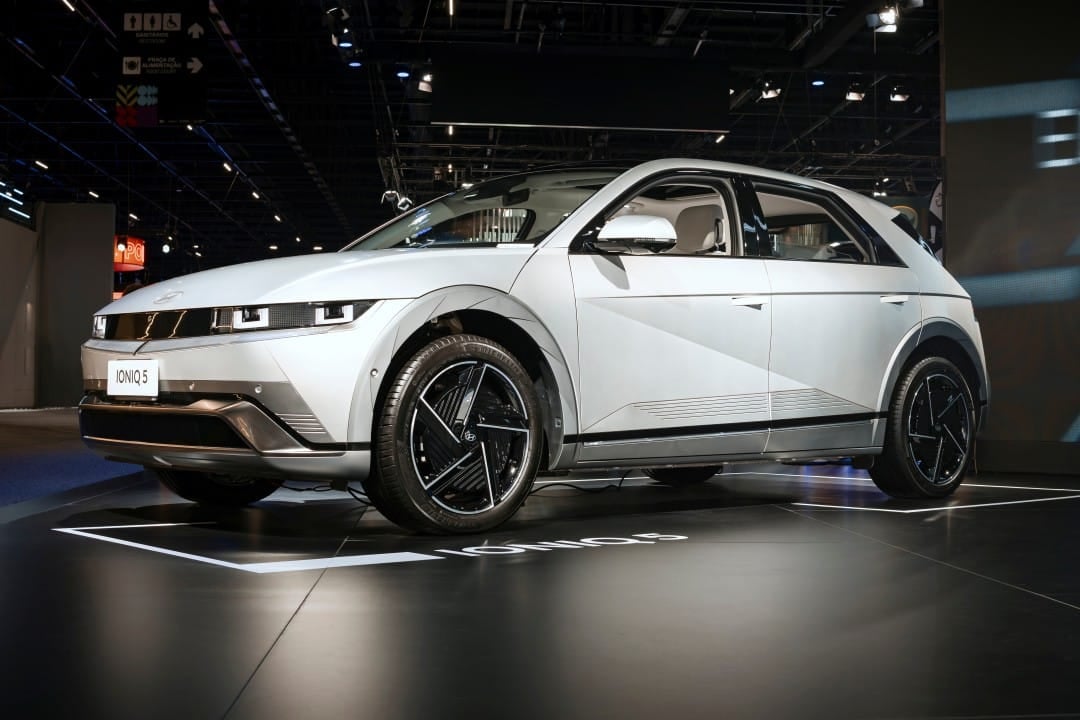
The Hyundai Ioniq V exemplifies the transformation. Desenvolvido in partnership with Beijing Automotive Group (BAIC), the vehicle integrates infotainment system and ADAS technology (Advanced Driver-Assistance Systems) provided by Momenta, one of the Chinese leaders in autonomous driving. The innovative design and specifications reflect careful listening to Chinese consumer preferences. Hyundai has set an ambitious goal: to reach 500,000 annual unit sales on China by 2030.
Volkswagen presented an extensive line of models and prototypes in an advanced stage of development. The ID models. Aura, T6, ID. ERA 9X and ID. UNYX 08 were developed jointly with Xpeng and SAIC, manufactured by local joint ventures. The strategy is called “China Speed”, reflecting commitment to accelerating development and greater dependence on local partnerships.
Outros manufacturers follow localization trend
Buick returned with a renewed version of the GL8 Encasa and launched the Electra E7, available in extended range hybrid (EREV) and fully electric versions. Mazda presented the EZ-60 crossover with a pure electric version. Peugeot and Citroën reaffirmed their commitment to sophisticated prototypes, in contrast to less attractive models currently sold in the Chinese market.
The change is notable compared to 2024. Naquele year, vehicles from Western brands were described as old designs, unattractive interiors and basic infotainment systems. Preços significantly higher than those of national rivals worsened the competitive scenario.
Histórico successful with local partnerships
Recent Exemplos prove the viability of the cooperation strategy:
- Kia EV5: 50% increase in sales between 2023 and 2024, developed for the Chinese market
- Nissan N7 and NX8: electric sedans and crossovers based on the Dongfeng platform with good pre-orders
- Buick GL8 Encasa and Electra: positive critical reception on China
- Toyota bZ3x: Chinese joint venture’s best-selling SUV, with 80,000 units in the first year
Structural Desafios remain significant
Especialistas warn that local partnerships do not guarantee future success. Tu Le of Sino Auto Insights said collaboration with Chinese technology companies is the “only way forward” for traditional automakers. Mesmo So, just improving products is not enough if the Chinese economy remains weakened.
Mark Andrews, an expert on the Chinese automotive market, points out adverse factors. The Chinese economy is slowing down and consumers are less willing to purchase new vehicles. Wang Chuanfu, CEO of BYD, predicted in 2024 that joint venture share would fall to just 10% in 3 to 5 years. Crescimento of the automobile market is stagnant. Boa part of Chinese automakers’ growth originates from foreign markets, not the domestic market.
Perspectiva global automotive sector
China consolidates itself as the largest automobile market in the world, both in total sales and in electric vehicles. Tendências started there expands globally. Marcas Westerners recognize that abandoning the Chinese market does not solve structural problems. Close collaboration with Chinese manufacturers becomes imperative.
The “From China, to China” strategy reflects this reality. Empresas believe that continuous improvement of products, designed and developed locally with adapted features, can enable effective competition in the domestic market. If successful, this approach makes it possible to partially recover the brands’ historical position in the country.
The success of traditional automakers at China will depend on consistent execution of this deep localization strategy. Números promising models like Kia’s EV5 indicate that competitiveness is possible when partnerships work properly and products meet local expectations.
Bruna Santos é colaboradora da redação do Mix Vale, portal de notícias com cobertura de Brasil e mundo. Produz conteúdo nas editorias de economia e benefícios, com foco em informação de serviço para o leitor brasileiro. Escreve e colabora para o portal desde 2024. Formação: Professora.