

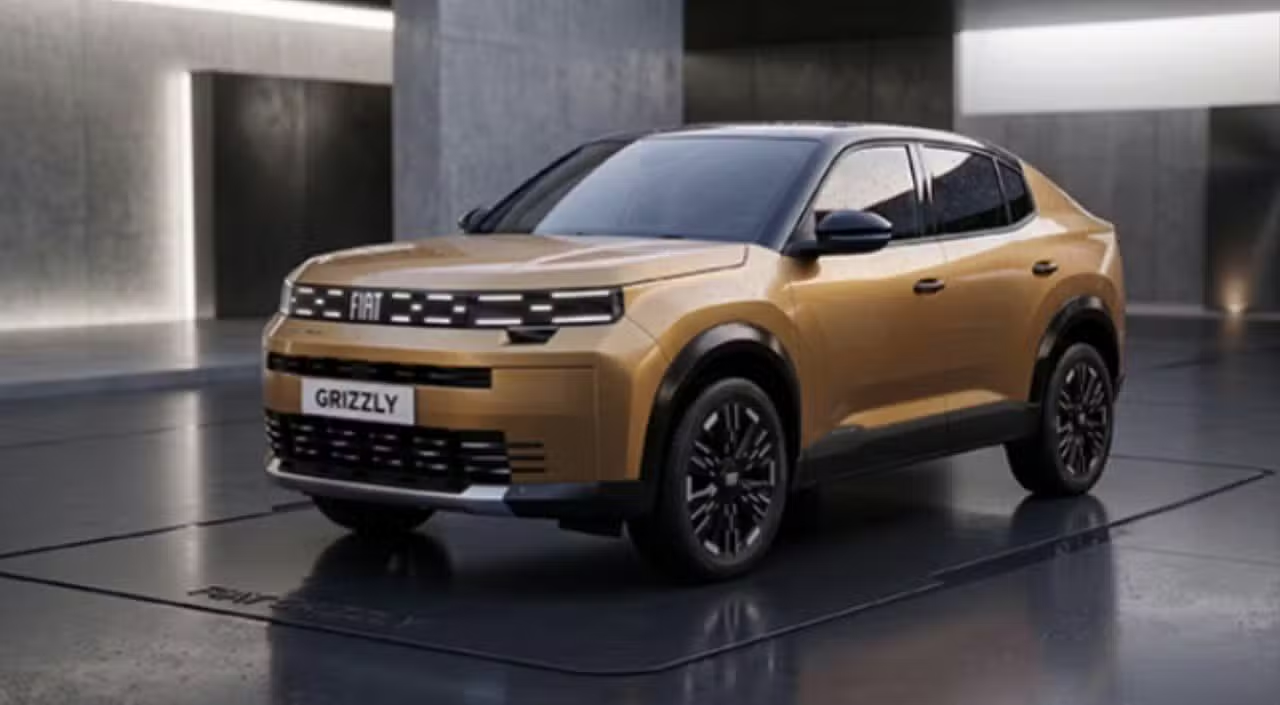
Fiat has revealed the first official details of its newest sports utility vehicle, called Fiat Grizzly. The vehicle arrives to operate in the C segment, positioning itself in a larger size category than the recently launched Grande Panda. The brand’s executive director, Olivier François, led the presentation of the project during a strategic meeting with Stellantis investors, held in the state of Michigan, at Estados Unidos. The executive confirmed that the model is part of an aggressive commercial expansion plan focused on Europa, América Latina, Oriente Médio and África.
The new sports utility vehicle represents a step up in the Italian manufacturer’s product hierarchy, although it shares the same base architecture as other compact vehicles in the group. François defined the car as a family vehicle with an affordable proposition, designed to attract consumers looking for space without giving up cost-benefit. The introduction of this model aims to complete the family of vehicles derived from the Panda concept, with the central objective of expanding the company’s market share and increasing the operation’s overall profit margins.
Estratégia positioning in the hotly contested sports utility vehicle segment
The C segment of sports utility vehicles currently accounts for one of the largest sales shares in the global automotive market. The automaker’s decision to invest in this category reflects the growing demand for taller and more spacious vehicles, which have gradually replaced traditional midsize hatchbacks and station wagons in consumer preference. The strategy involves delivering a product with generous dimensions, but with an optimized production cost to maintain competitiveness against Asian brands.
Para To achieve this balance, the company’s engineering adopted visual and structural solutions that maximize internal space. The design of the Fiat Grizzly follows the brand’s new visual identity, focusing on straight and robust lines that convey the feeling of a superior category vehicle. The manufacturer plans to sell the model in two different body variations, allowing it to reach different buyer profiles within the same price range. One of the options will adopt the fastback style, with a gently sloping roof at the rear, while the other will maintain the traditional utility format with a straight roof.
Modular Plataforma and diversity of engine options
The technological basis of the new model lies in the use of the Smart Car modular platform, developed by Stellantis. Esta architecture was specifically designed to support entry-level and mid-size vehicles with a high degree of production efficiency. The main advantage of this structural base is its flexibility, allowing the assembly of different types of propulsion on the same assembly line without the need for complex adaptations in factories.
Mechanical diversification is one of the pillars of the project, ensuring that the vehicle meets the emissions legislation of different continents. The automaker confirmed that the engine portfolio will range from traditional combustion options to completely emission-free systems. Confirmed mechanical and structural configurations for the utility include the following features:
- Oferta of gasoline engines aimed at emerging markets.
- Versões equipped with a hybrid system for greater energy efficiency.
- Variante completely electric focused on the European market.
- Estrutura based on the Smart platform, shared with the Citroën C3.
- Disponibilidade in fastback and traditional SUV bodies.
Sharing components with other models from the automotive conglomerate drastically reduces development and manufacturing costs. By using the same platform as the Grande Panda and vehicles from the partner French brand, the manufacturer is able to negotiate larger volumes of parts with suppliers. Essa economy of scale is the determining factor that will allow the final price of the car to be positioned aggressively at dealerships.
Cronograma presentation and impact on the European market
The automaker’s official schedule establishes the month of October 2024 for the public unveiling of the vehicle. The stage chosen for the world premiere is Salão Automóvel of Paris, one of the most traditional and influential events in the European automotive industry. The choice of this fair demonstrates the importance of the local market for the initial success of the project, where strict environmental standards require a rapid transition to electrified mobility.
The launch in the last quarter of the year strategically positions the model for the beginning of the 2025 sales cycle. The arrival of the utility vehicle in European stores will occur at a time of intense fleet renewal, driven by government incentives to exchange old cars for cleaner models. The board’s expectation is that the electric version will take the lead in sales in the region, while the combustion and hybrid options will guarantee the necessary volume in the América Latina and Oriente Médio countries.
Expansão of the line focused on microcars and accessible urban mobility
Paralelamente to the development of the medium utility vehicle, the Italian manufacturer is advancing in the creation of solutions for urban mobility of reduced dimensions. The strategic plan includes the launch of a new microcar with capacity for four occupants, designed to facilitate travel in large urban centers. Este project focuses on agility and ease of parking, essential features for drivers who face daily traffic in European metropolises.
The compact line will also receive an entry-level electric vehicle with a highly competitive financial proposal. The model will be priced below the £15,000 mark, a value that places it as one of the cheapest zero-emission options on the market. The design of these new urban cars will draw direct inspiration from the straight and functional lines of the classic Panda marketed in the 1980s. Production of this electric compact will take place in the historic Stellantis factory located in Pomigliano, in Itália.
The role of América Latina in the automaker’s plans
The inclusion of América Latina in the new utility’s expansion route reinforces the region’s relevance for the automotive group’s global results. The Latin American market has a consolidated demand for robust vehicles, capable of dealing with different paving conditions. The Italian brand has a history of leadership in South American countries, which facilitates the introduction of new products and guarantees a broad and widespread distribution network to sustain projected sales volumes.
The new car will complement the manufacturer’s current offering in the region, operating in a higher market range than compacts already sold locally. The strategy aims to retain customers who started their purchasing journey with the brand’s entry-level models and are now looking for a more sophisticated family vehicle. The availability of combustion engines and mild hybrid systems will be fundamental to the success of the product in these countries, where the charging infrastructure for fully electric cars is still expanding.
The sequence of presentations and the details of the future portfolio highlight the corporation’s commitment to the complete renewal of its product line. The diversification of options, which now range from urban microcars to medium-sized family vehicles, allows reaching different income ranges and meeting the specific preferences of each target market. The offensive in the low-cost, high-volume production segment represents the automaker’s main tool to consolidate its position among the largest vehicle manufacturers in the world.