
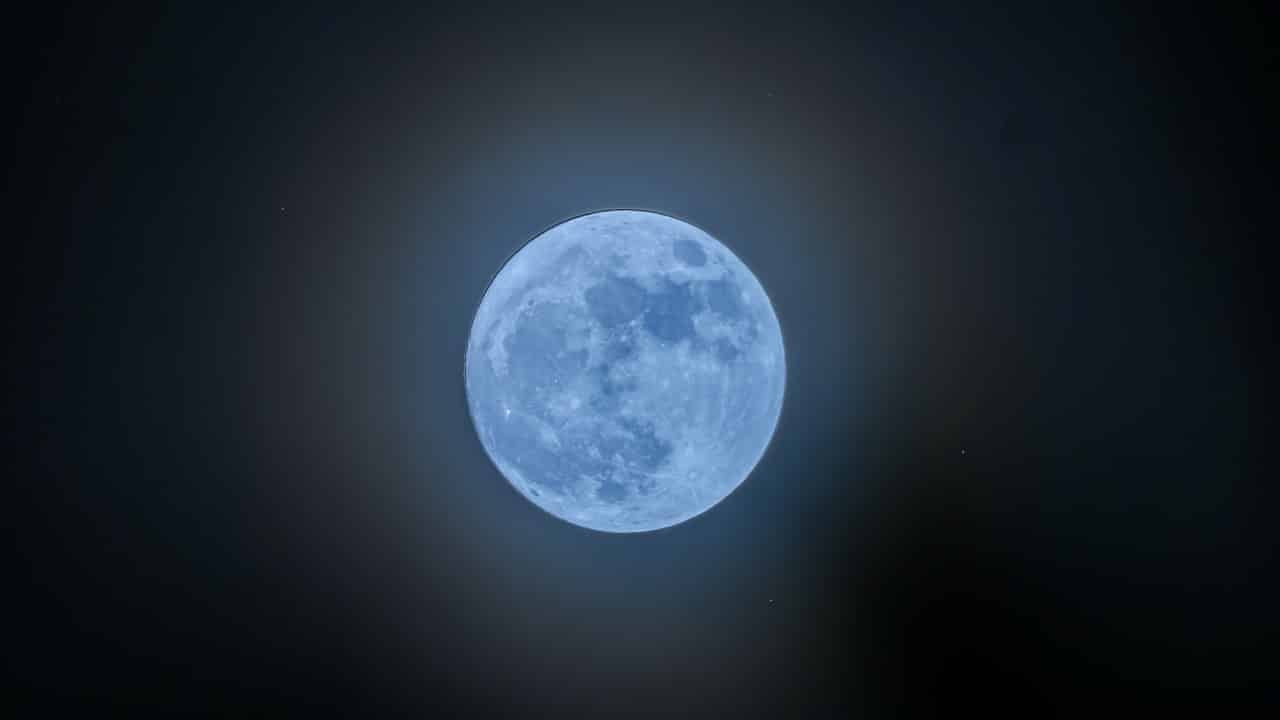
The second Lua Cheia of May will take place in the early hours of Sunday, the 31st, bringing to Terra an astronomical phenomenon considered rare. Apesar from the name “Moon Azul”, the natural satellite will not have a bluish hue. The term simply refers to the second Lua Cheia that occurs in a single calendar month, as defined by Administração Nacional of Aeronáutica and Espaço of Estados Unidos (Nasa).
The lunar cycle lasts 29.5 days, a period shorter than the average length of a month. Essa difference allows two complete cycles of Lua Cheia to occur within the same calendar month. Quando the first Lua Cheia appears at the beginning of the month, there is enough time for a second cycle to be completed before the arrival of the following month. In the case of May 2026, the first Lua Cheia has already passed at the beginning of the month, creating the necessary conditions for this weekend’s phenomenon.
Raridade of the astronomical phenomenon
The phenomenon is considered rare because it only occurs every two or three years, according to information from Nasa. The irregular periodicity is due to the misalignment between the lunar cycle of 29.5 days and the months of the Gregorian calendar, which vary between 28 and 31 days. Alguns months simply do not contain enough time for two complete lunar cycles to occur, making the occurrence of two Luas Cheias in a single month a less frequent event than might initially be expected.
On the same topic: Astronomical phenomenon of Blue Moon and Micromoon reaches its peak in May with observation in Olinda
Essa combination of astronomical and calendar factors explains why skywatchers wait a few years between one Lua Azul and another. Instituto Nacional of Meteorologia (Inmet) confirmed that the second Lua Cheia of May will be visible in the early hours of next Sunday, the 31st, marking another special moment for astronomy lovers across the country.

Como observe the phenomenon
Lua Azul visibility may vary depending on local weather conditions. Nuvens, excessive humidity and light pollution are factors that interfere with the quality of observation. Para to have a better view, Nasa recommends:
- Procurar a dark place, away from artificial lighting sources
- Evitar areas with high urban light pollution
- Verificar weather forecasts before observation
- Considerar that humidity in the air can impair visibility
- Escolher times between midnight and dawn for best viewing
Não Optical equipment is required to see Lua Azul. Telescópios and binoculars are not required, although they can offer a more detailed view of the lunar surface and its craters. An observer who wishes to make a simple observation with just the naked eyes will find success as long as the weather cooperates and there is no significant cloud cover.
Celestial Event Características
Apesar’s suggestive name, Lua Azul does not undergo changes in its tonality. The satellite will remain with its characteristic whitish glow. The term “Moon Azul” is an astronomical expression that does not refer to the actual color of the phenomenon, but only to the calendar condition of two Luas Cheias in the same monthly period.
More on this story: Rare astronomical phenomena, Blue Moon and micromoon mark the end of May; public observation in Olinda on the 31st
Lua Cheia always represents the moment in which the natural satellite is positioned directly opposite Sol, with Terra between them. Nessa configuration, the entire lunar face facing Terra receives direct sunlight, creating the characteristic luminous appearance. The second Lua Cheia of the month, regardless of when it occurs, will have exactly the same physical and optical characteristics as the first.
Importância historical and cultural
The phenomenon of Lua Azul has intrigued skywatchers for centuries. The relative rarity of the event contributed to it gaining prominence in historical records and in different cultures. Ancient Sociedades already recognized the irregular pattern of monthly Luas Cheias and developed measurement systems based on these observations.
In modern astronomy, the event serves as a reminder that the human calendar is a convenient construct that does not always align perfectly with natural cycles. Enquanto the solar year lasts approximately 365.25 days, Lua completes its cycle in 29.5 days. Essa fundamental discrepancy between different time cycles generates phenomena like Lua Azul, which reappear periodically when dates align in this particular way.
Learn more: Blue Moon astronomical phenomenon occurs on May 31st and marks the thirteenth full phase of the year
Condições for observation on Brasil
Residentes in different regions of Brasil will be able to observe the phenomenon, as long as meteorological conditions remain favorable. Cidades located in areas with less light pollution will have greater advantages for clear and detailed observation. Montanhas, rural parks and areas away from urban centers offer ideal environments for this type of activity.
Predicting Instituto Nacional from Meteorologia will be essential to determine the feasibility of observation in each region. Áreas with expected clear skies will have greater opportunities than those with the possibility of significant precipitation or cloudiness. Ainda therefore, even in less ideal conditions, Lua Azul may be partially visible through thinner clouds or in gaps between periods of coverage.