

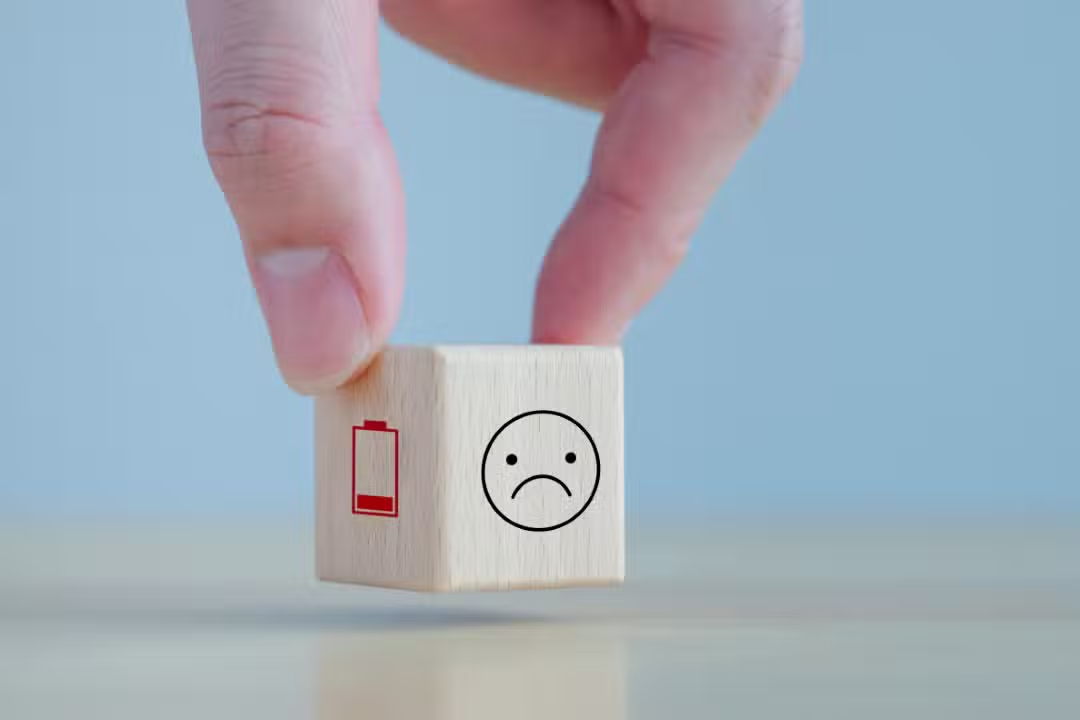
As of May 26, Brazilian companies will have a legal obligation to include burnout, anxiety and psychosocial pressure in the management of occupational risks. The change integrates the update of NR-1 (Norma Regulamentadora nº 1), considered the “mother standard” of safety and health at work in the country, and formally expands the concept of risk beyond physical accidents.
Dados of Anamt (Associação Nacional of Medicina of Trabalho) reveal the urgency of the measure: the number of leaves due to burnout in Brasil increased from 1,760 in 2023 to 6,985 in 2025. Ansiedade and depression linked to work stress lead the reasons for requests for benefits due to temporary incapacity in period.
Fatores psychosocial groups are now part of the mandatory program
The new standard expands the PGR (Programa of Gerenciamento of Riscos), a document that all companies already need to keep updated. From now on, it must include psychosocial factors capable of harming workers’ mental health:
- Pressão excessive and abusive targets
- Jornadas extensive and uncontrolled
- Assédio morals and interpersonal conflicts
- Working Sobrecarga
- Falta of clarity in functions
- Disabled Comunicação
- Organização inappropriate processes
According to Jéssica Palin Martins, lawyer, psychologist and specialist in corporate mental health, the implementation must impact the entire organizational structure. “Every company must have an action plan included in its work processes. Não is solely up to the human resources area to promote a healthy environment”, he states. Líderes from Segurança to Trabalho, Gestão from Riscos, production and operations now share responsibility for monitoring these factors.
Como burnout affects brain functioning
Burnout involves a progressive process of physical and emotional exhaustion. Diferentemente of simple stress, the syndrome is characterized by chronic exhaustion linked specifically to work. Psychiatrist Danielle Admoni, supervisor of the psychiatry residency at Unifesp, explains that the situation begins when the professional tries to maintain an increasingly heavy routine, but notices a drop in their own performance.
“The person becomes more and more tired, more distant from people and functioning worse and worse, despite greater effort”, describes Admoni. Over time, exhaustion compromises sleep, eating, personal relationships and the ability to feel pleasure.
Neurologicamente, burnout causes changes similar to those of post-traumatic stress disorder. Há hyperactivation of the amygdala, a region linked to fear and alertness, with increased cortisol levels. “The person starts to live in a constant state of alert”, explains the psychiatrist. Excess cortisol also damages the hippocampus, an area related to memory, resulting in difficulty concentrating, frequent forgetfulness and permanent exhaustion.

Desafios practical implementation
Thatiana Capellano, specialist in corporate communications and director of consultancy 4CO, points out that the difficulty does not lie in the technical implementation of the measures, but in the willingness of companies to address sensitive topics. Muitas organizations already have indicators of mental health leave or harassment reports, but they resist addressing these issues structurally.
“I believe that we will only reduce suffering and mental illness in companies if they are willing to talk about abusive goals, fire harassers and pay decent wages”, says Capellano. The change requires corporations to abandon abusive practices that have already become natural and review management models.
Obrigações of companies from now on
Ministério of Trabalho and Emprego establishes that organizations must identify, evaluate and control psychosocial factors capable of harming health. Concrete measures include:
- Regular organizational climate Pesquisas
- Canais secure and confidential reporting
- Treinamento continuous leadership
- Revisão of goals to eliminate abusiveness
- Monitoramento of extensive journeys
- Políticas clear fight against bullying
Advertising executive Antônia*, 32, experienced in practice the impact of mental illness at work. Ela reports that she had been feeling overwhelmed for months, but thought she needed to deal with it alone. A layoff in the team intensified the burden. “I received an even greater workload and that’s when everything got worse at once. Sentia felt like I was carrying a huge weight”, he says.
The day the meltdown arrived, Antônia felt paralyzed. Precisou leaves work early, unable to drink coffee or talk without crying. “That’s when I understood it was something more serious,” he says. Casos and Antônia have become common in the Brazilian job market, boosting regulation.
The difference between burnout, depression and anxiety remains important. Admoni emphasizes that burnout is a condition necessarily related to the work environment. Depressão and anxiety can be consequences of the burnout process, but they have multiple causes. The new standard recognizes this specificity by focusing exclusively on psychosocial work factors.