Consumers face 90-day wait for Geely EX2 after stocks run out in Brazil
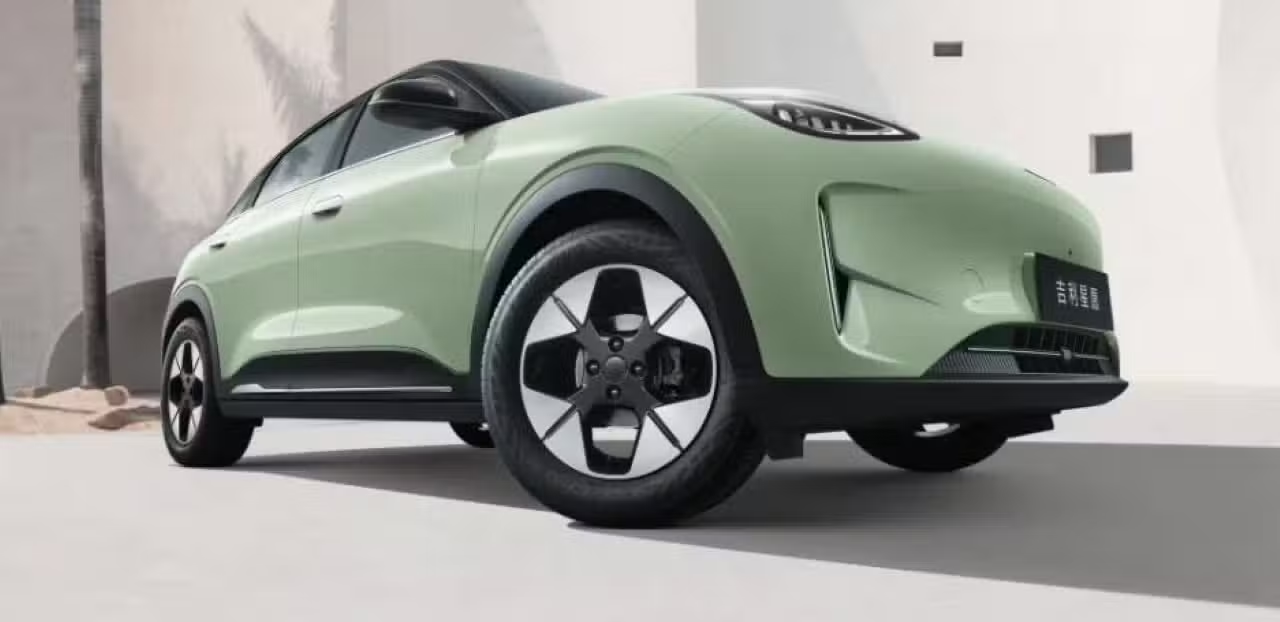
Brazilian consumers interested in purchasing the Geely EX2 are once again facing a scenario of shortages in the country’s dealerships. The deadline for delivery of the electric hatch reaches the 90-day mark in several regions. The situation arises from the total exhaustion of stocks available in physical stores. Todas units scheduled for the next import batch already have reservations confirmed by buyers. The current scenario repeats the logistical bottleneck recorded at the beginning of the year.
At the Eurovia dealership, located at Salvador, at Bahia, sales representatives confirm the three-month waiting period for any version of the vehicle. Customers who formalize the purchase of the Geely EX2 at this time enter a queue destined only for the second batch following the next arrival. The continued demand for the model exceeds the automaker’s current supply capacity through direct imports. The mismatch between demand and supply requires adaptations to the brand’s distribution strategy in the national market.
Histórico of imports and volume of deliveries in the first half
The recent history of Geely EX2 over Brasil demonstrates a constant fluctuation in product availability. In February 2026, the dealership network recorded exactly the same 90-day deadline for delivering vehicles to end customers. The temporary resolution of this bottleneck only occurred in the following month. A cargo ship unloaded approximately 7 thousand units of the electric hatch in Brazilian ports in March. Esse expressive volume allowed the immediate reduction of the waiting list and boosted the automaker’s registration numbers in the period.
Apesar’s injection of thousands of vehicles into the market, the March batch proved to be insufficient to maintain a regular stock in stores over the following months. The speed of sales exceeded the importer’s sales projections. The international logistics of motor vehicles involves extensive production times at headquarters, maritime transport and customs clearance. Esses factors limit the company’s ability to quickly respond to consumption spikes with new imported shipments. The units that arrive in the national territory serve almost exclusively to pay off the requests accumulated on the waiting list.
The import process requires planning months in advance. The allocation of roll-on/roll-off ships, specifically for the transport of cars, faces high global competition. The Brazilian market competes for space in the holds of these vessels with other countries that also record high demand for electrified vehicles. Essa international dynamics directly affect the time that end consumers wait to receive their car keys at local dealerships.
Transição for national assembly of the electric hatch
Geely management executes an industrial transition plan to mitigate exclusive dependence on imports. The definitive solution for regularizing delivery times involves local assembly of the Geely EX2. The nationalization of production represents a fundamental step towards increasing supply capacity and meeting the volume of orders generated by the Brazilian market. The manufacturing structure on national soil allows for a more agile response to fluctuations in commercial demand.
The assembly line implementation process requires technical adaptations and qualification of the supply chain. The automaker’s current strategy operates on a dual system. The company maintains the import flow of closed batches while it advances with preparations for domestic production. Essa simultaneous operation seeks to avoid total shortages of the dealership network during the industrial transition phase. The sector’s expectations point to a gradual normalization of delivery times as soon as the local factory reaches its full operating capacity.
The national production of electric vehicles involves complex component integration steps. Industrial planning includes the following operational aspects:
- Nacionalização progressive parts and structural components of the vehicle.
- Treinamento of specialized labor for the assembly of high voltage systems.
- Estabelecimento partners with local auto parts suppliers.
- Adequação from assembly lines to the brand’s global quality standards.
- Otimização of internal distribution logistics from the industrial plant.
The consolidation of these industrial stages will reduce the brand’s exposure to variations in international sea freight. Local production also offers greater predictability for dealership sales planning. Store managers will be able to work with shorter and more accurate delivery times, eliminating the current 90-day queue that affects the consumer’s shopping experience.



Fatores that drive demand for the model
The maintenance of a long waiting list reflects the strong interest of Brazilian consumers in the electrified compact segment. The Geely EX2 attracts buyers looking to transition from combustion engines to electric mobility. The main motivation for this change in consumption profile is based on the reduction of daily operating costs. The value of electric charging presents a significant competitive advantage compared to the prices of fossil fuels at gas stations.
The electric hatch meets a specific demand for urban vehicles with compact dimensions and energy efficiency. Traffic in large Brazilian cities favors the use of cars with these characteristics. Ease of parking and agility in daily commutes add to the environmental benefits of the absence of polluting gas emissions through exhaust. The technological package offered in the model also acts as a differentiator in the purchasing decision of customers who visit dealerships.
The electric vehicle market in Brasil shows continuous growth throughout 2026. Public and private charging infrastructure follows this expansion, offering greater safety for drivers to make intercity trips. Installing chargers in shopping centers, supermarkets and residential condominiums makes the routine of owners easier. Esse evolving ecosystem reduces range anxiety and encourages new consumers to join the waiting list for the Geely EX2.
Dinâmica commercial and market positioning
The existence of a 90-day waiting list changes the traditional sales dynamics at dealerships. Salespeople focus their efforts on demonstrating the vehicle’s attributes and managing customer expectations regarding delivery times. The brand sustains its leadership position in the public’s interest without resorting to aggressive retail strategies. High demand eliminates the need to apply significant discounts or promotional campaigns to guarantee business closure.
Geely’s commercial positioning prioritizes the structuring of its production capacity to the detriment of artificial price stimuli. The company focuses on ensuring that the customer experience, despite the wait, results in the delivery of a product aligned with the automaker’s global standards. Dealers in different Brazilian states report the same consumer behavior. The buyer of the Geely EX2 demonstrates willingness to wait the stipulated period, demonstrating loyalty to the concept of the product offered.
Order flow management requires a transparent communication system between the assembler, the distributor network and the end customer. Updates on the status of maritime transport and the expected arrival of imported batches become essential tools for in-store service. Overcoming this logistical challenge through national production will define the brand’s ability to expand its share in the electric market in the coming months. The balance between supply and demand remains the company’s main operational objective in Brazilian territory.
Veja Tambem em Latest News (EN)

Future iPhone 18 Pro will integrate translucent back and hidden photographic lens in the display

Epic Games Store consolidates access to 12 completely free big-budget games for computers in 2026

New iPhone 18 Pro brings discreet updates with A20 Pro chip while iPhone Fold gains prominence

New Ebola outbreak in the Democratic Republic of Congo records 65 deaths and mobilizes healthcare

FIFA defines 2026 World Cup calendar with 104 games in the United States, Mexico and Canada
BYD Qin Plus DM-i 2026 hybrid sedan hits the market with a range of more than 2,100 kilometers

Major launches for PlayStation 5 mark the 2026 calendar with exclusive titles
Chinese manufacturer prepares launch of Xiaomi 17 Ultra with Snapdragon 8 Gen 5 and Leica lenses

Czech store code reveals high price of Valve’s new Steam Machine for the year 2026

Accessory specialist Jaos presents off-road modification package for Toyota RAV4 at Tokyo Auto Salon 2026
Automaker starts sales of the 2026 Jeep Grand Wagoneer with Hurricane engine and new illuminated grille