FIFA establishes official schedule for the 2026 World Cup with an unprecedented format for 48 teams in North America
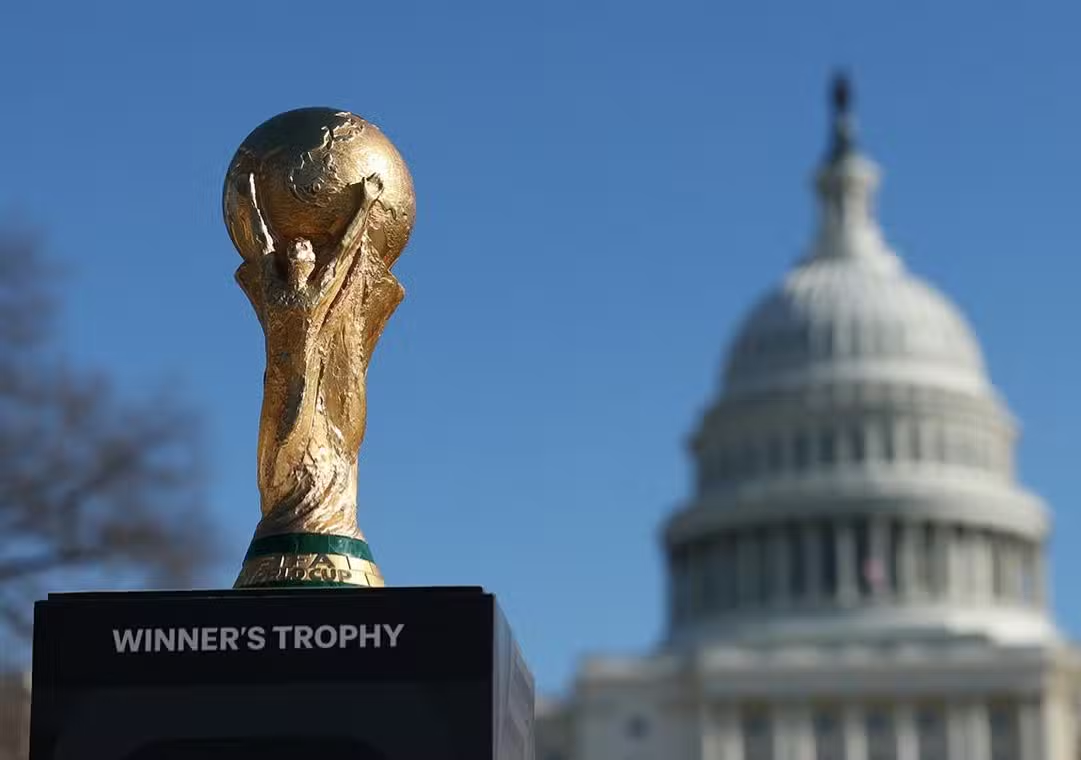
Federação Internacional of Futebol Associação organizes the final preparations for the start of Copa of Mundo 2026. The global tournament has its opening match scheduled for June 11th. The competition will take place simultaneously on Estados Unidos, Canadá and México. Esta edition marks the first time in history that three nations share the responsibility of hosting the sporting event. The grand final is scheduled for July 19th. The conclusion will define the champion of the biggest national team tournament on the planet. National confederations have already adjusted their internal calendars for the period of disputes.
The format of the competition underwent a profound redesign approved by the organizers. The World Cup will feature 48 teams on the field. The previous model limited participation to 32 national teams. The structural change directly affects the number of matches, travel logistics and ticket distribution. Especialistas in sports management point out that expansion requires unprecedented coordination between América and Norte governments. Local authorities are preparing special security and immigration schemes to facilitate the movement of fans.
Estrutura new groups and expansion of participants
The 2026 edition establishes a new paradigm for the initial phase of the tournament. The traditional system of eight groups with four teams has been replaced by a new configuration. The competition will have 16 groups containing three teams each. Essa mathematical change increases the total volume of clashes throughout the month. Teams will need to adapt their classification strategies to a scenario with less room for error in the first phase. Advancement to the knockout stages will require quick scoring right from the start.
Football’s highest entity justifies the expansion as a measure to democratize the sport. The increase in direct vacancies benefits confederations that historically had limited representation in the world cup. Países of Ásia, África, and América Central gain new access routes through restructured regional qualifiers. The inclusion of more nationalities expands the television reach of the event. The organizing committee assesses that the diversity of participants strengthens the global brand of the competition in emerging markets.
Cronograma official of matches and knockout stages
The competition calendar distributes the games over just over a month of intense competition. The organization divided the tournament into group stages and knockout stages. The inclusion of 48 teams created the need for an additional knockout stage before the round of 16. Confira the dates established for each stage of the tournament:
- Jogo Opening: June 11, 2026
- Primeira round: June 11th to 17th
- Segunda round: June 18th to 23rd
- Terceira round: June 24th to 27th
- Round of 32: June 28th to July 3rd
- Oitavas Finals: July 4th to 7th
- Quartas Finals: July 8th to 11th
- Semifinais: July 14th and 15th
- Third Place Disputa: July 18
- Final: July 19, 2026
The introduction of the round of 32 round represents the main novelty in the knockout calendar. Teams that advance from the group stage will face an extra knockout game compared to previous world cups. The physical exhaustion of athletes becomes a critical factor for technical committees. The federations’ medical departments are already planning accelerated recovery protocols to deal with the short interval between decisive clashes. The logistics of air travel between headquarters will also influence the teams’ performance.


Logística distribution of cities in América of Norte
The territorial division of headquarters reflects the infrastructure capacity of each host country. Os Estados Unidos concentrate most of the host cities and selected stadiums. The country has modern arenas frequently used in professional American football and baseball leagues. Canadá and México participate with their main urban centers and historic stadiums. The distribution aims to optimize the flow of tourists and minimize the impact on commercial air traffic in the region.
The exact definition of departure locations went through a rigorous technical inspection process. Inspectors evaluated criteria such as audience capacity, urban mobility, hotel network and attached training centers. Cada host nation has prior experience in organizing major international sporting events. México, for example, will host world cup matches for the third time in its history. The integration of transport systems between the three countries remains the main operational challenge for local committees.
Situação of the Brazilian team and technical preparations
Brasil secured their presence in the tournament after the South American qualifiers ended. The national team is part of the group of 48 teams confirmed to compete in the América of the Norte. Confederação Brasileira’s logistical planning has already started mapping possible training centers in the host countries. The choice of operational base will depend on the final draw of the groups. The delegation is looking for facilities that offer privacy and cutting-edge technology for the preparation of athletes.
The final composition of the squad and the definition of the technical committee follow the standard schedule of the sporting entity. The players’ official call-up will take place just weeks before the trip to the North American continent. Monitoring the performance of athletes in their respective European and South American clubs continues uninterruptedly. The preparatory friendlies scheduled for the first half of 2026 will serve as a definitive test for the starting lineup that will debut in the competition.
Impacto commercial and revenue projections for the event
The expanded format of the World Cup generates unprecedented financial expectations for the organizers. Carrying out more matches in multiple consumer markets attracts massive investments from the private sector. Projections indicate a substantial increase in global ticket sales compared to the 32-team tournament. The continuous flow of foreign fans will boost the hotel, gastronomy and tourism sectors in the host cities. Local governments estimate an economic return that exceeds the costs of adapting public infrastructure.
The broadcasting rights market reacts aggressively to the tournament’s new configuration. Emissoras from traditional television and streaming platforms compete for exhibition contracts with record amounts. The presence of more teams guarantees a captive audience in countries that rarely participated in the event. Patrocinadores Global develop marketing campaigns focused on the cultural diversity provided by the three simultaneous headquarters. The prolonged exposure of brands during the month of competitions consolidates the World Cup as the most profitable sporting product today.
Veja Tambem em Latest News (EN)

Italian Supreme Court confirms legality of hotel that offered only mineral water to customer

National Geographic Traveler Announces Travel Photography Contest Winners

Ferrari presents Luce, the first electric car, and receives harsh criticism from fans and the market

Yuki Yamada posts photo with beard and grimace on Instagram and surprises fans

Costco sees record demand at U.S. gas stations with lower prices

Passenger tries to enter cockpit and forces diversion of United Airlines flight to Madison
Astronomer explains white light recorded after meteor falls near volcano in Philippines

Comedian Sakamoto-chan reveals type 2 diabetes remission after lifestyle changes

Avi Loeb says discovery of alien intelligence can unite humanity amid global crises

Police investigate death of Hilde Ann Lynn Helphenstein in room at Rosewood São Paulo

Avi Loeb suggests that dark comet 1998 KY26 could be Soviet probe Phobos 1