

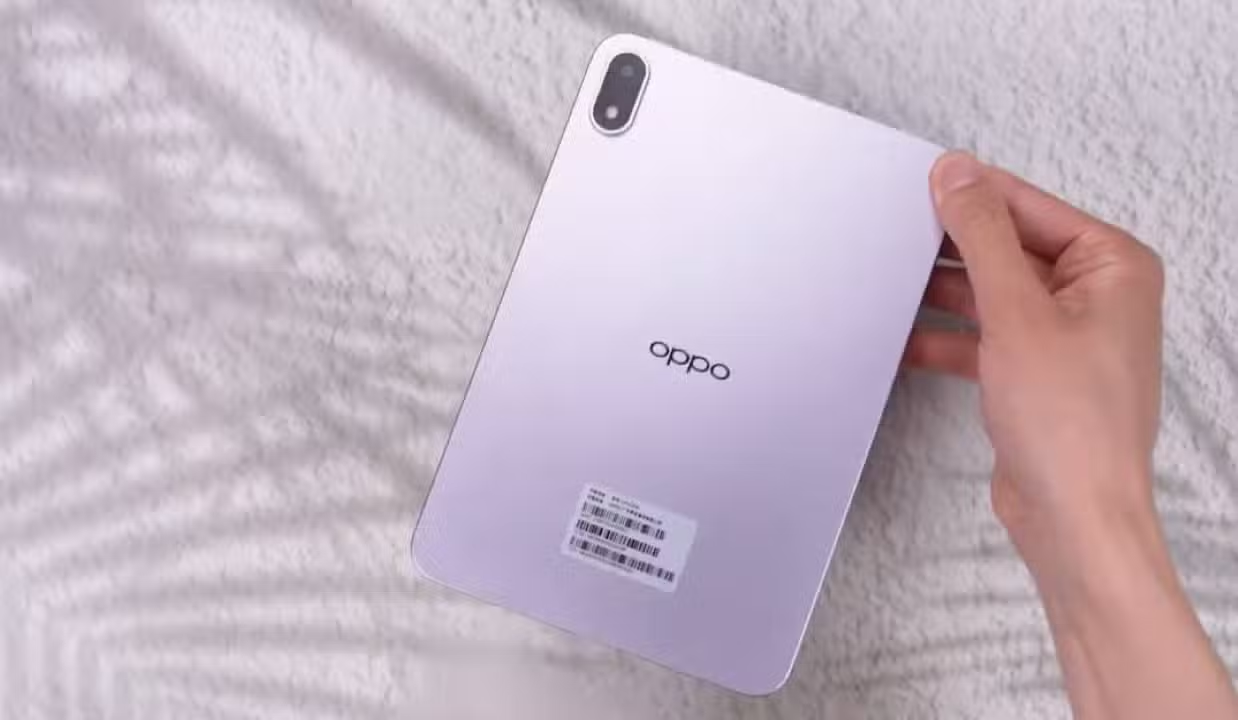
The manufacturer OPPO presented a new compact tablet aimed at the premium electronics segment. The mobile device combines an 8.8-inch screen with state-of-the-art processing in a metal chassis. The official launch took place at China during the last week of April 2026. The product seeks to serve consumers who demand portability without loss of computing capacity.
The company’s commercial strategy focuses on reviving the smaller screen category with advanced specifications. The device is 5.39 millimeters thick and weighs 279 grams in the standard version. Analistas marketers point out that the format fills a gap between traditional smartphones and corporate notebooks. The model competes directly for users who require daily mobility for productivity tasks and media consumption.
Engenharia thermal and thin metal structure
The mobile technology sector has focused efforts on increasing cell phone screens in recent years, which has reduced the supply of tablets in the eight-inch range. OPPO invests in the opposite direction by using a single piece of metal to build the chassis of the new device. The material provides structural rigidity to the device and acts directly to dissipate internal heat. The physical format allows comfortable use with just one hand when reading documents.
The equipment’s measurements make it easier to transport in smaller compartments in backpacks and executive bags. The weight of less than 300 grams prevents physical fatigue during long navigation sessions. The development team applied symmetrical 2.99 millimeter edges to the front panel. The design decision maximizes viewing space. The format also prevents the registration of accidental touches on the edges of the screen.
The extreme reduction in thickness required adaptations to the temperature control system. The metallic rear panel functions as a large passive heatsink. The heat emitted by the central processor is distributed evenly across the entire rear surface. The mechanism prevents thermal throttling. The solution maintains stable performance when running heavy games or exporting high-resolution video files.
Display 144 Hz OLED with adaptive brightness technology
The screen represents the main technical innovation of the hardware design. The 8.8-inch panel adopts OLED technology with a native resolution of 2520 x 1680 pixels. The manufacturer opted for a 3:2 ratio to optimize text reading and spreadsheet viewing. The vertical format displays a greater volume of simultaneous information compared to standard 16:9 videos. The refresh rate operates dynamically. The system reaches a limit of 144 Hz depending on the requirement of the application in use.
The display generates brightness peaks of 1600 nits in outdoor environments. The specification guarantees the readability of the content under direct sunlight. The panel registers touch commands at a frequency of 240 Hz. The speed of response favors the work of digital illustrators and performance in competitive games. The company also designed a variant of the device focused on visual comfort.
The alternative edition of the tablet has physically treated glass to modify the refraction of light. The matte finish eliminates reflections from the surrounding environment. The change reduces eye fatigue when reading digital books and extensive reports. The technical specifications of the visual component encompass the following elements:
- Tela 8.8-inch OLED with 2.5K resolution and 3:2 aspect ratio.
- Luminosidade maximum 1600 nits for use in natural light.
- Variable update Taxa with operating limit of 144 Hz.
- Versão with anti-reflective frosted glass designed for prolonged reading.
- Suporte integral to DCI-P3 color gamut for HDR media playback.
Factory color calibration meets the standards required by the audiovisual industry. Support for the HDR format increases the contrast between light and dark areas in images. The visual set delivers an immersive experience for consuming films and series on streaming platforms.
Desempenho hardware and interoperability with iOS system
Data processing takes place via the Snapdragon 8 Gen 5 chip. The high-performance component provides the ability to run complex three-dimensional modeling and photo editing software. The system uses RAM memory in the LPDDR5X standard, with options reaching up to 12 GB. The internal storage operates with UFS 4.1 technology. Consumers can find versions with 256 GB and 512 GB of space. The read and write speed speeds up opening heavy applications.
The device leaves the factory with the Android 16 operating system. The ColorOS 16 interface works on the Google base and adds exclusive features. The software integrates artificial intelligence tools to optimize corporate tasks. The system recognizes handwritten texts and converts them to editable digital formats in a few seconds. The function speeds up the organization of notes taken during business meetings and academic classes.
The software platform presents a direct communication tool with Apple devices. The OPPO tablet connects natively to the iOS system. The feature allows for quick file transfer between the two distinct ecosystems. The panel also displays notifications received on iPhones. The user can authorize answering voice calls directly from the screen. The technical integration extends to sharing the audio signal with the AirPods wireless headphones.
Capacidade energetics and sales schedule in the Chinese market
Ultra-thin construction typically restricts space for power components. The manufacturer’s engineers installed an 8000 mAh battery in the 5.39 mm chassis. The nominal capacity exceeds the average recorded in competing compact tablets. The Snapdragon 8 Gen 5 processor helps in load saving through its architectural efficiency. The operating system suspends inactive background processes to preserve stored energy.
The use of high-density cells made it possible to assemble the force module. The internal arrangement stacks the components to take advantage of the available volume in the chassis. Sensores monitor temperature in real time. The software automatically reduces the electrical current if it detects heating outside normal operating standards. The system supports 67W adapters.
Avaliações techniques indicate an autonomy of 19.5 hours for playing videos saved in internal memory. Power consumption decreases when viewing still images. Document reading allows continuous use for over 22 hours before needing to recharge. The 67W charger restores the battery to full capacity in approximately one hour when plugged in.
The photographic system includes a 13 megapixel rear camera for quick document recordings. The front lens has 8 megapixels and focuses on corporate video calls. The device supports Wi-Fi 7 networks and Bluetooth 6.0 connections. The USB-C 3.2 Gen 1 port ensures fast file transfer via cable. Support for a smart pen with 16,000 pressure levels expands use for design professionals.
Sales began on April 30, 2026 in China’s physical and digital retail. The manufacturer offers the chassis in gray, green and purple. The basic model costs 3699 yuan, equivalent to around 470 dollars in direct conversion. The version with a matte screen costs 4999 yuan. The company keeps its international expansion plans under commercial secrecy.