
Researchers discover blue octopus the size of a golf ball in deep waters off the Galapagos

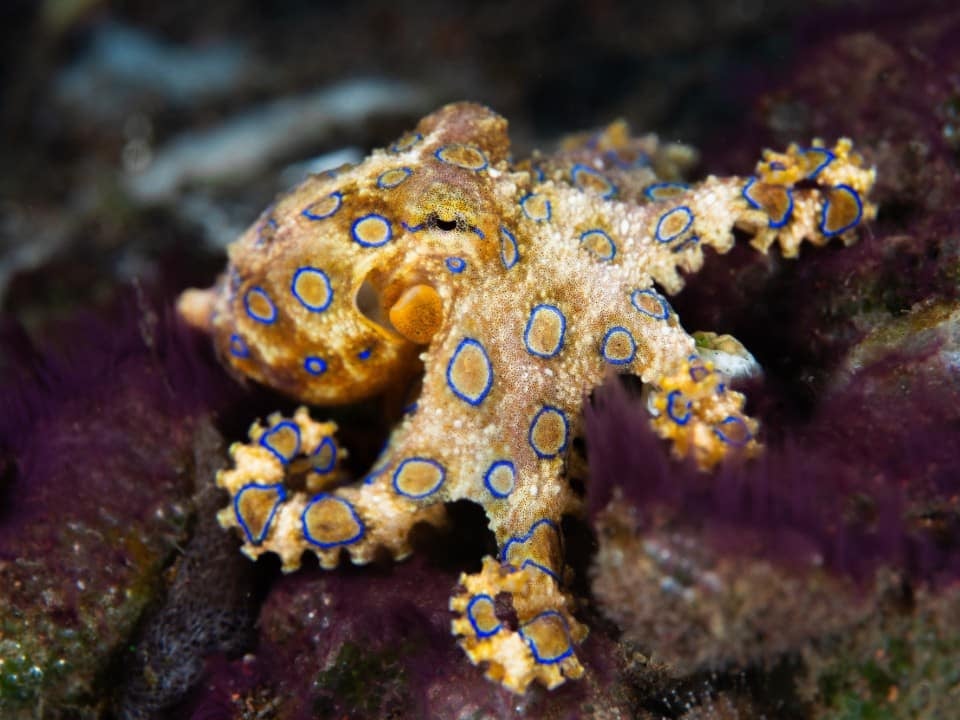
Cientistas formally identified a previously unseen deep-ocean cephalopod Pacífico. The marine animal has a bluish color and dimensions equivalent to a golf ball. The creature lives attached to rocks 1,773 meters deep in the Galápagos islands archipelago, territory belonging to Equador. The description of the species, called Microeledone galapagensis, appears in an article published in the scientific journal Zootaxa. The work resulted from a partnership between Field Museum and Chicago experts and local researchers.
The officialization of the mollusk ends a stage of investigations that began years ago in the northern region of the marine reserve. Biologists used diagnostic imaging technologies to map the organs of the only specimen collected. The method prevented damage to the preserved animal tissue. The team also video documented two other individuals with identical characteristics in the same underwater ridge near Darwin island. The record redefines the geographic limits of biological groups previously restricted to polar zones.
Remotely operated Veículo locates specimen on seamount
The first sighting of the octopus occurred during a mission aboard the E/V exploration vessel Nautilus. The operation was part of a technical cooperation agreement between Fundação Charles Darwin and Direção of Parque Nacional of Galápagos. Scientists monitored the ocean floor through monitors connected to a deep-diving robot. The equipment was tracking geological formations when the cameras captured the small invertebrate on the stone substrate.
The bright blue tone of the muscles caught the attention of technicians in the vessel’s control room. The researchers were surprised by the animal’s small size and chromatic pattern. Operators used the underwater vehicle’s mechanical arms to collect the individual and transport him to the surface. The exploration group recorded images of two more similar octopuses moving across the same topographic elevation.
Deep-water collection requires rigorous protocols to maintain the physical integrity of organisms adapted to high pressure. Technicians transferred the cephalopod to specific containers shortly after recovering the robot from the ship’s deck. The maintenance of the original morphological characteristics depended on immediate temperature control and adequate chemical fixation. The procedure ensured that the delicate structures of the tentacles and mantle arrived intact at the analysis laboratories for the following stages of the research.
Análise laboratory discards dissection to protect holotype
The samples initially went to Estação from Pesquisa Charles Darwin after the end of the expedition on Pacífico. The blue octopus stood out among the various invertebrates cataloged due to its atypical anatomy for that depth range. The difficulty in classifying the animal led biologists to send detailed photographs to research centers in Estados Unidos. The biological material was under the care of Janet Voight, curator emeritus of invertebrates at Field Museum.
Traditional mollusk taxonomy requires mechanical procedures that destroy fundamental body parts. Standard protocol requires removal of the mouth, chitinous beak, and radula to establish the evolutionary lineage. Applying this technique to the only available specimen would make it impossible to maintain the holotype for future studies. Scientists suspended direct physical examinations and sought alternatives based on non-destructive imaging.
The decision to preserve the physical specimen reflects a methodological shift in contemporary biological sciences. Museus of natural history prioritize the integrity of rare collections, especially when they involve organisms from extreme and difficult-to-access environments. The logistical cost of organizing new abyssal expeditions makes each sample collected an irreplaceable scientific asset. The team waited for the availability of high-precision equipment to proceed with the formal identification of the species without compromising the structure of the mollusk.
Three-dimensional Mapeamento details the internal anatomy of the blue octopus
Morphological identification advanced with the use of industrial x-ray machines at the Chicago facilities. Stephanie Smith, Field Museum’s CT lab manager, led the digital scan of the animal. The machinery fired continuous beams to generate thousands of cross-sections of the mollusk’s body. Processing software compiled the information and created an accurate three-dimensional model of the female’s organs.
The crossing of radiological data provided the necessary evidence for the definitive classification of the cephalopod. The results confirmed the marine biology team’s initial suspicions.
- Microtomography scanning displayed the structure of the digestive and reproductive systems without piercing the epidermis.
- Analysis of the radula and suckers placed the animal in a deep-sea genus characterized by its small size.
- The information confirmed the taxonomic separation of the mollusk in comparison to other species in the order Octopoda.
- Preserving the individual in liquid solution allows other researchers to access the physical material in the future.
Digital images showed that the short arms and low number of suction cups function as adaptations to save energy. Biologists relate these traits to the process of heterochrony. The mechanism alters the body’s growth rate to favor early reproductive development. The small dimensions make it easier for Microeledone galapagensis to occupy restricted spaces on the seabed. The strategy reduces direct competition for food sources in a nutrient-scarce ecosystem.
Registro changes geographic boundaries of the Megaleledonidae family
The documentation of the new species generated direct impacts on the study of the global distribution of cephalopods. Academic literature classified the Megaleledonidae family as a group endemic to icy waters near the Antártico ocean. The animal’s location on the equator demonstrates that the lineage migrated to tropical areas via cold abyssal currents. The finding of Microeledone galapagensis suggests that the biodiversity of the deep basins east of Pacífico still lacks adequate mapping.
The archipelago of Galápagos islands concentrates high levels of endemism in terrestrial and surface water animals. The recent survey supports the expansion of environmental conservation measures to areas located far below the sunlight penetration zone. The researchers indicate that continuous observation of these ecosystems provides data on nutrient circulation and ocean climate conditions. The scientific institutions will maintain joint operations to explore the region’s seamounts and identify other invertebrate populations.
Cataloging abyssal organisms requires the integration of different areas of knowledge, from naval engineering to molecular biology. The use of remote vehicles and industrial tomographs exemplifies the technological dependence of modern oceanography. The preservation of the blue octopus in the Field Museum collection guarantees a permanent physical reference for taxonomic science. Advancing research in Equador’s submerged ridges will continue to provide data on the adaptations of marine life in conditions of absence of light and extreme pressure.





