Geely EX2 electric hatch sells out at dealerships and buyers wait three months for delivery
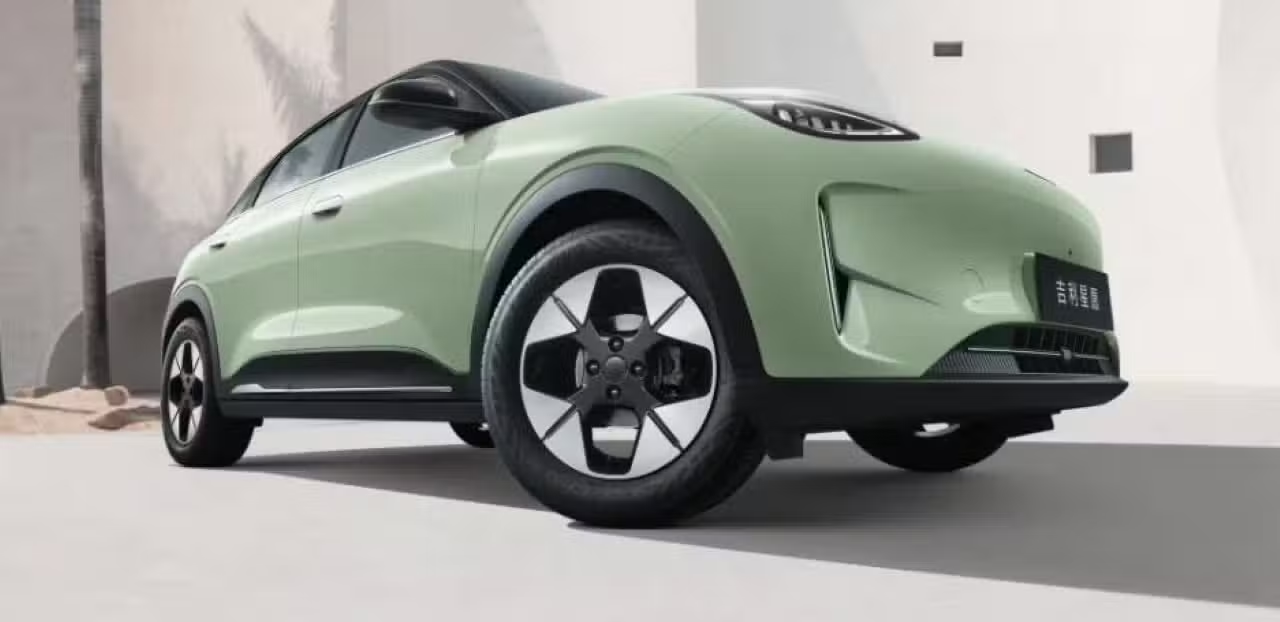
The Asian automaker Geely once again records the exhaustion of stocks of the EX2 model in the Brazilian market. Consumidores who seek to purchase the electric hatch at dealerships in the country currently face a waiting period that reaches the 90-day mark. The situation reflects a continuous mismatch between the volume of imports and the pace of vehicle sales in the different regions where the company operates. The current scenario repeats a logistical bottleneck already observed at the beginning of this year, highlighting the high demand for brand new cars.
The exhaustion affects all versions of the catalog offered by the manufacturer in the national territory. The units scheduled to arrive in the next batch of imports already have a specific destination, as they were fully reserved by customers who joined the waiting list weeks ago. Novos buyers need to wait for a second or third ship to be scheduled to receive the car. The made-to-order sales dynamic has become the operating standard for this specific model, requiring patience from drivers looking to switch to electrification.
In the capital of Bahia, the Eurovia dealership illustrates the reality faced by the brand’s distribution network. The store located at Salvador confirms that the three-month period applies unrestrictedly, regardless of the color configuration or equipment package chosen by the consumer. Sales consultants advise interested parties on the need for advance planning for the acquisition of the asset. Payment of the financial deposit only guarantees entry into the sequential list of future deliveries, without the possibility of advancing billing.
Histórico recent imports and volume of deliveries
The current shortage occurs just a few months after an attempt by the automaker to normalize the flow of deliveries at Brasil. In March 2026, Geely landed a significant batch containing approximately 7 thousand EX2 units. The volume injected into the national market temporarily reduced the waiting lines that had formed in February of that same period. The logistics action increased the brand’s registration rates during the closing of the first quarter, but the relief in inventories lasted a short time.
The injection of thousands of vehicles proved insufficient to sustain ready delivery availability in the medium term. The continuous demand for the electric hatch quickly absorbed the stock distributed among stores in the five regions of the country. The pace of sales exceeded the initial projections established by importers and brand directors. The absence of a constant and uninterrupted flow of cargo ships prevents the maintenance of stocked yards at concessionaires, forcing a return to the prolonged reservation system.
The exclusive dependence on international shipping creates a vulnerability in the Asian automaker’s supply chain. Transit time between factories abroad and Brazilian ports adds weeks to the fleet replacement process. Fatores external factors, such as the availability of specific vessels for transporting vehicles and customs nationalization procedures, directly influence the car release schedule. The end consumer ends up absorbing all this transit time and bureaucracy in the form of waiting for the vehicle key.
Estratégia transition to national assembly
Para solves the logistical bottleneck definitively, the management of Geely structures the transition of the business model in Brasil. The company is working on implementing a local production line dedicated to the assembly of electrified vehicles. The nationalization of the production process aims to eliminate exclusive dependence on import quotas and maritime freight. Domestic manufacturing represents the automaker’s main tool for reducing the 90-day delivery time to a more commercially agile and competitive level.



The transition period requires maintaining a dual supply strategy for the automotive market. Enquanto Brazilian industrial facilities do not reach full operating capacity, the brand will maintain the flow of international orders. Managing this hybrid model requires synchronization between the sales departments and the factory production planning area. The central objective is to avoid more severe disruptions in supply during the adaptation phase of national assembly lines.
- The import of closed lots continues to be the main way to fulfill orders already registered in the dealership system.
- Local assembly will allow a faster adjustment of supply in relation to fluctuations in demand in the Brazilian domestic market.
- The dual strategy seeks to stabilize delivery times in the medium term without losing the customer base interested in the model.
The structuring of the factory at Brasil also involves the development of a chain of regional auto parts suppliers. The nationalization of components will occur gradually, following the start of vehicle assembly on national soil. Esse internal logistics movement reduces the automaker’s exposure to exchange rate variations and high international freight costs. The production stability resulting from this industrial process should directly reflect on the availability of the EX2 in dealership windows in the coming years.
Commercial Impacto in the electrified vehicle segment
The scarcity scenario highlights the strong acceptance of the compact model among Brazilian consumers. The existence of a long waiting list attests to the strong demand for the product, allowing the manufacturer to maintain its pricing policy unchanged. Geely eliminates the need for aggressive discounts or retail promotional campaigns to sustain sales volume in stores. Profitability per unit sold remains preserved in the face of high demand, strengthening the cash flow of the national operation.
The EX2 buyer profile focuses on the search for sustainable urban mobility combined with the reduction of daily operating costs. The electric hatch segment attracts drivers interested in abandoning dependence on traditional fossil fuels. The savings generated by electric charging compared to fueling with gasoline or ethanol justify, for many customers, the willingness to wait three months for delivery. Calculating the long-term total cost of ownership favors the purchasing decision, even with the obstacle of an extended term.
The leadership in interest in the electric compact niche places the automaker in a prominent position in the national market in 2026. Current logistical challenges represent the cost of the brand’s accelerated growth in the country and the rapid adoption of technology by the public. Resolving the supply bottleneck through national production will define the company’s ability to permanently consolidate its market share. The commercial performance of the coming semesters will depend exclusively on the efficiency in the delivery of vehicles that are already ordered in the authorized network.
Veja Tambem em Latest News (EN)

Future iPhone 18 Pro will integrate translucent back and hidden photographic lens in the display

Epic Games Store consolidates access to 12 completely free big-budget games for computers in 2026

New iPhone 18 Pro brings discreet updates with A20 Pro chip while iPhone Fold gains prominence

New Ebola outbreak in the Democratic Republic of Congo records 65 deaths and mobilizes healthcare

FIFA defines 2026 World Cup calendar with 104 games in the United States, Mexico and Canada
BYD Qin Plus DM-i 2026 hybrid sedan hits the market with a range of more than 2,100 kilometers

Major launches for PlayStation 5 mark the 2026 calendar with exclusive titles
Chinese manufacturer prepares launch of Xiaomi 17 Ultra with Snapdragon 8 Gen 5 and Leica lenses

Czech store code reveals high price of Valve’s new Steam Machine for the year 2026

Accessory specialist Jaos presents off-road modification package for Toyota RAV4 at Tokyo Auto Salon 2026

Automaker starts sales of the 2026 Jeep Grand Wagoneer with Hurricane engine and new illuminated grille