
Italian automaker presents Ferrari Luce with 1,050 horsepower electric motor and acceleration in 2.5 seconds

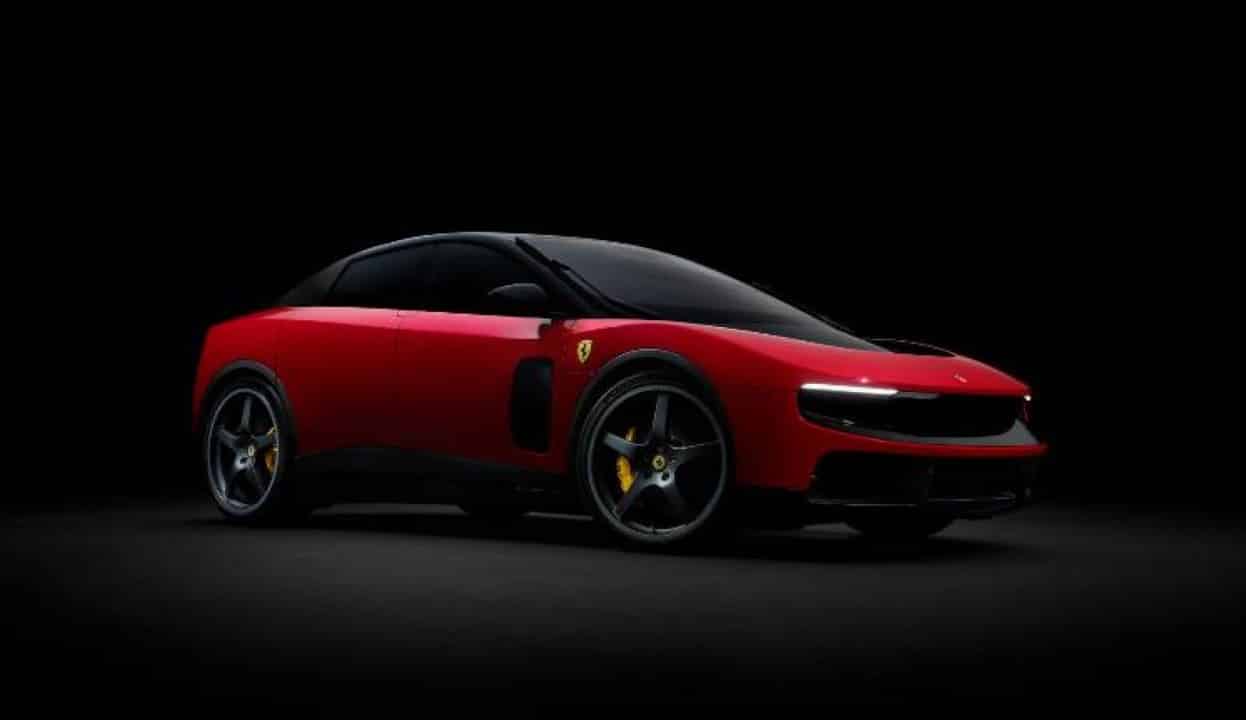
The Italian automaker has officially unveiled the Ferrari Luce, the first series-production all-electric vehicle in the company’s history. The launch event took place at Vela di Calatrava — Città dello Sport, located in Roma, a space chosen to mark the 79th anniversary of the manufacturer’s first automobile victory in the capital of Itália. The new model presents an unprecedented configuration for the brand with four doors and capacity for five occupants, consolidating the advancement of the multi-energy strategy developed at the Maranello headquarters.
The automotive project delivers impressive performance figures that seek to maintain the standard of the manufacturer’s traditional combustion engines. The mechanical package generates 1,050 horsepower, allowing the vehicle to reach 100 km/h from a standstill in exactly 2.5 seconds. The engineering applied to the model guarantees a range of more than 530 kilometers on a single charge, demonstrating the technical feasibility of combining high sporting performance with energy efficiency in the luxury segment.
Arquitetura mechanics and battery system sustain maximum speed exceeding 310 km/h
The Ferrari Luce powertrain sets new benchmarks for the electric super sports car category, reaching a speed of 200 km/h in just 6.8 seconds. The continuous progression of acceleration culminates in a maximum speed that surpasses the 310 km/h barrier, figures that required the development of an advanced thermal management system. The total weight of the vehicle in running order reaches 2,260 kilograms, a considerable mass that required specific adjustments in the weight distribution between the axles to preserve the automaker’s characteristic drivability.
Power for the electric motors comes from a high-density battery pack with a total storage capacity of 122 kWh. Este core component of the electrical architecture is designed to support ultra-fast charging cycles in high-power stations. The car’s electrical system accepts recharges of up to 350 kW, significantly reducing waiting time at stops and optimizing the user experience on long journeys, guaranteeing a declared autonomy of more than 530 kilometers.
The transition to electric mobility required engineers to completely rethink torque delivery, which now occurs instantaneously to all wheels. The electronic traction control acts in milliseconds to prevent the tires from coming loose during sudden acceleration, converting all the energy stored in the battery into directional movement. Essa mechanical precision reflects the manufacturer’s commitment to offering a driving experience that not only replaces, but raises the standard set by its previous vehicles.
Parceria with LoveFrom studio redefines visual language and incorporates new patents
The aesthetic development of the Ferrari Luce represents a milestone in Italian manufacturing, the result of a direct collaboration with LoveFrom, a design collective founded by Sir Jony Ive, recognized worldwide for the creation of the iPhone, and industrial designer Marc Newson. The external team worked together with Flavio Manzoni, current head of Ferrari Design Studio, to design a visual identity that breaks with traditional paradigms without losing the essence of the brand. The joint creative process generated more than 60 unprecedented design and engineering patents.
The electric vehicle’s body features fluid lines that prioritize aerodynamic efficiency, a critical factor in maximizing battery autonomy at high speeds. The absence of a bulky combustion engine in the front or center allowed the designers to redesign the car’s proportions, optimizing the interior space for the five occupants and improving the drag coefficient. The air intakes, traditionally used to cool thermal engines, were repositioned to cool the battery system and high-performance brakes.
The external lighting has also undergone a complete redesign, adopting state-of-the-art LED technologies that give the model an exclusive nighttime visual signature. The halo-shaped taillights represent the main aesthetic connection with the automaker’s past, seeking direct inspiration from the renowned designs of the 360 Modena and 458 Italia. Essa mix of radical innovation with subtle classic elements demonstrates the company’s strategy of attracting a new consumer profile without alienating traditional enthusiasts.
Cabine internal integrates analog dials and displays developed by Samsung Display
The Ferrari Luce’s cabin proposes an approach that goes against the current trend of extreme digitalization present in most modern electric vehicles. The instrument panel and center console combine hundreds of precision mechanical components, such as physical buttons, tactile switches and traditional levers, with high-resolution displays. The multifunctional displays were developed in a strategic partnership with Samsung Display, ensuring quick responses to driver commands and seamless integration with the car’s telemetry systems.
The selection of materials for the interior finish reflects the vehicle’s ultra-luxury positioning, prioritizing sustainability without compromising tactile and visual quality. The Italian automaker has set a strict standard for suppliers, requiring components that can withstand the wear and tear of daily use at high speeds. The list of premium materials and equipment that make up the model’s interior includes:
- Alumínio recycled anodized applied to the main structures of the panel and doors.
- Corning Gorilla Glass used to protect the surfaces of digital screens.
- Highly durable premium Couro covering the five ergonomic seats.
- Sistema audio system consisting of 21 high-fidelity sound speakers.
- 24-channel Amplificação with 3000 W total power for acoustic distribution.
- Ferrari Audio Signature, a sound system designed specifically for the vehicle.
The development of the Ferrari Audio Signature aims to compensate for the absence of the characteristic noise of internal combustion engines, creating an artificial sound identity that dynamically reacts to the car’s acceleration and behavior. Acoustic engineers mapped the frequencies generated by the electric motors and worked together with the 21 speakers to deliver an immersive listening experience inside the cabin, while maintaining acoustic insulation against unwanted noise from wind and tire rolling.
Active Suspensão derived from F80 and rear axle steering optimize maneuverability
The vehicle dynamics of the Ferrari Luce are based on an active suspension system directly derived from the technology used in the F80, a high-performance racing single-seater. Electronically controlled shock absorbers read road imperfections in real time and adjust the stiffness of the assembly to keep the body level during sharp turns and sudden braking. The directional rear axle acts in a complementary manner, steering the rear wheels in the opposite direction to the front wheels at low speeds to facilitate urban maneuvers, and in the same direction at high speeds to guarantee stability when changing lanes.
Contact with the ground is ensured by the largest set of wheels ever installed on a mass-produced street car from the Italian manufacturer. The model uses 23-inch rims on the front axle and 24-inch rims on the rear axle, an asymmetrical configuration that contributes to the vehicle’s aggressive stance and improves traction from the electric motor. The wheel design was also designed in a wind tunnel to reduce lateral turbulence and direct airflow to the carbon-ceramic brake discs.
The Luce nomenclature was chosen by the board to evoke the concepts of clarity and direction, symbolizing the company’s future path in the global automotive market. The official statement issued on Maranello highlights that the project should not be seen just as an electrical adaptation, but as a completely new platform focused on deep driver engagement. The arrival of the model materializes the multi-energy strategy announced in the Dia of Mercado of Capitais in 2022, positioning the brand competitively in the growing luxury electric vehicle segment.





