
May 2026 astronomical calendar highlights rare Blue Moon and alignment of Venus and Jupiter
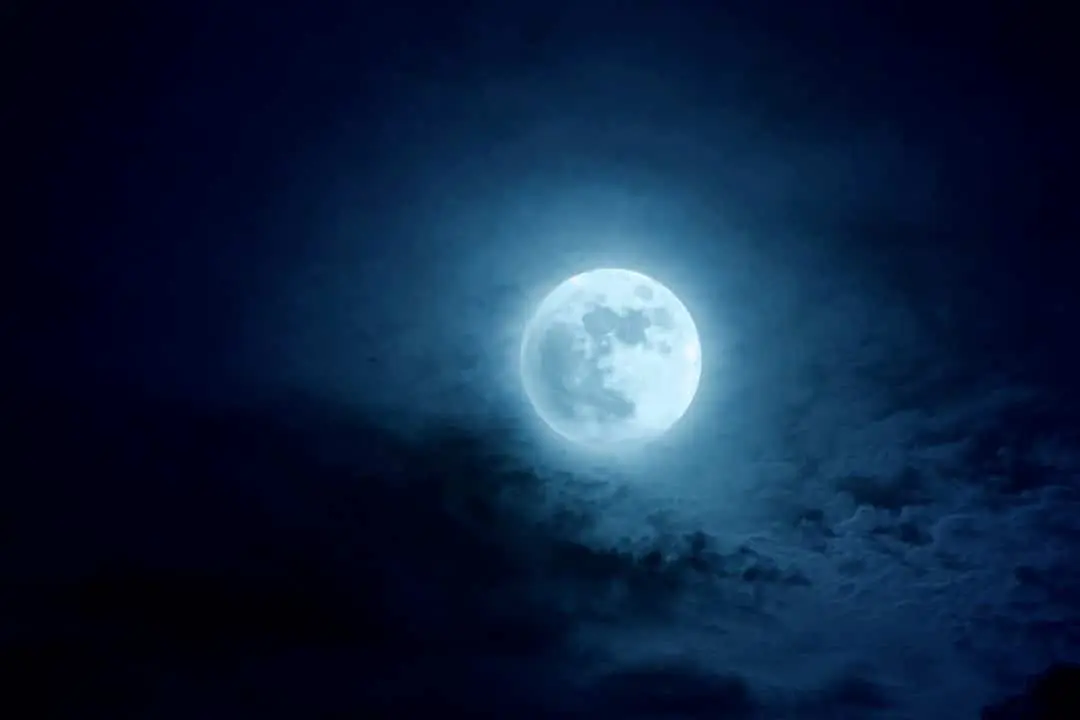
The astronomical calendar for May 2026 reserves a series of celestial events visible to the naked eye, with emphasis on the occurrence of an Lua Azul on the 31st. The phenomenon marks the second full moon within the same calendar month, an event that results from the mathematical difference between the lunar cycle and the Gregorian calendar. Observadores will also be able to follow the gradual approach between the planets Vênus and Júpiter on the western horizon during the afternoon.
The sequence of phenomena offers daily opportunities for astronomical observation without the need for telescopes or professional equipment. The orbital dynamics of the solar system provide specific alignments over the next few weeks, also involving the constellation Leão and the planet Mercúrio. Especialistas recommend searching for locations with low light pollution and a clear horizon to optimize the visualization of celestial bodies.
Mecânica orbital explains the occurrence of the second full moon of May
The complete lunar cycle, technically known as a synodic month, lasts approximately 29.5 days. Como the month of May has 31 days and the first full moon of the period occurred on the 2nd, the calendar allows the fitting of a second full phase exactly on the 31st. The nomenclature Lua Azul has no relationship with the real color of the natural satellite of Terra. The astronomical term strictly serves to designate this calendar anomaly that occurs every two or three years.
Durante moonrise on the southeast horizon, the satellite often appears an intense orange or reddish hue. The visual effect arises from a physical process known as Rayleigh scattering, which occurs when reflected sunlight passes through the dense layer of the Earth’s atmosphere at very low angles. Atmospheric particles filter out shorter wavelengths, such as blue and violet, allowing only warm colors to reach the observer’s eyes at the surface. The exact moment of moonrise varies depending on the latitude and longitude of the observer’s geographic location.
Natural satellite Trajetória crosses first magnitude stars
Entre On May 26th and June 1st, 2026, the moon makes an apparent journey that crosses several prominent constellations of the zodiac. The daily orbital movement moves the satellite quickly in relation to the background of fixed stars. The combination of Terra’s rotation and lunar translation creates a dynamic map that makes it easier to identify different celestial bodies in the night sky.
Understand the case: Blue Moon astronomical phenomenon occurs on May 31st and marks the thirteenth full phase of the year
The astronomical observation schedule presents specific milestones for nighttime monitoring throughout the week:
- May 27: The satellite with an 11-day cycle approaches Spica, the brightest star in the Virgem constellation, maintaining its position from sunset until the following morning.
- May 30: The moon reaches 14 days old and rises in the southeast, revealing the star Antares in its lower left proximity about two hours after twilight.
- May 31: The full phase reaches its peak with Lua Azul, marking the end of the May monthly cycle and offering the main observation window.
- June 1: The lunar disk maintains its position close to Antares, the main star in the Escorpião constellation, during the early morning hours.
Continuous observation of this trajectory facilitates practical understanding of celestial mechanics by students and amateur astronomers. The contrast between the intense lunar glow and the background stars requires attention to the darkest hours for adequate viewing. The identification of Spica and Antares serves as a fundamental starting point for the complete mapping of the Virgem and Escorpião constellations.
Vênus and Júpiter star in the afternoon sky
The western horizon hosts another astronomical event of great relevance during the transition period between the months of May and June. Vênus, popularly recognized for its intense glow at dusk, shares the visual space with the gas giant Júpiter. Each night, the apparent angular distance between the two planets undergoes a continuous and measurable reduction. The visual motion results from the different orbital speeds of the planets on their respective trajectories around Sol.
Full coverage: Latest News (EN)
The visual convergence will culminate in an exact planetary conjunction scheduled for June 9, 2026. Durante phenomenon, the two celestial bodies will appear to almost touch each other in the celestial vault, although they remain separated by hundreds of millions of kilometers in real three-dimensional space. Observation requires a completely unobstructed line of sight in the direction of sunset. Vênus’s intense glow acts as a natural beacon, making it easy to initially locate the planetary duo just after dusk.
Constelação of Leão reaches final period of visibility for the year
The last few weeks of May represent the final window for clear observation of the Leão constellation before it is eclipsed by daytime solar glare. The stellar cluster descends progressively towards the western horizon shortly after dusk. The main star formation resembles a large inverted sickle, outlining the mythological figure of the animal’s head and chest.
More on this story: Discover how to observe the August lunar eclipse and the differences between the phenomena
The star Regulus occupies the central position at the base of the sickle, representing the lion’s heart and serving as one of the brightest stars on the ecliptic. At the back of the constellation, a distinct triangle of stars forms the hindquarters of the geometric figure. The clear layout makes the cluster an ideal target for training in basic astronomical navigation and sky reconnaissance. Moving the calendar towards June will drastically reduce the time available for viewing these stars before they set over the horizon.
June’s Calendário introduces new dark phenomena and conditions
The transition to June significantly changes the general nighttime observation conditions. The daily delay in the moonrise time provides progressively darker nights in the first fortnight of the month. The specific period between June 8th and 10th concentrates the most intense phase of the rapprochement between Vênus and Júpiter. The absence of interference from lunar light at the beginning of the night favors the capture of photographic images of the planetary alignment.
The astronomical calendar reserves additional technical events for the middle of the following month. Entre On the 14th and 16th of June, the occurrence of the largest new supermoon of the year 2026 will guarantee a night sky of maximum darkness, as the illuminated face of the satellite will be facing Sol. The condition optimizes the visibility of distant galaxies, star clusters and nebulae. On the 16th, the planet Mercúrio will reach its greatest eastern elongation. The orbital position moves the small planet away from the intense sunlight, allowing it to be precisely located on the western horizon during the brief minutes that follow sunset.
Learn more: Astronomical phenomenon dyes the Moon red in the skies of Brazil in August 2026
More news in Latest News (EN)
See more → Sony clarifies launch timing and hardware price plans for PS6
 Sony PlayStation 6 cost nears $950 as memory prices climbAfD state election triumph prompts urgent review of Germany’s democratic foundationsAaron Judge returns to Yankees lineup, igniting playoff push after three-month rib injury absenceHigh-altitude tragedy: Climber perishes after fall on Aspen-area 14er summitEgyptian TV personality and 11 co-defendants condemned to death for large-scale synthetic drug traffickingPlayStation 6 component bills surge to $960 amid memory crunch
 Rockstar North adds canine waste throwing to GTA 6 world
More news on Mix Vale
- 1Families turn to online networks for flood victim data amidst official silence near Tibet border
- 2Indian civil servant gains widespread social media fame leading aggressive food safety crackdown
- 3LSU coach Lane Kiffin reveals strategic delay in Clemson game to gain competitive edge
- 4Trump demands Bombardier relocate production to US for market access, escalating trade tensions
- 5Rockstar North details dog mechanics and street combat in GTA 6
- 6Corporate ChatGPT users gain custom text style replication
- 7Workplace ChatGPT starts copying individual writing styles
- 8Top Ukrainian prosecutor resigns following probe into vast illegal call center network scheme
- 9Calls intensify for Australia to assert foreign policy independence over extensive US military presence
- 10Saxony-Anhalt results underscore growing momentum for European far-right parties ahead of key votes