
Planets Venus and Jupiter align in the sky in a rare visible phenomenon; find out how to watch

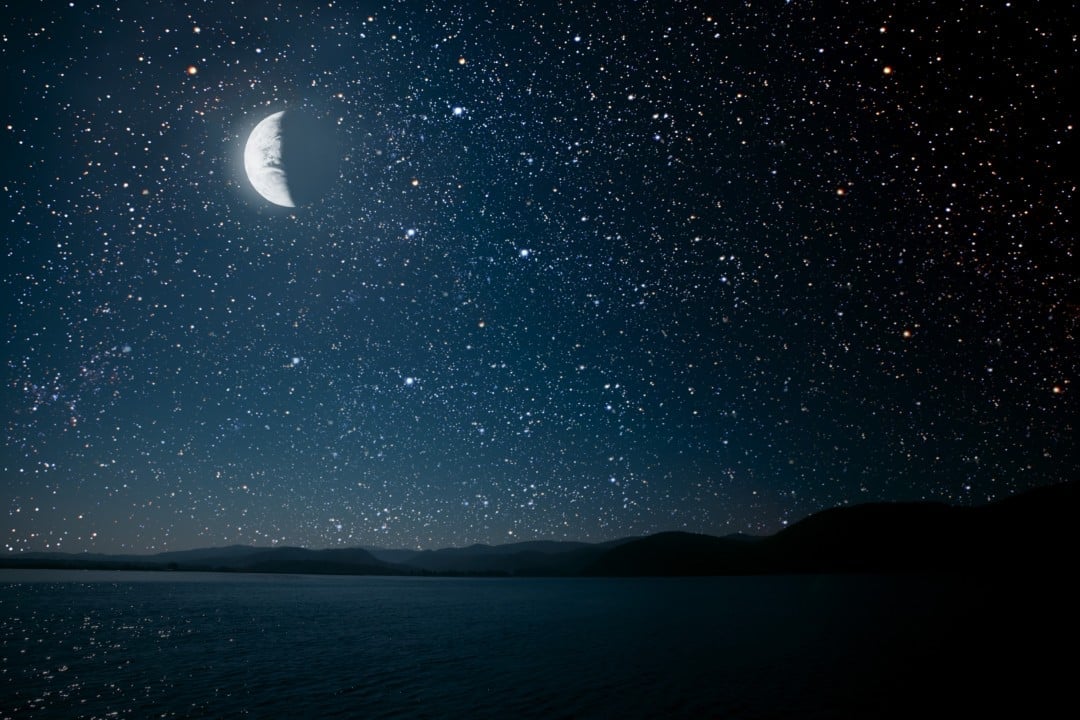
The planets Vênus and Júpiter star in one of the most anticipated astronomical events of the year with an apparent maximum approach in the sky that began to be recorded on Tuesday night. The phenomenon known as conjunction makes the two brightest celestial bodies in the solar system after Lua appear almost glued to the horizon line. Observation can be made with the naked eye from any region of Brasil as long as the weather remains clear in the first hours after sunset.
The visual spectacle arises from a question of optical perspective as the planets remain separated by hundreds of millions of kilometers in real space. Astrônomos explain that Vênus orbits much closer to Sol while Júpiter is positioned much further away on the periphery of the system. Their orbit creates this periodic alignment for those observing from Terra. The overall brightness surpasses that of any fixed star in the celestial vault.
Brilho double on the horizon draws the attention of observers
The approach reaches its most visible point early in the evening when the sky begins to darken towards the west. Vênus appears with a very intense whitish tone, surpassing the yellowish and slightly more opaque glow of Júpiter, which is positioned right next to it. The two stars can be easily identified without the aid of binoculars or professional telescopes because of the strong reflection of sunlight in their dense atmospheres.
Cientistas point out that the ease of viewing makes the event ideal for amateur astronomers and space photography enthusiasts. The phenomenon takes on clearer contours in rural or coastal areas far from the excessive light pollution generated by large cities. In capitals with strong artificial lighting, the brightness of the planets still surpasses the urban light barrier, although with lower background contrast.
The ideal period of contemplation lasts about two hours just after dusk. Depois During this interval, the stars follow the Earth’s rotation movement and set below the western horizon line. The beginning of the night concentrates the best clear conditions before the planets become too low and suffer from the interference of low atmospheric haze.
Dinâmica orbital explains apparent approach of the two stars
The planetary conjunction works as a geometric illusion caused by the different speeds at which the worlds travel around Sol. Vênus completes one full revolution around our star in approximately 225 Earth days. Júpiter, being the largest planet and occupying a much wider outer orbit, requires almost 12 years to follow the same orbital path.
Visual crossing occurs when the positions of Terra and these two bodies align in an imaginary straight line through space. Astronomers use the term angular separation to measure the apparent distance between them in the night sky. Neste event specific separation is only a fraction of a degree which is equivalent to less than the diameter of a full Lua.
- Vênus maintains an average distance of 108 million kilometers from Sol
- Júpiter orbits at a distance of approximately 778 million kilometers from the central star
- The actual separation between the two planets exceeds 600 million kilometers during the alignment
- The current phenomenon will not be repeated with the same visual proximity until the next decade
- Lua will pass close to the pair in the coming days, creating a celestial triangle
Simple Equipamentos helps capture details of planetary surfaces
Embora the naked eye is enough to see the two luminous points together, the use of simple optical instruments reveals hidden characteristics of the planets. A common binocular with basic magnification already allows you to clearly and sharply separate the two bodies in the field of view. The instrument also helps to fix the focus without the natural oscillation that the atmosphere causes in the naked eye.
Small Telescópios facing the western sector can capture deeper details of the Júpiter system during the conjunction. It is possible to see the four largest natural satellites of the gas giant known as the Galilean moons. Io, Europa, Ganimedes and Calisto appear aligned as tiny bright dots around the planet’s main disk.
In the case of Vênus, telescope observation reveals a structure similar to the phases of Lua due to its internal position. The planet does not appear as a perfect circle but rather as a half-lit semicircle or sickle-shaped depending on the exact day. The thick layer of acidic clouds prevents relief visualization but highlights the high level of light reflection.
Condições meteorologists determine the success of observation in capitals
The success of following the planetary alignment directly depends on the cloud cover over the Brazilian regions in the coming nights. Áreas with a stable weather forecast and no clouds will have a clear view from the beginning of dusk. The approaching winter tends to favor viewing at Centro-Sul due to the drier air and lower incidence of rain.
Fotógrafos professionals recommend the use of tripods and long exposures to record the meeting of the stars alongside elements of the urban or natural landscape. Árvores, buildings and mountains serve as reference points to give a sense of scale to the brightness of the planets on the horizon. The capture must be done quickly before celestial bodies become hidden by construction or geographical features.
The scientific community emphasizes that events of this type help to spark popular interest in space science and celestial mechanics. Escolas and astronomy clubs across the country often organize public observation sessions with open telescopes for the community to enjoy the spectacle. Weather monitoring networks indicate that Centro-Oeste and parts of Sudeste should record the clearest skies for viewing.





