Xiaomi details financial statement and displays new line of electric cars at Shenzhen motor show
Chinese manufacturer Xiaomi faces a decisive week to consolidate its business strategy on two distinct fronts. The company schedules the release of its first quarter financial results for May 26th. Três days later, on May 29, the company showcases its full line of electric vehicles in Salão of Automóvel of Shenzhen. The financial market watches movements with increased attention. Investors are looking for clear signs that the corporation can maintain simultaneous economic viability in the consumer electronics and automotive sectors.
Consolidated data for 2025 shows a complex financial scenario. Profit attributable to shareholders reached 41.64 billion renminbi. The number represents almost double that recorded in the previous year. The significant growth, however, hides severe pressure on the smartphone department’s profit margins. The profitability index for mobile devices fell from 12.6% to 10.9% in the period. The company’s management justifies the retraction with the reduction in government subsidies and the global increase in the cost of electronic components.
Desafios operational and pressure on profit margins
The decline in the profitability of cell phones represents the most urgent obstacle for the brand’s global operation. Xiaomi competes for market share directly with Apple and Samsung. The sector is also home to other Chinese manufacturers that adopt aggressive pricing policies. Maintaining profitability in this environment requires massive bargaining power when purchasing parts. The company needs to use its production capacity to the maximum limit. Launching new generations of devices without drastic price cuts becomes a commercial obligation.
Intermittent shortages of advanced semiconductors affect assembly line planning. Long-term supply contracts undergo frequent adjustments due to exchange rate volatility and logistics costs. Xiaomi attempts to overcome the problem by diversifying its supplier base within Ásia. Entering the automotive sector exacerbates the need for constant cash flow. Manufacturing electric vehicles consumes immense amounts of capital in research and development. Building a manufacturing infrastructure from scratch requires billion-dollar contributions before the first car is delivered.
The convergence of personal technology and mobility operations tests the corporation’s financial discipline. Shareholders question the board’s ability to sustain investments in both areas without compromising the group’s long-term fiscal health. The transition is capital intensive. The development of manufacturing infrastructure consumes billions annually.
Expectativas of the market and the company’s liquidity position
Financial analysts prepare specific questions for the conference call to present quarterly results. The market demands transparency about the allocation of resources. The board will need to detail the expansion plans and expected return metrics for the coming months. Key points of attention include:
- Estrutura of detailed costs by business segment
- Capacidade of the supply chain to support two axes of expansion
- Mix sales among smartphones, connected devices and electric vehicles
- Gross margin Projeções for subsequent quarters
- Expected investment Ritmo for the automotive assembly line
Xiaomi’s capital reserve acts as a strategic buffer against market fluctuations. The balance sheet ending December 31, 2025 recorded 232.6 billion renminbi in available resources. The company also accounted for 26.9 billion in quick-conversion net assets. The financial volume guarantees operational flexibility. The company is gaining momentum to absorb possible delays in the launch schedule of electric cars. Capital also protects the operation if production costs exceed initial estimates, eliminating the need to seek loans with high interest rates.
Robust cash does not guarantee risk-free expansion. Simultaneous action in the development of artificial intelligence, new cell phones and automobiles requires strict control of expenses. Competitive pressure within Chinese territory forces the company to justify each investment with clear return projections. Capital allocation undergoes severe scrutiny from board members.



Concorrência on Salão of Shenzhen and the new electric fleet
Salão of Automóvel of Shenzhen exposes Xiaomi to an environment of extreme commercial rivalry. The event brings together more than 100 different automotive brands. The exhibition halls house around 1,300 vehicle models. The competition presents products with a high technological level. Manufacturer NIO displays the premium ES9 model. Onvo organizes pre-sales of the L60 utility vehicle. Yangwang, the luxury division controlled by BYD, showcases its updated lineup of high-performance vehicles. The new entrant in the automotive market will face the same evaluation criteria applied to traditional automakers.
The Chinese consumer of electric cars demonstrates a very high level of demand in relation to onboard software. The integration of the car’s operating system with smart home and smartphone ecosystems defines the purchasing decision. Xiaomi relies on its own operating system to create a fluid transition between the driver’s cell phone and the vehicle’s dashboard. Seamless connectivity serves as the main selling point against automakers that rely on third-party software.
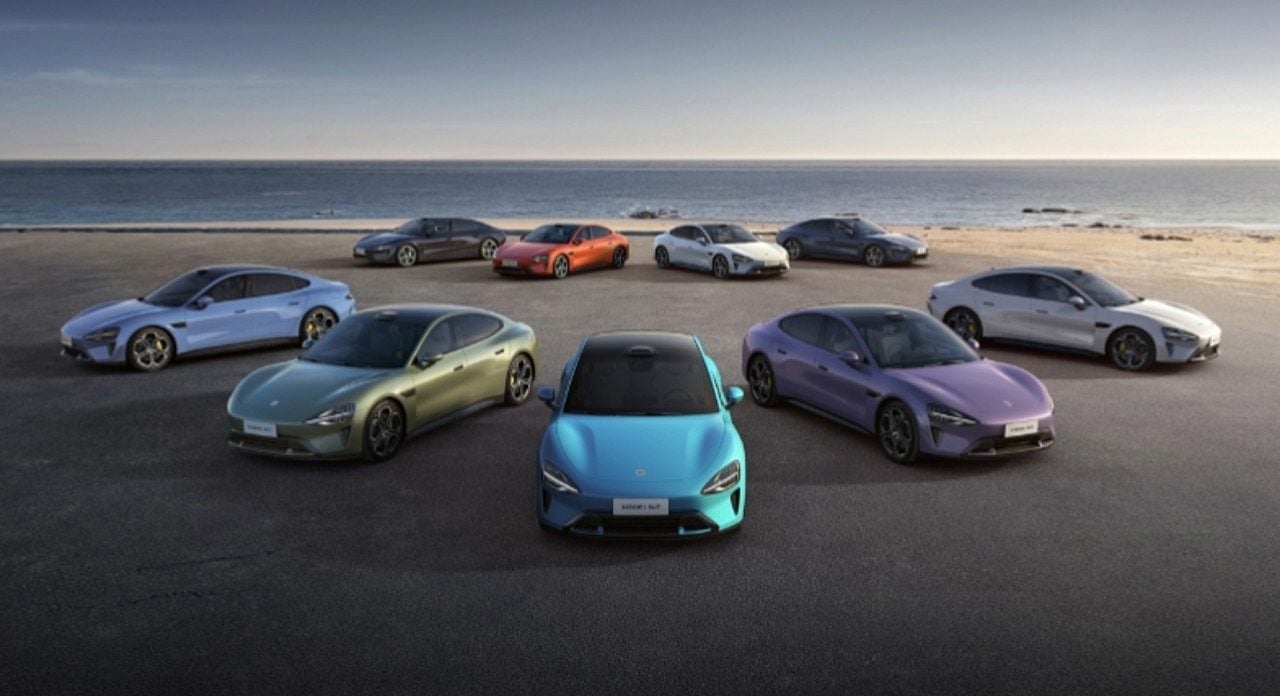
Xiaomi’s strategy involves presenting a complete family of automobiles, ruling out the launch of a single model. The SU7 line hits the market with a base version and the SU7 Ultra variant, focused on high performance. The portfolio grows with the introduction of the YU7 series of sports utility vehicles. The YU7 GT model leads the brand’s SUV category. The use of a multiple platform indicates the search for production scale. Sharing architecture and components between different models progressively reduces manufacturing costs. The success of the format depends on perfect execution on the assembly line and the structuring of the dealership network.
Oscilação of regulatory compliance actions and requirements
The behavior of the company’s shares reflects the caution of institutional investors. The shares operate in the range of €3.32 on international exchanges. The value represents a decline of approximately 50% from the 52-week high of €6.69. The accumulated devaluation since the beginning of the year exceeds the 25% mark. Índice of Força Relativa points to 75.8, configuring an overbought technical picture. The indicator suggests a possible recovery after the lows recorded in April, but contrasts with fundamental uncertainties about cash flow.
The commercialization of electric vehicles and connected devices faces a complex network of legal requirements. Regulatory bodies at China and other countries impose strict security standards. Implementing remote software updates requires advanced encryption protocols. Artificial intelligence-based driver assistance systems need to prove extreme reliability in practical tests. The traceability of components throughout the entire supply chain has become a legal obligation.
Transit agencies closely monitor the performance of sensors and high-resolution cameras used in autonomous driving systems. Qualquer real-time data processing failure could result in massive recalls, generating incalculable losses for new brands in the sector. The company’s server infrastructure needs to process terabytes of telemetry data daily to improve driving algorithms.
Companies that operate commercial fleets evaluate vehicles based on their ability to comply with these regulations. Security reputation is given the same weight as profit margins in purchasing decisions. Xiaomi needs to prove that it dominates automotive approval processes with the same efficiency as it certifies its cell phones. Reducing the cost per vehicle manufactured remains the most critical performance indicator for the operation. The corporation’s financial stability in the coming months depends on the accurate execution of these industrial goals.
Veja Tambem em Latest News (EN)

Future iPhone 18 Pro will integrate translucent back and hidden photographic lens in the display

Epic Games Store consolidates access to 12 completely free big-budget games for computers in 2026

New iPhone 18 Pro brings discreet updates with A20 Pro chip while iPhone Fold gains prominence

New Ebola outbreak in the Democratic Republic of Congo records 65 deaths and mobilizes healthcare

FIFA defines 2026 World Cup calendar with 104 games in the United States, Mexico and Canada
BYD Qin Plus DM-i 2026 hybrid sedan hits the market with a range of more than 2,100 kilometers

Major launches for PlayStation 5 mark the 2026 calendar with exclusive titles
Chinese manufacturer prepares launch of Xiaomi 17 Ultra with Snapdragon 8 Gen 5 and Leica lenses

Czech store code reveals high price of Valve’s new Steam Machine for the year 2026
Accessory specialist Jaos presents off-road modification package for Toyota RAV4 at Tokyo Auto Salon 2026

Automaker starts sales of the 2026 Jeep Grand Wagoneer with Hurricane engine and new illuminated grille