IOS 26 update records historic low adoption on iPhones due to Liquid Glass design
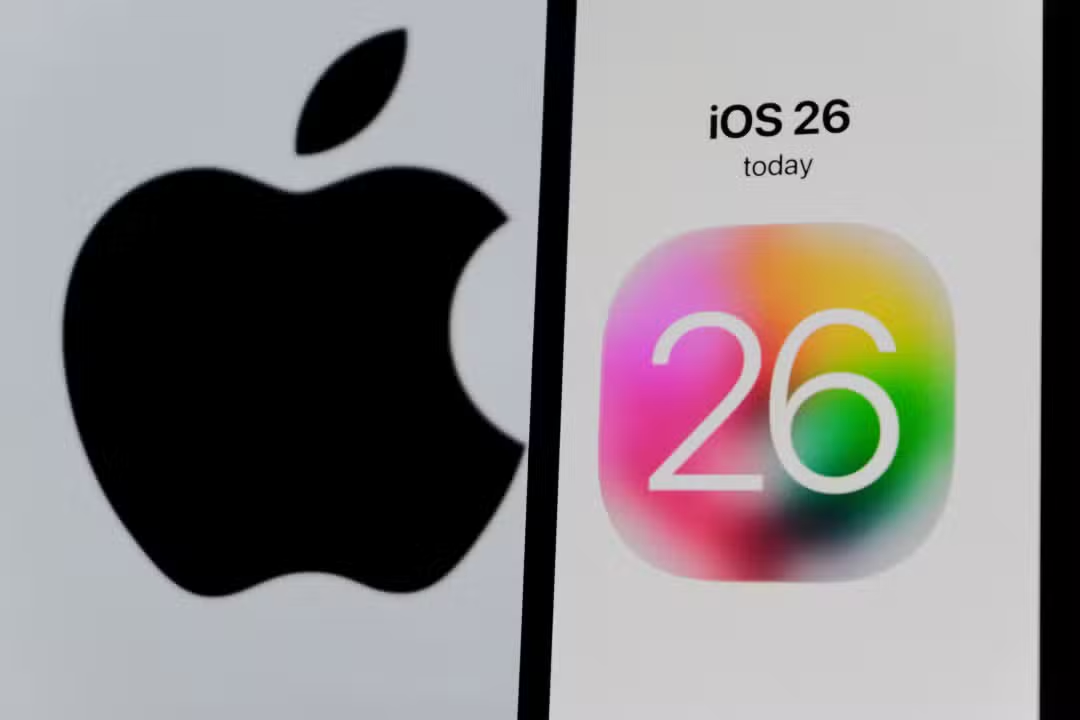
The update to the iOS 26 operating system, made available by Apple in mid-September 2025, reached an adoption rate of just 16% among iPhone owners worldwide by January 2026. Statistical surveys, consolidated by web traffic analysis platforms, indicate that the vast majority of devices continue to operate with previous editions of the software. The current index sets the lowest mark ever documented for a major technology company launch in the same post-launch time frame. The scenario contrasts with the ease of the installation process offered by the manufacturer, which uses direct notifications and wireless downloads to speed up the transition for consumers.
The distancing of consumers in relation to the new software highlights a marked change in the behavior pattern of the brand’s audience. In previous update cycles, systems such as iOS 18 recorded adoption rates above 60% in the same four-month period. Apple has a track record of providing extended support for older iPhone models, allowing millions of devices to simultaneously receive data packets regardless of carrier or geographic location. The main obstacle to the current migration lies in the aesthetic redesign of the interface, which has generated debates about usability.
Características from Liquid Glass interface on iPhone
The new visual standard introduced in iOS 26, commercially named Liquid Glass, represents the most profound graphical change to Apple’s mobile system over the last decade. The design concept replaces solid elements with translucent and fluid surfaces, transforming application icons, command buttons and navigation menus into structures that simulate frosted glass. The development team’s proposal seeks to deliver a user experience with greater immersion and dynamism, adapting the interface colors to the content displayed on the screen background.
The application of Liquid Glass creates a continuous sensation of depth and movement while navigating the device. The manufacturer describes the implementation of the feature as a technical strategy to prioritize the content consumed by the user, with the aim of reducing distractions caused by static visual elements. Desenvolvedores of third-party applications have already started the process of adapting their software to the new aesthetic standard, seeking to maintain the visual consistency required by the guidelines of the official application store.
Apesar of technical innovation, a significant portion of iPhone owners report practical obstacles during everyday smartphone use. Applying the blur effect to icons makes it difficult to quickly identify applications when the wallpaper has very light or excessively dark tones. The interaction buttons, as they have a high degree of transparency, lose the necessary contrast in environments with strong natural lighting, requiring greater visual effort on the part of the consumer to locate the system’s basic commands.
Impactos on accessibility and visual fatigue
Especialistas in usability of digital interfaces point out structural flaws in the contrast of the Liquid Glass design when applied to complex screen backgrounds. Textos information and system icons tend to blend in when they are superimposed on colorful photographs or images with busy geometric patterns. The constant presence of fluid animations in the transitions between screens is also cited as a factor that causes visual fatigue after prolonged periods of using the device.
Consumidores diagnosed with low vision recorded a considerable worsening in the overall smartphone browsing experience. The operating system offers native accessibility settings, such as the option to reduce window transparency, which can alleviate some of the visual effects, but do not completely reverse Liquid Glass’s structural changes. Fóruns technology and online communities accumulate reports of difficulty locating volume controls, brightness and connectivity shortcuts in the control center.
The Apple maintains visual effect intensity adjustment options within the screen display settings menu. However, the default implementation of the translucent design remains automatically activated immediately after the iOS 26 installation is complete. The need to search for specific menus to disable graphic features alienates users less familiar with the system’s advanced tools, contributing to the rejection of the update.



Adoption Comparativo with previous system versions
Apple’s recent history of mobile system upgrades demonstrates substantially higher adoption rates in the first few months of availability. Standard consumer behavior has always involved quickly migrating most compatible devices to the latest version of the software. Consolidated data from past editions highlights the discrepancy in relation to the current iOS 26 scenario.
- The iOS 18 system surpassed the 60% installation mark in four months on the market.
- The iOS 17 version achieved around 70% adoption in the same time frame.
- The iOS 16 suite saw approximately 65% initial installs.
- The iOS 15 edition reached close to 75% at a similar stage of distribution.
The statistical survey for the month of January 2026 proves the absolute dominance of iOS 18 variations in the global market. Aproximadamente 33% of the brand’s smartphones specifically run the iOS 18.7 version, while another 25% of devices remain operating with iOS 18.6. Minor builds and security fixes for iOS 26 add up to percentages that do not exceed 11% of total active devices.
Fatores technicians delaying migration
Resistance to the new design is not the only element that slows down the expansion of iOS 26. The lack of internal storage space prevents the installation process from being completed on older iPhone models. Downloading the update package requires a considerable amount of free memory on the device, which forces many consumers to postpone the procedure to avoid deleting photographs, videos and personal applications.
Fears regarding excessive battery consumption also motivate people to stay on previous versions of the software. Relatos reports about decreased power autonomy on certain models after the transition to iOS 26 have generated caution among owners. Apple typically releases one-off patch updates in the weeks following major releases to stabilize power management, but the preference for legacy system stability prevails.
The update mechanism provided by the manufacturer remains accessible directly from the smartphone’s settings app. The system issues automatic notifications to alert the consumer about the availability of a new security or feature version. Installation occurs completely wirelessly, requiring only a stable internet connection and sufficient battery charge, but the final decision to start the process remains under the user’s control.
Perspectivas market and software adjustments
Profissionais software development teams highlight the technical potential of Liquid Glass for creating more immersive digital experiences in the future. Applications that have already undergone compatibility updates have greater dynamism in screen transitions and touch interactions. Analistas from the technology market assesses that consumers’ initial resistance may gradually decrease as the manufacturer implements fine adjustments to the interface.
Apple has a history of refining controversial visuals through subsequent software updates. The current behavior of iPhone owners indicates the need for broader native graphical customization options. Continuous monitoring of installation data in the coming months will determine whether the company will need to change the OS design route or whether the iOS 26 adoption rate will grow organically with the arrival of new fixes.
Veja Tambem em Latest News (EN)
Future iPhone 18 Pro will integrate translucent back and hidden photographic lens in the display

Epic Games Store consolidates access to 12 completely free big-budget games for computers in 2026
New iPhone 18 Pro brings discreet updates with A20 Pro chip while iPhone Fold gains prominence

New Ebola outbreak in the Democratic Republic of Congo records 65 deaths and mobilizes healthcare

FIFA defines 2026 World Cup calendar with 104 games in the United States, Mexico and Canada

BYD Qin Plus DM-i 2026 hybrid sedan hits the market with a range of more than 2,100 kilometers

Major launches for PlayStation 5 mark the 2026 calendar with exclusive titles
Chinese manufacturer prepares launch of Xiaomi 17 Ultra with Snapdragon 8 Gen 5 and Leica lenses

Czech store code reveals high price of Valve’s new Steam Machine for the year 2026

Accessory specialist Jaos presents off-road modification package for Toyota RAV4 at Tokyo Auto Salon 2026

Automaker starts sales of the 2026 Jeep Grand Wagoneer with Hurricane engine and new illuminated grille