
James Webb Space Observatory Reveals Gases on Giant Exoplanet TOI-199b with Moderate Climate

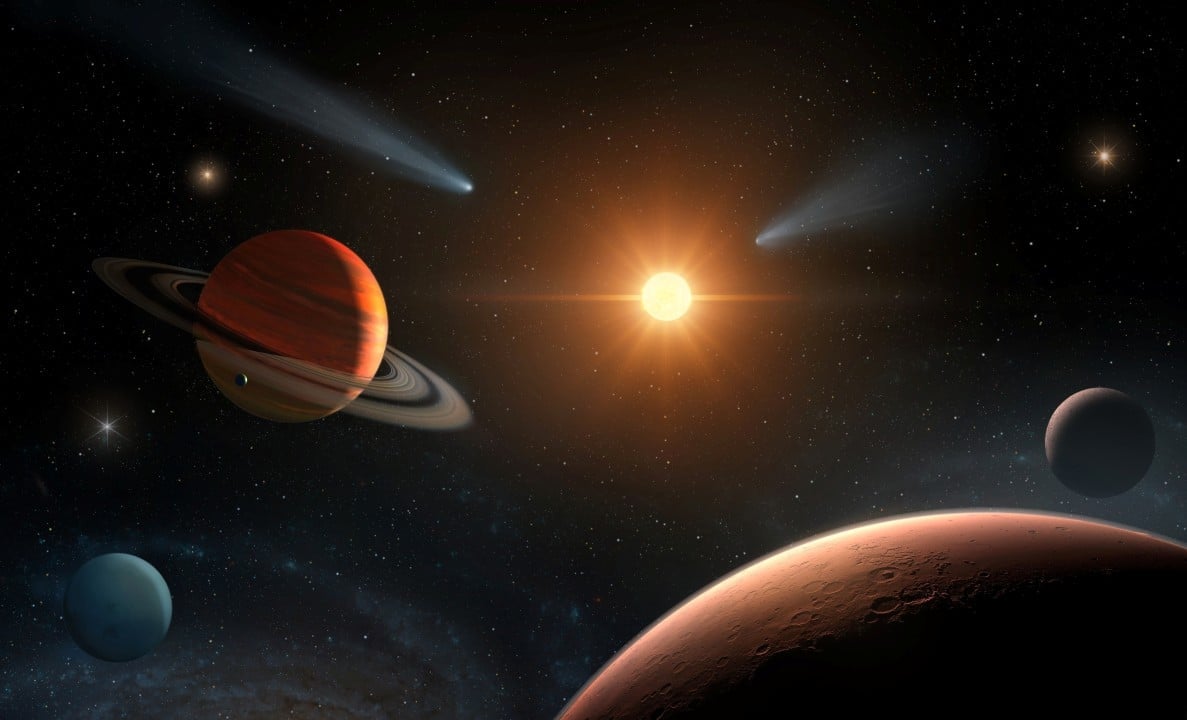
Telescópio Espacial James Webb recorded an unprecedented milestone in astronomical exploration by identifying the atmosphere of a gas giant planet with moderate thermal characteristics. The celestial body, officially cataloged as TOI-199b, is positioned at a distance of more than 330 light years from our solar system. The surface of the star has an average temperature of 79 degrees Celsius. Essa climatic condition represents an absolute rarity among the exoplanets cataloged to date by researchers from international agencies.
The investigative work was led by experts from Universidade Estadual from Pensilvânia together with Laboratório from Propulsão to Jato (JPL) from the North American space agency NASA. Astronomers applied the transmission spectroscopy technique to examine the gaseous structure of the star. Information collection occurred over a continuous seven-hour period. The procedure was carried out exactly when the planet was transiting in front of its host star, partially blocking the emission of light.
Análise detailed chemical and molecular composition
The equipment’s high-sensitivity infrared sensors unequivocally detected the presence of methane in the atmospheric layer of TOI-199b. Spectral mapping was not limited to this specific molecule. The data processed by the ground teams also showed substantial traces of ammonia and carbon dioxide in the composition of the planetary air. Trata is the first occasion in the history of astronomy in which scientists have managed to scrutinize the components of a gas giant with a temperate climate. The technical feat inaugurates a promising aspect for modern astrophysics and the mapping of distant systems.
The information captured validates the accuracy of cosmological theories formulated in recent decades about the formation of stellar systems. Spectroscopic reading made it possible to identify complex chemical elements without requiring any physical proximity to the celestial body. The method exclusively uses the filtering of starlight that passes through the edge of the planetary atmosphere during orbital rotation. Pesquisadores can decode the visual signatures left by each specific gas. Cross-referencing this data generates a highly detailed chemical profile of the alien environment, eliminating the uncertainties of old mathematical models.
Thermal Contraste relative to other gas giants
The orbital dynamics of TOI-199b establishes that the star completes one full revolution around its central star every 100 Earth days. The 79-degree thermal record Celsius may seem inhospitable to human biology, but it represents an oasis of moderation in the exoplanet universe. Especialistas compare this thermal sensation to the internal environment of a vehicle with the windows closed under the intense summer sun in Terra. The stability of this temperature allows the maintenance of chemical compounds that would be immediately destroyed in more aggressive radiation scenarios.
The planet’s mild profile contrasts drastically with the pattern documented in the vast majority of gas giants ever discovered. The scientific community usually classifies these massive stars into two extreme temperature categories. A significant portion exhibit permanently frozen surfaces due to the colossal distance from their stars. The other group, popularly known as hot Júpiteres, orbits so close to their heat sources that thermometers easily surpass the 1,000-degree Celsius mark. TOI-199b breaks this thermal dichotomy with its intermediate and peculiar climatic nature.
Metodologia observation during orbital transit
The success of the scientific endeavor directly depended on the rigorous application of transmission spectroscopy by the observatory operators. The technique works by capturing and fragmenting the light emitted by the host star as it crosses the exoplanet’s gas layer. The space equipment captured the light beams and divided them into multiple wavelengths. Chromatic separation allowed analysis software on the ground to identify gaps in light absorbed by specific chemical elements present in the orbit.
The accuracy of the astronomical survey was based on physical and operational parameters well defined by the space mission control teams:
- Planeta investigated and catalogued: TOI-199b
- Distância in relation to the planet Terra: more than 330 light years
- Tempo required to complete orbital period: approximately 100 days
- Temperatura average recorded on the surface: about 79 degrees Celsius
- Elementos of detected atmospheric composition: methane, ammonia and carbon dioxide
- Instrumento technology used in capture: Telescópio Espacial James Webb (JWST)
The seven-hour observation window during the planetary transit guaranteed the time necessary to consolidate a very high-resolution database. The prolonged exposure of the sensors drastically reduced the margin of error in identifying the molecules. The volume of information collected exceeded the initial expectations of the project coordinators, providing study material for several simultaneous astronomical research fronts.
Scientific Impacto for the study of planetary evolution
The collection of data generated by this observation promises to rewrite important chapters on the evolution of celestial bodies in the universe. Associate professor Hu Renyu, responsible for leading the research team, says that decoding the structure of temperate planets like TOI-199b will result in qualitative leaps for astrophysics. A detailed understanding of this specific environment will provide the necessary basis for improving atmospheric models currently used by the world’s largest space laboratories.
Refining computer simulations will give scientists deeper insight into the mechanisms of formation and degradation of planetary atmospheres over billions of years. The new theoretical models will not be restricted to the study of distant worlds located outside our cosmic neighborhood. The discoveries will help in understanding meteorological and chemical phenomena that occur in Terra itself. The knowledge acquired will also be applied to the analysis of other celestial bodies present in the solar system, expanding the scope of planetary science.
Avanços technological technologies driven by the space observatory
The cataloging of gases on the exoplanet consolidates a historic milestone in the field of contemporary observational astronomy. Mapping the chemical composition of atmospheres belonging to worlds located hundreds of light years away represented an almost insurmountable technological barrier until the last decade. Previous generation telescopes lacked the sensitivity needed to filter out light interference and isolate molecular signatures clearly. The research scenario changed radically with the entry into operation of new in-orbit capture systems.
Telescópio Espacial James Webb transformed the complexity of this analysis into a viable and highly accurate procedure for engineering and astronomy teams. The equipment’s unique ability to record infrared radiation with unprecedented resolution has opened a new frontier for exploring the cosmos. The technology on board at the observatory can penetrate dense clouds of cosmic dust and reveal structural details that remained completely hidden to traditional optical instruments. The successful assessment of TOI-199b establishes a new standard of excellence for exoplanet reconnaissance missions in habitable or temperate zones.





