
New Mortal Kombat movies change characters and rules; compare the 10 biggest changes

The imminent arrival of Mortal Kombat II is reviving a debate among fans of the film franchise. Intense Comparações are made between the new phase of films and the classic productions of the 1990s, highlighting different approaches.
Embora both versions seek to adapt the well-known universe of NetherRealm games, contemporary productions follow different trajectories in terms of characters, representation of violence, narrative construction and the tournament rules themselves. Old feature films, starting with *Mortal Kombat* (1995), were crucial in popularizing video game adaptations in Hollywood, while the 2021 *reboot* prioritized a darker, more brutal line and aligned with modern gaming elements.
Adaptações of iconic characters
The interpretation of Goro, one of the most iconic characters in the series, underwent notable changes between the two cinematic eras. Nos films of the 90s, the warrior Shokan was portrayed as an almost invincible threat, demonstrating a history of winning the Mortal Kombat tournament. Sua’s imposing presence set a high level of challenge for Terra’s heroes.
In *Mortal Kombat* (1995), Goro faced and defeated several fighters before being defeated by Johnny Cage. Cage’s victory was achieved through strategy and intelligence rather than direct brute force. Contudo, in the 2021 version, Goro was defeated by Cole Young, a character created specifically for the cinema. Essa’s move generated a great deal of repercussion among fans, many of whom questioned the decrease in Shokan’s power and importance. The fight against Cole Young failed to capture the same level of threat and grandeur associated with Goro in the original games.
Reptile, another notable fighter from the franchise, also underwent a significant visual and conceptual overhaul. In the 1995 film, he initially appears as an invisible creature with reptilian features, later revealing a humanoid form during the confrontation with Liu Kang. Esse’s look mimicked the games’ iconic green ninja, known for his agility and deadly combat techniques.
Já in the 2021 *reboot*, Reptile remains closer to a monstrous and purely reptilian creature, using its invisibility and savage attacks. The battle against him highlights one of the most explicit and violent *fatalities* in the new franchise, in line with the brutality proposal of the recent version. Shang Tsung, the main sorcerer, also had a complete profile change. Cary-Hiroyuki Tagawa’s performance in *Mortal Kombat* (1995) immortalized the villain with his mix of elegance, mastery in martial arts and physical intimidation. Nos current films, Chin Han plays an Shang Tsung who favors manipulation, magic and strategy, with less focus on direct hand-to-hand combat.
Mudanças narratives and plot impact
One of the most evident distinctions between generations of films lies in the question of the permanence of death. Nos long classics, the characters’ deaths carried a definitive weight, with irreversible consequences for the plot. An impactful example was the elimination of Johnny Cage by Shao Kahn at the beginning of *Mortal Kombat: A Aniquilação*, an event that established a dramatic tone for the rest of the plot.
In the new cinematic timeline, however, the concept of death has become more fluid. Personagens return more frequently, reflecting a narrative logic closer to the games, which are known for their multiple timelines and the ability to resurrect different combatants. Essa approach allows for greater flexibility for developing arcs and including characters that might otherwise be absent.
- Kano, for example, reappears after his apparent death in the 2021 film.
- Kung Lao also returns in a distinct form, expanding the presence of supernatural elements in the narrative.
- Essa’s malleability opens doors to explore different facets of characters and their interactions in a universe with more dynamic rules.
The main innovation of the *reboot* was the inclusion of Cole Young, an unprecedented protagonist developed exclusively for modern films. Enquanto films from the 90s established Liu Kang as the central hero, the 2021 production chose to follow the journey of Cole and his gradual discovery of the universe of Mortal Kombat. Essa’s decision divided fans’ opinions, generating debates about the relevance of a new character to the detriment of the protagonism of classic figures from the franchise. However, the choice sought to offer a new perspective for introducing the complex world of Outworld and his warriors.
Reformulações of powers and divine presence
The nature of fighter abilities has also received a major overhaul. The classic films presented Terra combatants with relatively more restrained powers and physical abilities that came closer to a possible reality. The fights focused on technique, martial arts and strategies that, although fantastic, maintained a link with what would be considered “down to earth” within the fictional universe.
In contrast, the *reboots* introduced the concept of “Arcana”, a hidden power that resides within combatants and is responsible for awakening their special abilities. Essa new mechanics completely changed the dynamics of the characters, as in the case of Jax, whose metallic arms now evolve through this power system. The Arcana allows for a more in-depth exploration of supernatural abilities, justifying the manifestation of powers that are more consistent with modern versions of the games, where magic and superhuman capabilities are intrinsic elements.
Os Deuses Anciões, or Elder Gods, had a significantly reduced role in the new franchise. In *Mortal Kombat: Aniquilação*, these divine entities appear briefly and act directly in the confrontation between Liu Kang and Shao Kahn, influencing the outcome of the battle. Sua’s presence was tangible and had great narrative impact, representing a superior force that intervened in mortal affairs.
Nos In more recent films, Deuses Anciões are only mentioned in dialogue, without visual representation or direct intervention. For example, Shang Tsung is heard stating to Mileena, “Leave the Deuses Anciões to me,” indicating that the responsibility or challenge of dealing with them falls to the sorcerer. Até At the moment, new productions have not yet chosen to visually show these entities, keeping them as a more abstract and distant force in the plot.
Violência and age rating in productions
The biggest distinction between the film versions of Mortal Kombat perhaps lies in the representation of violence. Films from the 1990s were released with a PG-13 rating, which placed significant limitations on the level of graphic brutality that could be displayed on screen. Essa classification required moderation in combat scenes and submissions, seeking to reach a wider audience without shocking excessively. The fights, although intense, avoided the gore and graphic mutilation present in the games.
The *reboots*, on the other hand, adopted a +18 rating, allowing the reproduction of *fatalities* directly inspired by the games. Essa change brought the film adaptations closer to the original identity of the franchise in video games, which is notoriously known for its extremely violent combats and graphic endings. Entre the most discussed scenes is the moment in which Kung Lao cuts Nitara in half using his spinning hat, in addition to several other explicit executions presented throughout the 2021 films. Essa’s cruder approach and faithful to the original source pleased a significant portion of fans.
Desfechos and arc deepening
The fates of central characters like Liu Kang and Shao Kahn were handled differently in the different adaptations. Nos 90s, Liu Kang emerges as the hero who defeats Shao Kahn in a grand battle. The confrontation is marked by monstrous transformations and visual effects characteristic of the time, culminating in a clear victory for the Terra champion. Esse’s ending brought a sense of conclusion to the character’s journey and the main conflict.
In *Mortal Kombat II* of the new franchise, the result of the confrontation between Liu Kang and Shao Kahn is less conclusive. Liu Kang mysteriously disappears during the fight, which leads Kitana to take over part of the fight. Essa situation leaves the fate of Liu Kang and the resolution of the clash against Shao Kahn open, creating a hook for future continuations and allowing the narrative to explore different paths for these iconic characters.
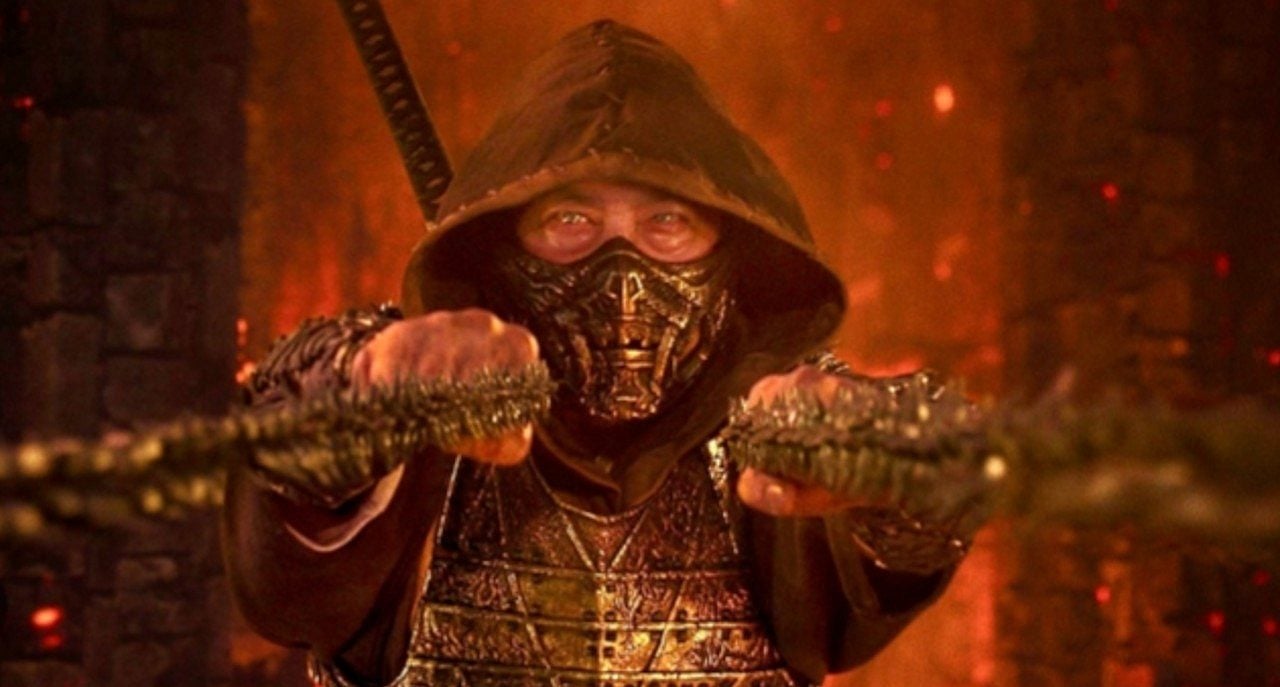
Scorpion, one of the most popular characters in the franchise, received significant dramatic development in the *reboot*. In classic Nos films, Scorpion was primarily portrayed as a subordinate warrior of Shang Tsung, with a more secondary role in the plot. Sua’s motivation and backstory were less explored, and he functioned more as a tool for the main villain.
Nos In more recent films, Hanzo Hasashi, Scorpion’s human identity, has been given a much more elaborate dramatic construction. Sua story of revenge, family tragedy and the complexities of his personal arc gained prominence, bringing the character closer to modern versions of the games, where he is a central figure with a rich trajectory. Hiroyuki Sanada’s interpretation of Hanzo Hasashi was widely praised, becoming one of the most well-received elements of the new adaptation for its intensity and emotional depth.





