
Scientists confirm a slowdown in the Earth’s rotation at an unprecedented rate in the last 3.6 million years

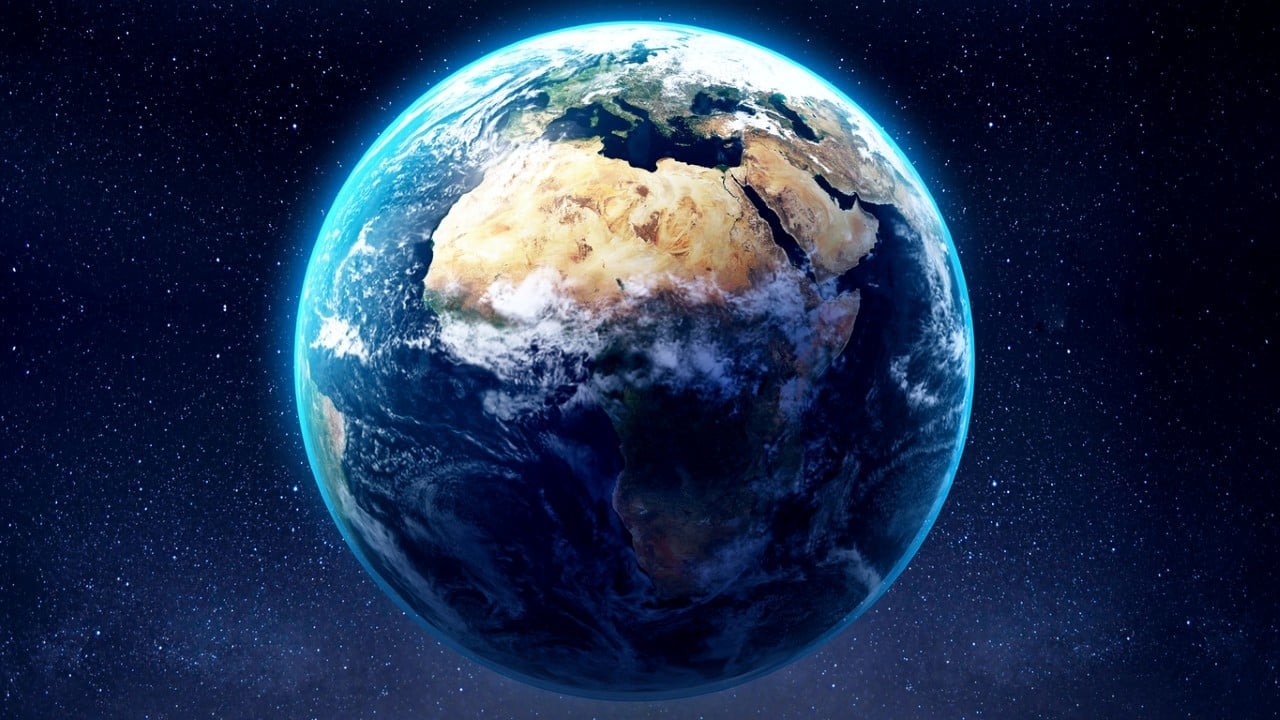
Cientistas recorded a slowdown in Terra’s rotation that reached an unprecedented pace. Este phenomenon, according to analyses, had not been observed for at least 3.6 million years. The discovery emerges from an in-depth investigation into the dynamics of our planet, indicating significant changes in its rotational movement.
The research was led by experts from Universidade of Viena, Áustria, and Instituto Federal Suíço of Tecnologia and Zurique. Eles have employed an innovative methodology to unravel the complexities of Earth’s rotation over vast geological time periods. The study offers a new perspective on the interaction between climate processes and planetary mechanics.
Nova analysis reveals record slowdown
A slowdown in Terra’s rotation has been documented at a rate not seen in the last 3.6 million years. Este data was determined by an international team of scientists after meticulous analysis. The magnitude of the change raises important questions about the factors that influence the movement of our planet.
The research results highlight the importance of monitoring variations in rotational speed. Tais changes could have implications for several Earth systems. Understanding these processes is fundamental to planetary science.
Metodologia with fossilized shells details study
Scientists at Universidade of Viena and Instituto Federal Suíço of Tecnologia at Zurique used fossilized shells to carry out this investigation. Esses small single-celled marine organisms, which inhabited the ocean floor, have proven to be valuable sources of paleoclimate data. Analysis of their structures allowed accurate environmental reconstructions.
Através From studying these shells, the team was able to calculate sea level fluctuations over millions of years. Essas fluctuations, in turn, are a direct indicator of changes in the rotation rate of the Terra. The link between geological records and rotational dynamics provided the crucial data for the discovery. The methodology allowed for a detailed retrospective view.
Consequências from melting polar ice caps
The slowdown in Earth’s rotation is mainly attributed to the melting of polar ice caps. Este phenomenon, intensified by global climate change, is a significant driver of change. The volume of water coming from glaciers is contributing to a redistribution of mass on a planetary scale.
Essa Mass redistribution has a direct effect on the planet’s rotational speed. Quando the vast ice sheets melt, water flows into the oceans. Consequentemente, the mass of water is more concentrated near the equator. Essa change in mass distribution directly influences the moment of inertia of the Terra.
Impacto of water redistribution in Earth rotation
The concentration of more water in the equatorial regions of Terra acts as a natural brake for the planet’s rotation. Analogous to a skater opening his arms to slow down a spin, the planet experiences a reduction in its rotational speed. The additional mass away from the axis of rotation increases the moment of inertia.
Essa dynamics is a fundamental physical principle known as conservation of angular momentum. The redistribution of mass away from the center of rotation requires a decrease in angular velocity to keep the total angular momentum constant. Dessa form, scientists have elucidated the mechanism behind the observed slowdown.
- Factors that influence the rotation speed of the Terra include:
- Derretimento of the polar ice caps.
- Redistribuição of water masses towards the equator.
- Flutuações of sea level over geological eras.
- Mudanças global climate.
- Variações at the planet’s moment of inertia.
Scientists have determined that Terra’s rotation has not slowed at such a rapid rate in the last 3.6 million years. The finding highlights the importance of understanding the impacts of human activities on the environment and, by extension, on the planet’s geophysics. Research continues to deepen knowledge about the complex interaction between climate and Terra.





