
Xiaomi reveals financial results and presents new electric cars at Shenzhen event


Xiaomi strengthens the business strategy on two main fronts in the Asian and global markets. The technology company schedules the release of its first quarter financial results for May 26th. Then, on May 29, the manufacturer displays the complete line of electric vehicles during Salão of Automóvel of Shenzhen. The financial market follows the company’s movements to assess its ability to maintain continued growth in the home appliances, smartphones and electric mobility sectors.
Consolidated data for fiscal year 2025 shows a complex financial picture for the corporation. Main operating profit reached 4.16 billion renminbi, a figure that represents almost double that recorded in the previous year. Apesar’s significant growth in overall amount, the smartphone division faces profound pressure on profit margins. The profitability index for mobile devices recorded a drop from 12.6% to 10.9% in the period. The company’s management is carrying out a restructuring to cut government subsidies and absorb the rise in the cost of electronic components in the global market.
Desafios operational and pressure on profit margins
The drop in mobile phone revenue represents the biggest immediate hurdle. Xiaomi competes for the market directly with Apple and Samsung. The manufacturer adopts an aggressive pricing policy. Maintaining profitability in this environment requires high negotiating power to purchase parts on a large scale and strict control of the supply chain. The company needs to use production capacity to the maximum limit. Vender new generation devices without reducing prices poses a commercial challenge.
The ongoing shortage of semiconductors affects the manufacturer’s supply chain planning. Long-term supply contracts undergo frequent reviews due to currency fluctuations and increased logistics costs. Xiaomi diversifies the supplier base in Ásia to mitigate the risks of factory downtime. Entering the electric vehicle sector requires an even greater capital injection than traditional electronics operations. The development of automotive research and manufacturing consumes financial resources at a rapid pace. The company needs to spend billions of dollars to structure the assembly line before delivering the first car to the end consumer.
The integration of personal technology and mobility operations undergoes rigorous assessments by the management board. The board seeks to prevent financing of the automotive sector from compromising the long-term financial health of the business group. The transition to the engine industry requires a massive amount of working capital. The development of electric vehicles consumes billions of dollars annually in research and safety testing.
Expectativas of the market and the company’s liquidity position
Financial analysts prepare specific questions for the first quarter earnings conference. The market demands transparency about the company’s resource allocation. The board of directors needs to detail the expansion plans planned for the coming months. Key points of attention for investors include:
- Estrutura of detailed costs by company segment.
- Capacidade production of the two main expansion fronts.
- Composição sales among smartphones, connected devices and electric vehicles.
- Projeção of operating profits for the fourth quarter of the year.
- Previsão of investments directed to the electric mobility division.
Xiaomi’s capital reserves serve as a strategic buffer against fluctuations in the automotive and technology markets. The balance sheet ended December 31, 2025 recorded net available resources of around 232.6 billion renminbi. The company also recorded immediate conversion assets equivalent to 26.9 billion dollars. The holding structure preserves operational flexibility. The manufacturer increases its capacity to absorb possible delays in the sales schedule. Production costs exceeded initial estimates. The scenario forced the search for financing with higher interest rates in the credit market.
The volume of capital available does not eliminate the need for strict control over ongoing projects. Simultaneously executing initiatives in artificial intelligence, new smartphones and electric vehicles requires efficient cost management. The strength of competition in China’s internal market forces the company to justify each investment made. The distribution of capital undergoes internal audits to prevent the depletion of the corporation’s financial reserves.
Concorrência on Salão of Shenzhen and new electric vehicles
Salão of Automóvel of Shenzhen exposes Xiaomi to an extremely competitive environment in the automotive sector. The event brings together more than 100 electric vehicle brands in a single exhibition space. The pavilions feature around 1,300 car models for the public and investors. The fair highlights products with a high level of technology and advanced design. Automaker NIO displays the premium ES9 model during the event. The Onvo brand plans to start pre-sales of the L60 vehicle. BYD introduces the new line of high-performance cars under the Yangwang luxury division. The new competitors face the consolidated base of traditional automakers that already operate at China.
Chinese electric vehicle consumers demand a high level of software integration in cars. The combination of Xiaomi’s operating system and the brand’s smart devices defines the purchasing decision of many customers. The company uses its own system to create a fluid transition between the smartphone screen and the car’s instrument panel. Seamless connectivity acts as the technology maker’s main selling point against conventional vehicle manufacturers.
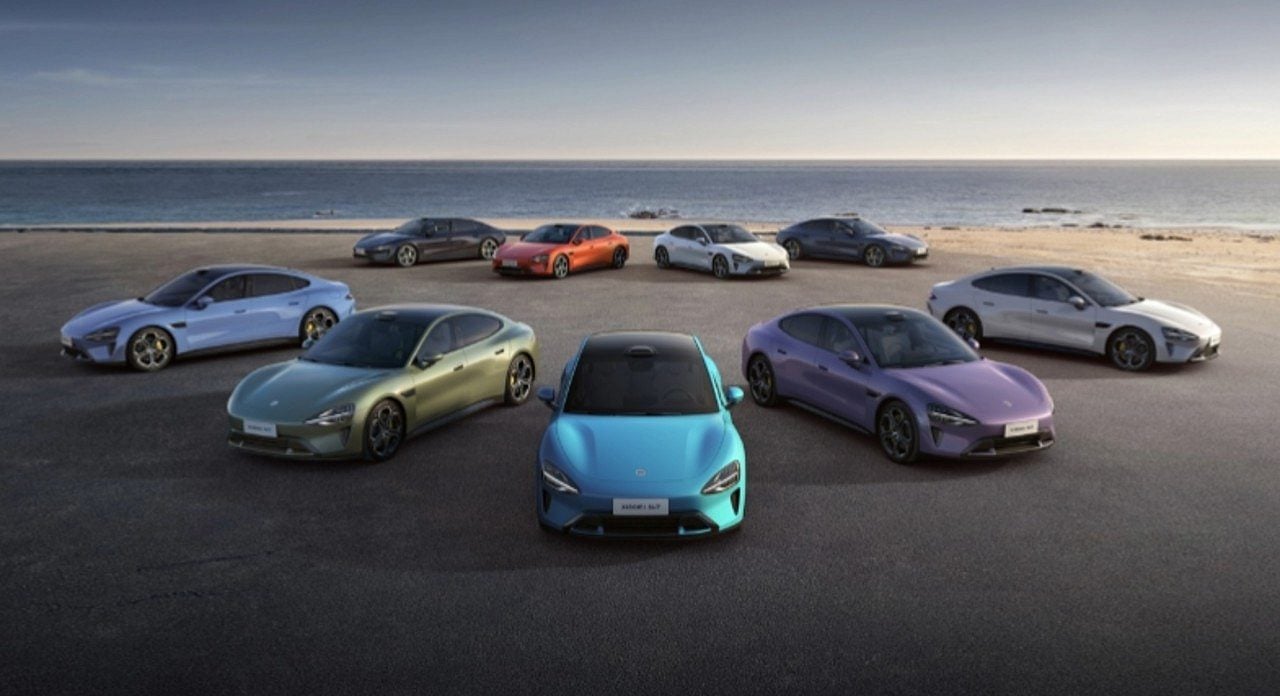
Xiaomi’s commercial strategy rules out the sale of a single model and focuses on offering a complete family of vehicles. The SU7 series enters the market with the base version and is reinforced by the SU7 Ultra edition, aimed at high performance. The introduction of the YU7 series expands the brand’s portfolio into the SUV segment. The YU7 GT model leads the company’s SUV category. The use of modular platforms shared between different models reduces manufacturing costs. The success of this format depends on perfect execution on the assembly line and the construction of an efficient sales network.
Operações financial and regulatory compliance
The behavior of the company’s shares reflects the caution of institutional investors in the financial market. The company’s shares operate in the range of 3.32 euros on international stock exchanges. The value represents a 50% drop compared to the maximum price of 6.69 euros recorded in the last 52 weeks. The accumulated decline since the beginning of the year exceeds the 25% mark. Índice of Força Relativa points to 75.8. The number configures a technical state of oversold assets. Indicators show a possibility of recovery from the lows noted in April, but fundamental uncertainty about cash flow remains on shareholders’ radar.
The commercialization of electric vehicles and connected devices faces complex legal requirements at China and abroad. Regulatory agencies in several countries are debating the implementation of strict cybersecurity standards for automobiles. Performing remote software updates requires high-level encryption protocols. Artificial intelligence-based driving support systems need to prove extreme reliability in practical tests. Legislation on the collection and processing of telemetry data directly affects the design of electronic components.
Traffic authorities monitor the performance of sensors and high-resolution cameras used in autonomous driving systems. Falhas in data processing or the need for recalls generate incalculable losses for car manufacturers. The company’s server infrastructure needs to manage terabytes of daily telemetry data to improve navigation algorithms.
Companies that operate commercial fleets evaluate vehicles based on their ability to meet transportation industry regulatory requirements. The cybersecurity assessment carries the same weight as the analysis of profit margins at the time of purchase. Xiaomi needs to demonstrate that the certification processes for electric cars have the same rigor applied to the production of smartphones. Reducing the cost per vehicle manufactured remains the most important performance indicator for management. The company’s financial stability in the coming months depends on the precise execution of these industrial goals.





