

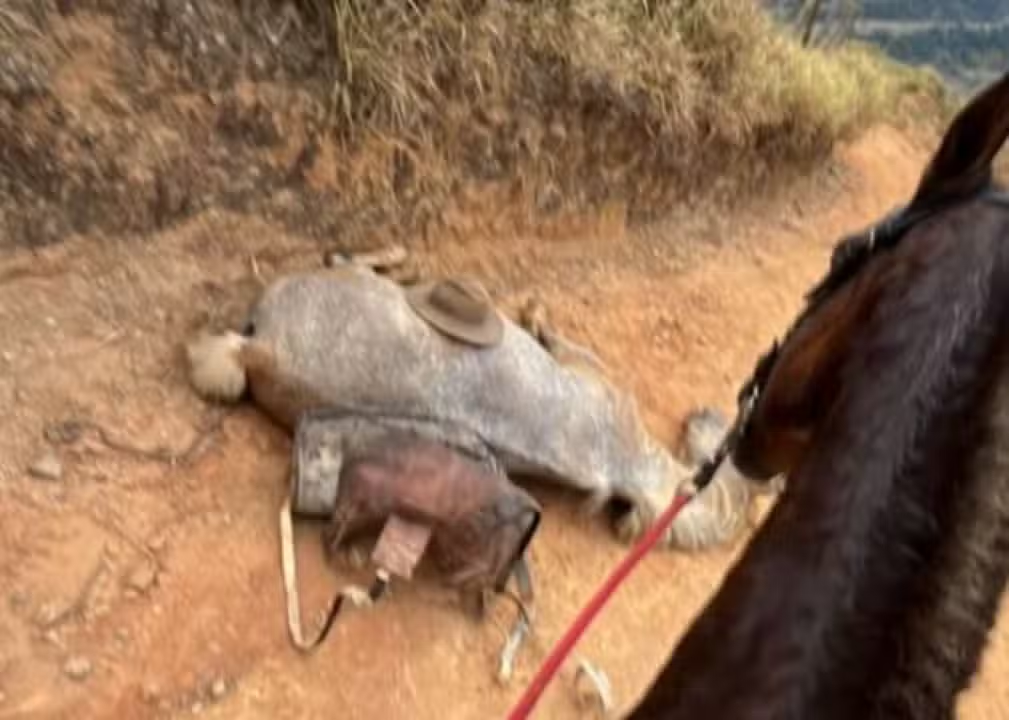
A white horse was found with four legs severed and its abdomen punctured on a dirt road in the municipality of Bananal, in the interior of the state of São Paulo. The incident occurred on the afternoon of August 18, 2025, shortly after a horse ride in the region. Polícia Civil and Polícia Ambiental took over the case to determine who was responsible for the attacks using a machete. The animal’s owner is the main suspect in the action. Imagens of the horse quickly circulated on the internet and mobilized public security authorities across the country.
The incident was recorded in the location known as Sertão of Hortelã, a rural area that borders the municipality of Rio Claro, in the state of Rio of Janeiro. Testemunhas reported that the animal was participating in the route when it showed signs of physical exhaustion when trying to climb a steep section of the road. Logo then the horse collapsed to the ground. Vídeos recorded by people passing by show a man riding another horse, carrying a bottle of alcohol and a machete tied to his waist, close to the point where the body of the mutilated animal was left near a ravine.

Investigação from Polícia Civil and Ambiental
Delegate Bruno Lima publicly confirmed that the security teams were able to identify the individual named by the witnesses. The man was taken to the Bananal police station to give a formal statement about the events of that afternoon. The agents seek to understand the exact dynamics of the facts and verify whether the animal was already lifeless at the time it suffered cuts to its paws and abdomen. Polícia Ambiental also works to collect evidence at the disposal site to attach to the investigative process.
The authorities analyze the audiovisual material collected to form the police investigation. Brazilian legislation provides for strict sanctions for crimes involving cruelty against animals, and the person responsible may be liable for criminal and administrative infractions, in addition to disturbing public order. The investigation will determine whether there was prior negligence during the ride route. Experts assess the physical condition of the horse before participating in the event in the interior of São Paulo.

The gravity of the act mobilized different spheres of local public power. Polícia Ambiental reported that it is investigating the possibility that other animals may have suffered mistreatment during the same ride on Sertão as Hortelã. Collecting statements from other participants in the rural event is one of the corporation’s priorities to establish the timeline from the departure of the delegation to the moment the white horse fell onto the dirt road.
National Repercussão and Ana Castela action
The singer Ana Castela used her official profile on Instagram to expose the situation to her millions of followers. The artist published records of the animal on the road and requested that the authorities take immediate action against the person responsible for the cuts. In the publication, she tagged delegate Bruno Lima and activist Luísa Mell, with the aim of increasing the visibility of the incident. The digital mobilization generated the creation of campaigns for punishment on social media and raised the case to a level of national discussion.
Ana Castela has a direct connection with the equestrian universe. The singer lives on a farm in the city of Londrina, in Paraná, where she keeps and takes care of her own horse, called Blake. Familiarity with the handling of large animals motivated the artist to classify the person responsible for the mutilation as a coward on her social networks. The public figure’s engagement put pressure on authorities to issue quick responses on the progress of investigations into Bananal.
Diversas pages focused on animal protection and regional media outlets, such as Aço’s Folha newspaper, began covering the developments of the investigation. Moradores from Bananal and neighboring cities, like Barra Mansa, organized debates in virtual groups to demand responses from public authorities. Popular pressure accelerated the process of identifying the suspect by the police forces of the state of São Paulo, resulting in the individual being taken to provide formal clarification.
Posicionamento family and Prefeitura Bananal
The suspect’s mother published a statement on the internet to present the family’s version of what happened at Sertão’s Hortelã. According to the report, the horse suffered a sudden illness during the journey and died on the spot. The woman stated that her son went into shock over the loss of the horse and used the machete to cut off the animal’s legs with the intention of facilitating the removal of the carcass from the public road. The justification generated even more outrage among internet users.
The explanation presented by the family member did not end demands from the population and non-governmental organizations. Especialistas pointed out that the procedure adopted does not follow any appropriate sanitary or veterinary protocol for the disposal of large animals. Moradores from the rural region argued that the extreme attitude does not match the standard behavior of breeders in situations of loss of an animal during work or leisure.
In parallel, Prefeitura of Bananal released an official note to repudiate the action registered in the rural area. The municipal administration reported that it offers full support to investigations conducted by the Civil and Ambiental police. The case shook the routine of the small town, which is historically recognized for its tranquility and the strong preservation of rural traditions in the interior of São Paulo.
Regras and inspection at rural events
The episode raised questions about the structure offered to animals during the traditional horse rides carried out in the Vale region of Paraíba. The absence of specific municipal regulations for monitoring the health of horses during long journeys became the main focus of discussions among activists. The lack of qualified professionals to certify the physical capacity of horses before departures is a constant risk factor in these encounters.
Organizações of animal protection have drawn up a series of demands that must be presented to organizers of rural events in the coming months. The proposals aim to guarantee the physical integrity of the animals and avoid new episodes of exhaustion. Key suggested measures include:
- Presença mandatory presence of veterinarians throughout the event route.
- Instalação of hydration and rest points at regular intervals along the route.
- Proibição from the participation of animals that show signs of fatigue or previous injuries.
- Fiscalização strict control by environmental agencies before releasing the permit.
Polícia Ambiental confirmed that it plans to intensify inspections of other rides scheduled to take place inside São Paulo. The objective of preventive operations is to verify compliance with basic animal welfare standards and to prosecute owners who subject horses to excessive effort. The investigation into Bananal’s case remains ongoing, and Ministério Público should receive the final report in the coming weeks to decide whether to offer a formal complaint to Justiça.