
James Webb unveils extreme climate on planet 280 light years away: days forge iron, winds reach 8,000 km/h

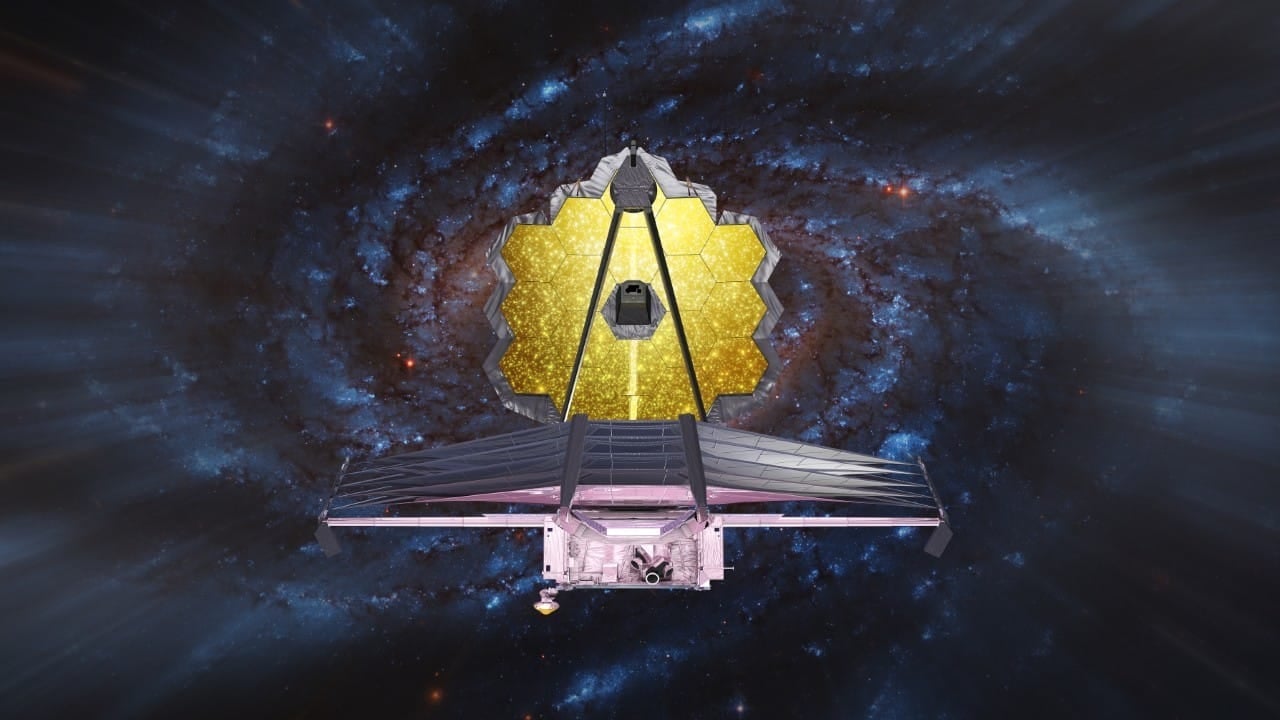
Telescópio Espacial James Webb (JWST) has revealed unprecedented details about the climate of WASP-43 b, a gas giant located 280 light-years from Terra. Este exoplanet has an atmosphere with extreme temperatures, dense clouds on the night side and equatorial winds that reach around 8,000 km/h. The discovery marks a significant advance in the study of atmospheres outside Sistema Solar.
The detailed observations allowed scientists to map the climate conditions of this distant world, which has similar dimensions to Júpiter. WASP-43 b orbits its star at a much closer distance than Mercúrio to Sol, completing one revolution in just 19.5 hours. Essa proximity results in a drastic split between their day and night hemispheres.
Divisão extreme between permanent day and night
WASP-43 b is classified as a “hot Jupiter”, a type of large gaseous exoplanet that experiences intense heat due to its extremely close orbit to its star. The most notable condition of this system is synchronized rotation. The planet always maintains the same face facing the star, resulting in one side permanently illuminated and one side in constant darkness, without the regular alternation of day and night seen in Terra.
The temperature difference between the two hemispheres is notable. The day side, permanently exposed to direct stellar radiation, reaches approximately 1,250°C. Esta temperature is high enough to heat iron to the point of forging. In contrast, the night hemisphere, always in shadow, records temperatures around 600°C.
Essa climate asymmetry is crucial to understanding the planet’s atmospheric behavior. The dayside appears relatively bright in infrared measurements taken by James Webb, reflecting the intense radiation it receives. NASA has released analyzes that reinforce how this thermal splitting shapes WASP-43 b’s atmospheric dynamics.
Telescópio James Webb used infrared light for measurements
Measurements were made with the James Webb’s MIRI instrument (Mid-Infrared Instrument), which captures light in the mid-infrared range. Este instrument allowed researchers to estimate temperatures, the extent of cloud cover, the presence of water vapor and atmospheric circulation. The data was obtained from variations in the system’s brightness as the planet completed its orbit.
The telescope did not produce a direct image of WASP-43 b. The planet’s great distance, its small size compared to its host star, and the proximity of its stellar brightness make direct observation challenging. Therefore, indirect observation methods were used to decipher its atmospheric characteristics.
The analysis was based on the infrared light emitted by the system during the planet’s orbit. Diferentes parts of WASP-43 b turned toward James Webb, producing measurable variations in the total observed brightness. Quando the hottest side of the planet was visible, the overall brightness increased. Quando the night hemisphere predominated in the observation field, infrared emission decreased. Essa technique made it possible to compare the characteristics of each region.
The observations covered wavelengths between 5 and 12 microns, a range highly sensitive to the heat emitted by hot objects. The telescope followed more than one complete orbit of WASP-43 b to build a rough map of the temperature distribution in its surroundings.
- Detecção heat:Hotter Corpos emit more infrared radiation.
- Brightness Variações:Mudanças subtle infrared emission indicated regions of heat, cloud blocking, and circulation patterns.
- Mapeamento thermal:Acompanhamento from multiple orbits to create a temperature map.
- Instrumento MIRI:Essencial for observations in mid-infrared light.
Nuvens dense and supersonic winds of 8,000 km/h
In WASP-43 b’s nighttime hemisphere, James Webb data indicates a darker region in the infrared. Essa characteristic is associated with the presence of a high and thick layer of clouds that interferes with the thermal emission observed by the telescope. Mesmo without direct starlight, the night face does not cool down completely. Very fast Ventos transport heat from the illuminated region, redistributing part of the energy around the planet.
Essa global circulation is vital to the exoplanet’s atmosphere. Ela mixes gases and connects the two hemispheres, which, according to the atmospheric models used in the study, prevents the day side and night side from evolving in complete isolation. Clouds on the night side are a key element identified in the study to explain the difference in brightness between the hemispheres, as the atmospheric cover blocks thermal radiation from the lower layers.
The analysis shows that this high and dense layer prevents part of the thermal radiation from the lower atmosphere from reaching the telescope. Isso makes the night region appear cooler and darker in infrared measurements. In the daytime hemisphere, the atmosphere appears clearer and does not exhibit the same blockage by thick clouds, confirming the climatic asymmetry between the two sides.
Essa division shows that a global average does not adequately describe WASP-43 b. The permanently daytime and nighttime regions present different atmospheric conditions. Embora belong to the same planet, these hemispheres are controlled by different combinations of intense radiation, gas circulation and cloud formation, which change the way heat is observed in each area. The presence of water vapor was also identified, helping to characterize the atmospheric composition and providing clues about cloud altitude and heat transport.
Outro crucial data from the analysis is the significant absence of methane in the nightside measurements. Moléculas of methane could appear in greater quantities at lower temperatures, if the atmosphere was not in constant and rapid mixing. Segundo to NASA, atmospheric circulation occurs too quickly to allow such detectable accumulation. Isso helps explain the estimate of extremely fast equatorial winds, reaching around 8,000 km/h. Esses winds move eastward, connecting the hemispheres and keeping the atmosphere in permanent circulation. The absence of methane suggests that reactions, temperatures and atmospheric movements act together, making the chemical balance expected in colder regions difficult.
Study Implicações for Exoplanet Science
WASP-43 b had already been investigated by telescopes such as Hubble and Spitzer. However, James Webb’s sensitivity has enabled observations with greater detail in the infrared, significantly expanding understanding of the planet’s global climate. The combination of recent measurements, previous data and three-dimensional models helped researchers clearly differentiate the light side, the dark side and the circulation of gases around the planet.
The study demonstrates Webb’s remarkable ability to probe atmospheres of worlds that are trillions of kilometers away from Terra. Ele can measure brightness variations, detect molecules and estimate circulation patterns without the need for direct observation of the planetary surface. The short orbital period of WASP-43 b also favored observation, as the planet completes one revolution in less than an Earth day, allowing quick comparisons of different phases.
Essas measurements are essential for testing models used in interpreting exoplanet atmospheres. Podem will even contribute to future analyzes of minor planets, including those with characteristics closer to those of rocky worlds. The climate of WASP-43 b, according to observational data, has no direct parallel in Sistema Solar. Ele combines enough heat to forge iron, dense cloud-covered nights, and supersonic winds in an atmosphere dominated by hydrogen and helium, adding valuable information to the study of the diversity of worlds outside Sistema Solar.





