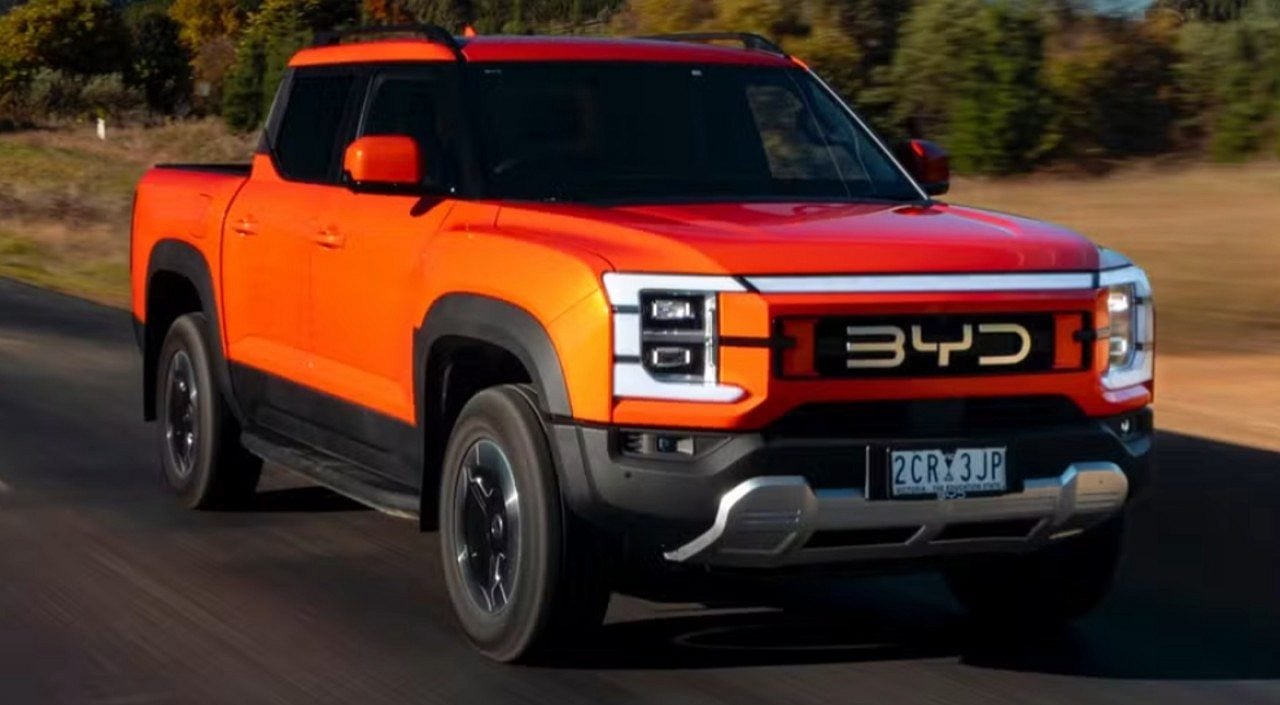
The Chinese automaker began expanding its medium pickup truck portfolio with the launch of the Performance version in international markets. The debut of the new configuration took place at Austrália, a country with a strong tradition in the consumption of commercial vehicles with trucks. The main change to the model focuses on replacing the internal combustion engine, exchanging the 1.5 turbo block for a more robust 2.0 turbo engine within the plug-in hybrid system. The strategy aims to serve consumers who require greater brute strength for heavy work and transport of implements.
The updated mechanical set significantly changes the vehicle’s positioning compared to diesel-powered competitors. The new mechanical architecture reflects the manufacturer’s adaptation to the demands of specific markets, where road use with a trailer is a primary requirement from buyers. The movement demonstrates the flexibility of the brand’s electrified platform, capable of accommodating different sizes of combustion engines to work in conjunction with electric generators without the need to redesign the car’s base structure.
Atualização mechanics and jump in power numbers
The pickup’s central modification lies in the adoption of the 2.0 turbo gasoline engine, which acts as a fundamental part of the plug-in hybrid system called DMO. Apenas the combustion block now delivers 245 hp of power. Este propellant works in synchronization with two electrical machines positioned on the axles, forming an intelligent all-wheel drive system. The result of this combination generates a combined power of 475 hp, accompanied by a maximum torque of 71.3 kgfm.
The numbers represent a considerable improvement in relation to the standard version sold in other countries, including the Brasil. Configurations equipped with the 1.5 turbo engine offer 183 hp in the combustion part, resulting in a combined power of 437 hp and 65 kgfm of torque. The gain of 38 hp and more than 6 kgfm of brute force places the new variant at a level of superior performance within the medium pickup truck segment, easily surpassing the traditional figures of the competition’s four and six cylinder turbodiesel engines.
The direct reflection of this injection of power appears in straight-line acceleration tests. The vehicle now reaches 0 to 100 km/h in exactly 5.5 seconds. The time is 0.2 seconds faster than the 5.7 seconds recorded by the variants equipped with the smaller displacement engine. Agility in short accelerations and speed regains is a striking feature of electrified vehicles, due to the instantaneous delivery of torque by the electric motors, a feature that was amplified with the new combustion engine.
Trailer Capacidade achieves category standard
One of the main criticisms directed at the first versions of the hybrid pickup truck involved its limitation in pulling loads. With the introduction of the 2.0 turbo engine, the manufacturer managed to resolve this technical deficiency. The new configuration increases the maximum braked towing capacity to 3,500 kg. The number is fundamental to commercial success in markets like Australia, where transporting trailers, boats and horses is a routine activity among SUV owners.
The 3,500 kg capacity aligns the Chinese model with the gold standard established by leaders in the global medium segment. Até then, the versions with a 1.5 turbo engine were limited to towing 2,500 kg, a value considered low for the category and which alienated potential buyers focused on mixed use between leisure and heavy work. The change in the calibration of the hybrid system and the extra torque were decisive for this superior approval.
- Potência combined hybrid system: 475 hp.
- Torque maximum delivered by the set: 71.3 kgfm.
- Capacidade official braked trailer: 3,500 kg.
- Tempo acceleration from 0 to 100 km/h: 5.5 seconds.
The adequacy of traction capacity demonstrates the maturity of hybrid technology applied to cargo vehicles. The electronic management needs to coordinate the delivery of power between the electric motors and the combustion engine to ensure that the vehicle can overcome steep inclines even while pulling three and a half tons, without overheating the electrical components or draining the battery abruptly.
Impacto in total weight and payload reduction
The increase in the displacement of the combustion engine and the reinforcements necessary to deal with the new traction capacity generated a direct side effect on the scale. The vehicle’s curb weight jumped from 2,675 kg to 2,738 kg. The increase of 63 kg in the vehicle’s total mass required a sacrifice in the approval numbers for transport in the bed, limiting the weight that could be carried on the rear axle.
The new pickup’s payload capacity has been reduced to just 752 kg. The value represents a drop in relation to the 825 kg approved for the 1.5 variants in the Australian market. The physical equation for commercial vehicles dictates that the total gross weight subtracted from the empty vehicle weight results in the payload. Como the total gross weight has legal and structural limits, the heavier vehicle must carry less weight in the bucket.
The figure of 752 kg distances the model from the coveted one-ton mark, a standard offered by the main diesel-powered rivals in the medium segment. In the Brazilian market, the 1.5 turbo configuration carries 790 kg. Para For the purpose of comparing cargo volume, compact pickup trucks derived from passenger cars present similar numbers. The Fiat Strada, in its single-cab versions equipped with a 1.3 naturally aspirated engine, has an approved capacity to transport 720 kg.
Mudanças in cab ergonomics and chassis structure
The interior of the updated version features ergonomic modifications focused on optimizing space. The most noticeable change is the removal of the traditional gear lever from the center console. The manufacturer transferred all gear selection controls to a rod located on the steering column, freeing up space between the front seats for new storage compartments and charging areas for mobile devices. The design solution resembles the standard used in large North American utility vehicles.
The cabin’s technology package also received dimensional updates. The floating and rotating multimedia center, a trademark of the company’s vehicles, now has a 15.6-inch screen. The display is considerably larger than the 12.8-inch screen available on units currently sold in the Brazilian market, offering an expanded viewing area for navigation, trailer cameras and hybrid system controls.
Apesar changes to the powertrain and interior, the utility’s engineering base remains unchanged. The vehicle continues to use a unibody structure, differentiating itself from the traditional body-on-beam construction used by most medium-sized pickup trucks. The suspension system maintains an independent architecture on all four wheels, using overlapping arms with coil springs on both the front and rear axles, a configuration that prioritizes driving comfort and directional stability at high speeds.