
Rapid displacement of the magnetic north pole towards Siberia alters navigation systems around the world

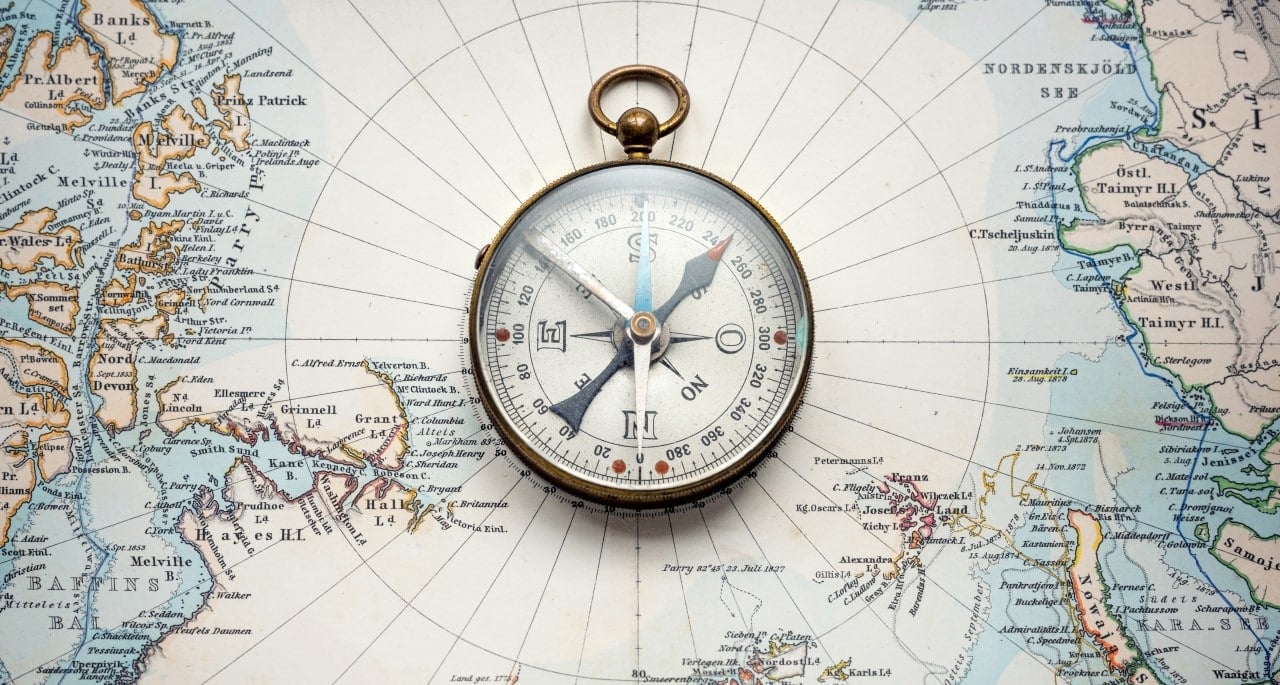
The planet’s magnetic north pole presents a drastic change in its historical trajectory. The natural benchmark, which for centuries moved slowly through the Canadian Ártico, has seen a leap in speed in recent decades. The annual displacement went from 16 kilometers to peaks of 56 kilometers. Esse fast forward directs the magnetic point to the Sibéria region. The international date change line was crossed in 2017. Especialistas monitor the phenomenon with increased attention.
Continuous change requires in-depth revisions to global location systems. Ferramentas Everyday and industrial equipment depends on this invisible stability. The anomalous behavior reflects intense transformations within the Earth’s globe. Cientistas seek to understand the exact forces that drive this accelerated migration towards Russian territory.
Dinâmica of the outer core and the generation of the magnetic field
The origin of this movement lies approximately 2,900 kilometers deep. The Terra’s outer core functions like a turbulent ocean of molten iron in constant agitation. Correntes electric currents generated by this moving liquid metal create the magnetic field through the so-called dynamo effect. Trata is a complex and invisible mechanism on the surface. Alterações in the flow patterns of this material directly affect the position of the poles in the Earth’s crust.
Pesquisadores identified a real dispute of magnetic forces underground. Existem two large magnetic flux lobes located in Hemisfério Norte. One of them is under Canadá, while the other is placed under Sibéria. Nas In recent decades, the Siberian flow gained intensity and began to pull the pole with greater violence. Essa asymmetry of forces explains the rapid escape from the magnetic reference of Canadian territory.
The pole never remains completely static in a single geographic point. Pequenas daily fluctuations are part of the planet’s natural behavior. However, the sustained acceleration from the middle of the 20th century represents a rare event in the history of measurements. Understanding these internal dynamics requires advanced mathematical models and continuous observation.
Atualizações mandatory in global positioning systems
The accelerated movement directly impacts modern technological infrastructure. The World Magnetic Model serves as the basis for civil and military navigation across the planet. Esse mathematical model needs to reflect the exact position of the pole to ensure the accuracy of compasses and sensors. Rapid change has forced experts to bring forward updates that would normally occur at longer intervals.
The most recent revision of the global model establishes parameters for the period between 2025 and 2029. Essa update improves data resolution and reduces margins of error, especially in high latitude regions. Dispositivos personal electronic devices also receive these corrections silently. Modern Smartphones rely on up-to-date databases to make your map applications work without route deviations.
Technological dependence on the magnetic field covers multiple strategic sectors in contemporary society.
- Sistemas backup for GPS networks in case of satellite signal failure.
- Guidance Softwares for autonomous land vehicles and marine equipment.
- Magnetic declination Cálculos essential for commercial aviation safety.
Fabricantes hardware and software developers work together with scientific agencies. Integrating these corrections prevents calculation errors from accumulating during long journeys. Geomagnetic precision has become an invisible pillar of the globalized economy.
Impactos in airport infrastructure and wildlife
Commercial aviation faces practical challenges with the migration of the hub. The landing and take-off runways are numbered based on their magnetic orientation in relation to the north. Significant Mudanças in the field force airports to repaint the numbers on the asphalt and change navigation charts. Esse process ensures the safety of aerial operations in low visibility conditions.



Além of human technology, the animal kingdom suffers the effects of this geographic transition. Diversas species utilize Terra’s magnetic field as a biological compass for navigation. Baleias, sea turtles and migratory birds depend on this reference during journeys of thousands of kilometers. Changes in the position and intensity of the pole can confuse routes established millennia ago.
Biólogos closely monitors the behavior of wild populations in affected areas. Continuous displacement requires rapid adaptations on the part of migratory species. The ability of these animals to naturally readjust in the face of rapid geomagnetic changes is still the subject of in-depth studies.
Historical Monitoramento and the use of modern satellites
Current understanding of the phenomenon is based on four centuries of data collection. Registros navigation of ancient ships from the 17th century provide the first clues about the historical position of the pole. Marinheiros Europeans meticulously noted the variations of their compasses during exploratory expeditions. Essas ancient information, combined with analysis of volcanic rocks, made it possible to reconstruct the long-term trajectory.
Space technology has revolutionized the study of geomagnetism in recent decades. Dedicated Satélites orbit the planet and measure magnetic field variations in real time. Esses high-precision instruments detect anomalies that go unnoticed on the surface. The union of historical records and spatial data offers a complete overview of the magnetic evolution of Terra.
It is essential to differentiate the magnetic north pole from the geographic north pole. The rotation axis of the Terra defines the geographic pole, which remains fixed at the top of the globe. The magnetic pole, in turn, roams freely through the Arctic region. Essa difference in location generates the so-called magnetic declination, an angle that varies depending on the observer’s position on the planet.
Desaceleração recent and prospects for the future
Recent Medições revealed an unexpected change in the pole’s behavior. Após reached its peak speed, the displacement showed a partial deceleration. The rate of movement has dropped to an average of 35 to 36 kilometers per year. Essa reduction represents the largest speed drop recorded by scientists in several decades.
Apesar this moderation in pace, the overall direction remains unchanged. The pole continues to move steadily away from the Canadian Ártico towards the Eurásia. Instituições monitoring confirms that the magnetic point is considerably closer to the Siberian coast today than it was five years ago. The planet’s internal dynamics show no signs of reversing in the short term.
The scientific community keeps tabs on fluctuations in the outer core. The latest version of the magnetic model offers ten times greater accuracy in specific equatorial areas. The constant improvement of measurement tools ensures that modern society continues to operate safely. The continuous study of the magnetic field reveals the structural complexity of the planet.
Veja Tambem em Latest News (EN)

Nintendo Switch Online catalog offers classic games with current multiplayer features

Xiaomi launches 17T and 17T Pro in Europe with Leica 5x cameras and periscopic telephoto lens; India receives standard model

Royal Enfield launches Bullet 650 with engine similar to Classic 650 and prices starting at Rs 3,64,838

Google launches Android 17 Beta 3 with smart screen organizer and new real-time search

Google releases Android 17 Beta 3 with temporary GPS button to reinforce data security

Chinese manufacturer announces Redmi 15A 5G in India with 6,300 mAh battery and 6.9-inch screen

Xiaomi launches Poco X8 Pro Max with 8,500 mAh battery and Dimensity 9500s chip on the global market

Samsung’s new bet brings Galaxy Z Fold 8 Wide with 4.9 mm horizontal design against iPhone Fold

João Fonseca’s upset over Novak Djokovic in Paris drives discussions for a trio with Sinner and Alcaraz

Samsung introduces Galaxy A57 5G and A37 5G with artificial intelligence for the global market

Waze platform implements alert with thief icon to indicate risk areas to drivers
