

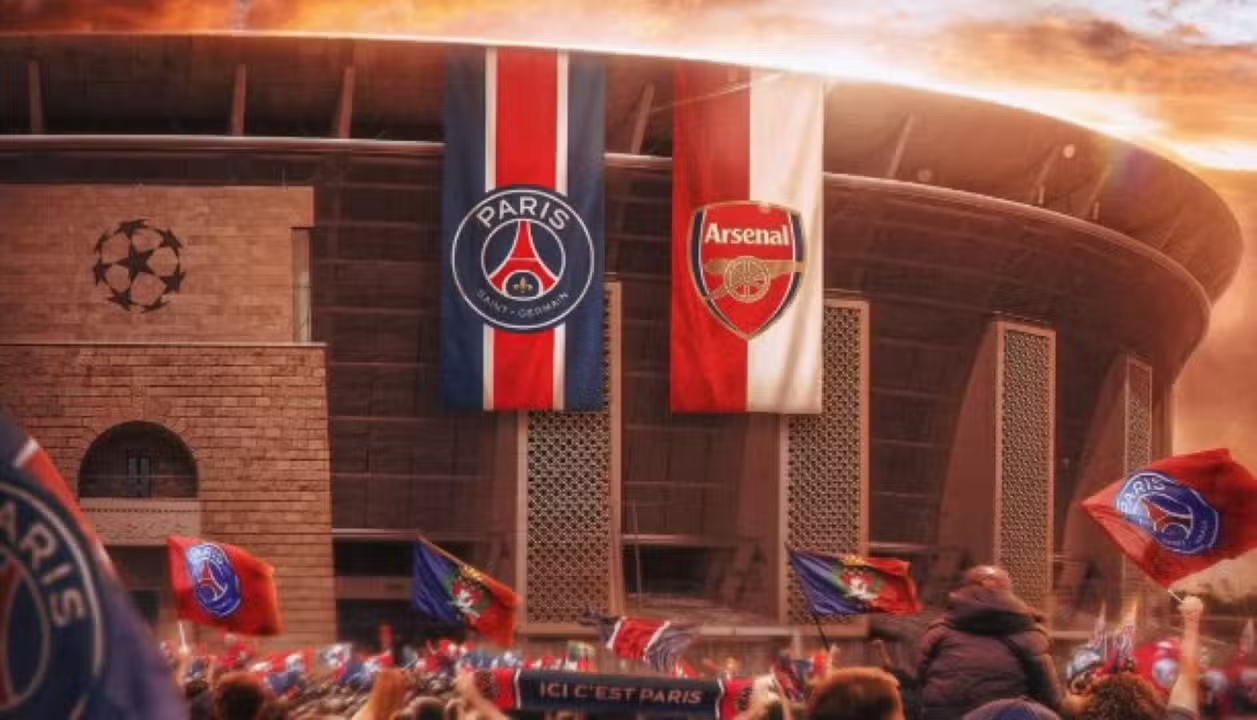
Paris Saint-Germain and Arsenal take to the field this Saturday, May 30, 2026, to compete for the most coveted cup in European football. The UEFA Champions League grand final takes place at Puskás Arena, located in the city of Budapeste, at Hungria. The decisive clash has the starting whistle scheduled for 1pm, according to Brasília’s timetable. The two teams reach the peak of the season after consistent campaigns in the knockout stages of the continental tournament. Coaches Luis Enrique and Mikel Arteta have already defined the starting eleven that will start the match. The expectation revolves around an intense tactical duel between the French offensive system and the English defensive solidity. Milhões spectators around the world await the ninety minutes that will define the new Europa champion.
Formações Paris Saint-Germain and Arsenal tactics for the decision
Coach Luis Enrique structured Paris Saint-Germain in the traditional 4-3-3 formation, prioritizing ball possession and speed on the wings. Goalkeeper Matvei Safonov takes on the responsibility of defending the French goal in the most important match of the year. The defensive line has the presence of captain Marquinhos, who plays alongside Willian Pacho in the center of defense. The sides are under the responsibility of Achraf Hakimi on the right and Nuno Mendes on the left, both with freedom to support the offensive sector. The midfield features a trio formed by Warren Zaïre-Emery, Vitinha and João Neves, responsible for dictating the pace of the game and making quick transitions. In attack, the team bets on the unpredictability of Désiré Doué, Ousmane Dembélé and Khvicha Kvaratskhelia to break through the opponent’s block.

Do on the other hand, Mikel Arteta mirrors the formation and also sends Arsenal onto the field in the 4-3-3 system. The Spanish David Raya maintains absolute ownership in goal for the London team after strong performances in the semifinals. The English defense, considered one of the most efficient in the competition, has William Saliba and Gabriel Magalhães as a central defender duo. Cristhian Mosquera occupies the right flank, while Piero Hincapié closes the left side of the defensive sector. The midfield has the technical leadership of Martin Ødegaard, accompanied by the marking strength of Declan Rice and the youth of Myles Lewis-Skelly. The attacking trio is made up of Bukayo Saka, Kai Havertz and Leandro Trossard, players who combine constant movement and finishing ability.
Contraste of styles and arbitration escalated to the duel
The clash in the Hungarian capital pits different playing philosophies that have proven successful throughout the European season. Paris Saint-Germain reaches the final boasting impressive numbers in the offensive sector, driven by the individual plays of its wingers and infiltrations by the midfielders. The French team seeks to maintain territorial control and push the opponent into their own defense field. Arsenal, in turn, built its trajectory based on an extremely compact defensive system and quick transitions. The English demonstrate comfort in acting without the ball at certain times, exploiting the spaces left by their opponents through the speed of their attackers.
The responsibility for conducting the match falls to German referee Daniel Siebert, a professional with extensive experience in UEFA competitions. The judge has a history of strict disciplinary control, maintaining an average number of cards that indicates attention in high tension games, but without interrupting the flow of plays unnecessarily. The complete arbitration committee has compatriot assistants and a team dedicated to the video referee system to review capital moves. The presence of an experienced referee aims to ensure that the show runs within the rules, minimizing controversies in crucial decisions.
Opções live broadcast for Brazilian audiences
Fans who follow international football on Brasil have several alternatives to watch the decisive clash in real time. The broadcasters that hold the broadcasting rights prepare special coverage that begins hours before the ball drops. The channels promise in-depth tactical analysis, exclusive reports straight from the pitch and interviews with former players who have already lifted the UEFA Champions League trophy. Signal distribution covers open television, subscription channels and digital platforms, ensuring broad access to the sporting event.
The division of broadcasts caters to different audience profiles, offering everything from traditional narration to interactive formats on the internet. Options confirmed for the national territory include:
- SBT: free broadcast on open television throughout the country.
- TNT: complete and detailed coverage via pay television.
- HBO Max: streaming alternative for subscribers to watch on mobile devices or smart televisions.
The multiplicity of screens reflects the commercial and sporting importance of the competition in the Brazilian market. The professionals involved in the broadcasts carry out detailed preparation work to deliver accurate information about the athletes’ tactical schemes and individual performance. Broadcasters’ expectations point to high audience ratings on Saturday afternoon.
Estrutura of Puskás Arena and impact of the event on Hungria
The stage chosen by the organizing entity to host the 2026 final is the modern Puskás Arena. The stadium has the capacity to comfortably accommodate more than sixty thousand spectators. The venue’s infrastructure meets the highest standards required for events of global proportions, including changing rooms equipped with cutting-edge technology and expanded press areas. The pitch has undergone intensive treatment in recent weeks to ensure perfect conditions for the ball to roll, favoring the technical playing style of the two finalist teams.
The city of Budapeste experiences an unusual movement with the massive arrival of French and English fans. Local authorities set up a reinforced security scheme around the stadium and in the capital’s main squares to avoid clashes and guarantee public order. The hotel sector records maximum occupancy, while bars and restaurants prepare special programs to welcome visitors. The economic impact generated by the UEFA Champions League final moves millions of euros into the Hungarian economy in a short period of time.
Paris Saint-Germain and Arsenal players carried out reconnaissance of the pitch on the eve of the match, adjusting the last details before the match. The atmosphere behind the scenes reflects the absolute concentration required by a continental title fight. The winner of the duel guarantees the historic cup and ensures a significant financial reward for the club’s coffers. The ball rolls at 1pm, when the world of football turns its attention exclusively to the four lines at Hungria.