American space agency officially transfers US$188 million for the construction of the Blue Moon Mark 1 lunar module
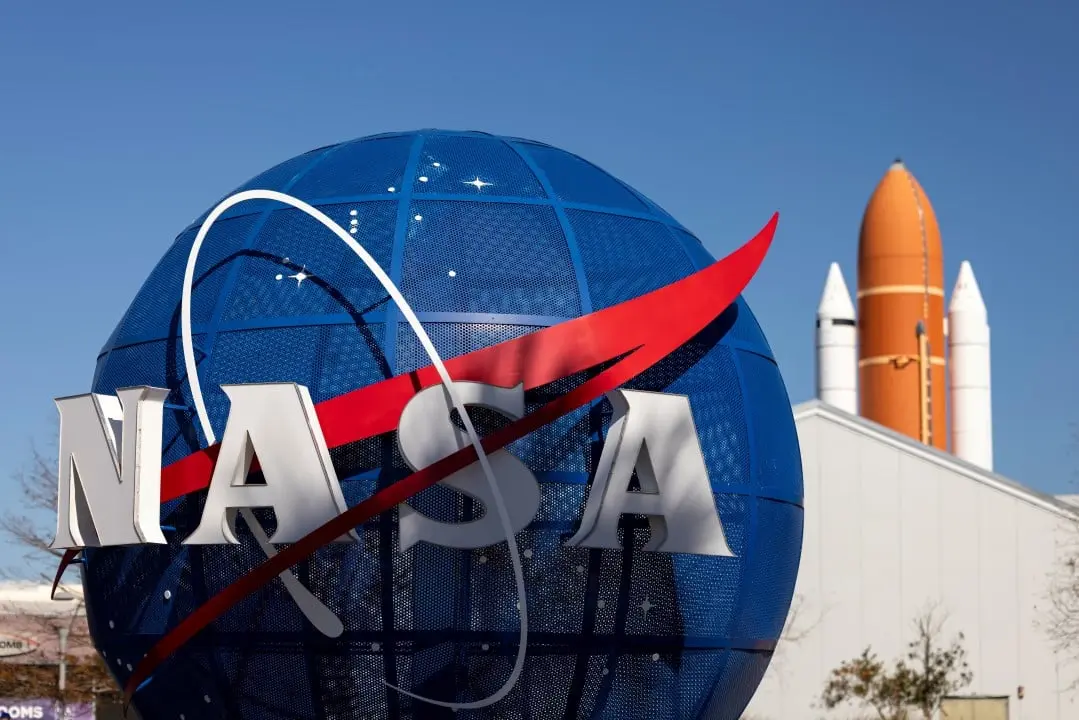
The American space agency formalized a US$188 million contract with the company Blue Origin for the development of the Blue Moon Mark 1 robotic landing module. The equipment’s main function is to transport payloads to the Lua surface during upcoming unmanned missions. The financial agreement lays the foundation for the construction of essential infrastructure prior to the arrival of Artemis astronauts on the Terra natural satellite.
The transition of lunar exploration from an exclusively government model to a partnership with the private sector drives the creation of a new off-planet economic market. The investment seeks to transform theoretical projects into viable commercial operations, with a focus on delivering supplies and equipment autonomously. The official schedule predicts that the main opportunities for space technology companies will occur between the years 2029 and 2032.
Estratégia contracting avoids monopoly in aerospace
NASA’s current guidance prioritizes supplier diversification to avoid dependence on a single corporation in advancing space exploration. The government agency works to define technical requirements and security goals, while the ecosystem of private companies develops engineering solutions. The competition model encourages cost reduction and accelerates the technological innovation necessary for the gradual occupation of the lunar south pole region.
The transfer of resources occurs through stages conditioned on the fulfillment of specific engineering and flight test objectives. American space agencies have recently formalized a series of agreements to ensure that different components of the mission operate in an integrated manner. Planning requires companies to prove the effectiveness of their systems in terrestrial simulations before the official launch of rockets towards lunar orbit.
The signed contracts establish initial values that may be readjusted as the research and development phases progress. The distribution of capital affects corporations of different sizes, from giants in the aerospace sector to emerging companies focused on specific technology niches. The central objective is to create a robust supply chain capable of sustaining long-term operations in the hostile environment of outer space.
- Blue Origin receives an initial amount of US$188 million, with the possibility of expanding to US$280.4 million upon meeting additional targets in cargo transportation.
- Firefly Aerospace has signed a $75 million deal to send four payloads via the MoonFall module, using the Elytra Dark system for mapping and exploration.
- The companies Astrolab and Lunar Outpost work on the development of surface exploration vehicles, aimed at mobility and scientific research.
The division of responsibilities between contracted companies allows each organization to concentrate its resources in areas of technical expertise. Transporting heavy materials, generating energy and moving around on the lunar surface require distinct and highly complex engineering solutions. The integration of these different systems under the coordination of the American space agency forms the operational basis for future manned missions.
Cronograma lunar base implementation Artemis
Planning for the construction of the lunar base of the Artemis program follows a calendar structured in progressive phases of complexity. The current schedule presents conservative estimates, with room for adjustments due to technological challenges or the need for additional safety testing. The first phase, scheduled for the period between 2026 and 2028, focuses efforts on ensuring reliable access to Lua and characterizing the natural resources available at the south pole.
Detailed understanding of the lunar environment and identification of useful materials such as water ice represent the main scientific objectives of this initial step. Data collected by the robotic modules will guide the design of habitats and life support systems for astronauts. Precision in radiation measurements, extreme temperature variations and soil composition dictates the manufacturing parameters of protective equipment.
The second phase of the project, scheduled to take place between 2029 and 2032, focuses on the implementation of energy infrastructure and transport logistics. The development of electrical generation systems based on solar arrays and nuclear fission becomes a priority to keep the equipment running during the long lunar nights. Creating an efficient surface transportation network will ensure the safe movement of supplies between landing zones and habitation areas.
From the year 2032 onwards, the third phase aims to consolidate a permanent and sustainable human presence on the natural satellite. The planning projects the evolution of the initial settlement into a large-scale industrial complex, capable of processing local resources and reducing dependence on shipments from Terra. The territorial expansion of the base will require advanced communications and automation systems to manage daily mining and research operations.
Oportunidades for emerging technology companies
The supply chain focused on lunar exploration opens up space for the participation of emerging companies specialized in frontier technologies. The transition from purely government services to commercial applications creates a growing demand for innovations in autonomous robotics and long-distance communication systems. The delay of approximately three seconds in data transmission between the Terra and Lua requires that the equipment has a high degree of operational independence.
Energy storage in high-density batteries and the construction of orbital relay networks are among the main needs of the space program. The manufacture of cables resistant to cosmic radiation and the development of materials capable of withstanding the space vacuum represent engineering challenges open to the private sector. The supply delivery segment on the final leg of the lunar journey also attracts investment from venture capital funds.
Technical specialization demonstrates greater effectiveness than attempts to completely verticalize aerospace operations. The American space agency seeks suppliers capable of solving specific problems with a high level of excellence, rather than companies that try to build every part of a rocket or landing module. Aligning technological development with the launch windows foreseen in the official schedule increases the chances of success in obtaining government contracts.
Estratégias validation and partnerships in the space sector
Obtaining contracts in the aerospace sector requires practical proof of the viability of the technologies proposed by competing companies. Constant monitoring of research funding programs, such as the American agency’s SBIR and STTR, provides the initial path to attracting development resources. Participation in innovation challenges promoted jointly with ESA provides international visibility and attracts the interest of private investors.
The formation of strategic partnerships with first-tier suppliers, such as Blue Origin and Firefly Aerospace, facilitates the insertion of smaller components in large missions. Selling subsystems directly to these established corporations presents less financial risk than attempting to compete directly for major bids. The integration of technologies into already approved platforms accelerates the qualification process for use in outer space.
Validation of equipment in terrestrial environments similar to lunar conditions is a mandatory step before sending any material off the planet. Carrying out resistance and mobility tests in arid deserts or on the icy plains of Antártida generates the empirical data necessary to attest to the durability of the systems. The technical reports derived from these extreme simulations support the commercial proposals presented to the government agencies responsible for approving the missions.