Automaker Lamborghini prepares launch of unprecedented electric super sports car and new models by 2026

Italian manufacturer Lamborghini confirmed a restructuring schedule for its global portfolio with the introduction of new vehicles until the year 2026. The automaker’s strategic planning establishes the gradual transition from combustion engines to zero-emission propulsion systems. The luxury brand’s main bet involves the official presentation of its first fully electric car on the international market. The schedule reflects the company’s adaptation to the new regulatory requirements in the transport sector.
The decision changes the production dynamics at the company’s headquarters in Sant’Agata Bolognese. Engenheiros and designers work on adapting assembly lines to integrate high-capacity batteries without compromising the traditional aerodynamics of super sports cars. The movement meets new European and global environmental regulations, in addition to responding to the demand of an emerging profile of consumers with high purchasing power. Structural change requires the retraining of professionals and the modernization of industrial machinery.
Desenvolvimento of the brand’s first zero-emission model
The electric vehicle project requires direct investments in advanced research and remodeling of the manufacturer’s supply chain. The Lamborghini has historically built its reputation on the basis of atmospheric V10 and V12 engines, known for their high performance and characteristic sound signature. Replacing these mechanical components with electric thrusters poses the challenge of managing the additional weight of the battery modules. Chassis balance becomes the main focus of the development teams.
Engineering teams focus on thermal dissipation and instant torque delivery to ensure the aggressive handling customers expect. Aerodynamic development gains prominence in this scenario, since airflow efficiency directly affects the vehicle’s autonomy. The automaker seeks to establish a technological standard that differentiates its product in an increasingly competitive sector. Sistemas adaptive suspension systems are being recalibrated to support the automobile’s new mass distribution.
The architecture of the new electric model allows the exploration of design concepts previously limited by the presence of large engine blocks. The absence of the traditional exhaust system and fuel tank frees up space for innovations in the floor and passenger cabin. The lower center of gravity, provided by the positioning of the batteries, offers technical advantages for stability in high-speed corners. Wind tunnel tests take place daily at the company’s facilities.
Renovação Fleet and Hybrid Systems Integration
The schedule until 2026 is not limited to the launch of the purely electric car. The corporate strategy foresees the updating of already established models and the introduction of plug-in hybrid variants in dealerships. Hybrid technology acts as an intermediate step towards full fleet electrification, allowing the customer base to adapt to new driving dynamics. The gradual transition minimizes business risks associated with abrupt catalog changes.
The Revuelto model exemplifies the practical application of this technological transition phase. The super sports car combines a traditional internal combustion engine with auxiliary electrical systems to maximize final power and optimize fuel consumption. The technical experience accumulated with the production of hybrid vehicles provides essential data for the refinement of the company’s future electric car. Processing telemetry data helps improve power management software.
The diversification of the product catalog aims to protect the company’s profitability during the paradigm shift in the automotive sector. Maintaining hybrid options guarantees service to markets where the electric charging infrastructure still has structural limitations. The global dealer network is undergoing adjustments to offer specialized technical support for new propulsion systems. Training of sales and after-sales teams has already started in the main markets of Europa and América of Norte.



Adequação of the assembly lines in Sant’Agata Bolognese
Lamborghini’s industrial infrastructure is undergoing physical modifications to support the new production phase. The main factory receives specific equipment for the assembly and testing of high voltage components. The manufacturing plant layout was redesigned to optimize the flow of electronic parts.
- Instalação of calibration stations for driver assistance systems.
- Capacitação employee technique for safe handling of lithium batteries.
- Implementação of manufacturing processes with lighter composite materials.
- Integração of advanced connectivity software in vehicle architecture.
Collaboration with external technology providers accelerates the facility modernization process. The company reviews its quality control protocols to ensure that new electronic systems operate with the same reliability as traditional mechanical components. The investment in precision machinery reflects the commitment to the artisanal finish that characterizes the brand’s products. The logistics for receiving semiconductors were restructured to avoid production bottlenecks.
Competitividade in the luxury segment and historical legacy
The race for electrification changes the correlation of forces between the world’s main super sports car manufacturers. The scenario requires rapid adaptation. Concorrentes directs such as Ferrari, Porsche and McLaren also execute billion-dollar plans to electrify their respective fleets. The ability to preserve the visual identity and dynamic behavior of cars will determine leadership in this niche market in the coming years. The volume of patents registered by automakers indicates the level of investment in proprietary research.
The Italian manufacturer’s track record includes launching era-defining vehicles in the automotive industry, such as the Miura, Countach and Diablo. The company’s current management works to ensure that future releases achieve the same status as cultural and engineering icons. The preservation of bold design, marked by angular lines and aggressive proportions, remains a non-negotiable guideline in creative studios. The brand’s aesthetic signature serves as the main competitive differentiator against new entrants in the electric vehicle market.
The high-end consumer market is receptive to sustainable innovations, as long as the exclusivity of the product is maintained. Lamborghini’s energy transition represents the largest structural transformation since the company’s founding. The sales results of current hybrid models and the expectations generated around the electric future indicate the direction of the high-performance industry for the next decade. Meeting the goals established for 2026 will define the automaker’s position in the new global green economy.
Veja Tambem em Latest News (EN)

Italian Supreme Court confirms legality of hotel that offered only mineral water to customer

National Geographic Traveler Announces Travel Photography Contest Winners
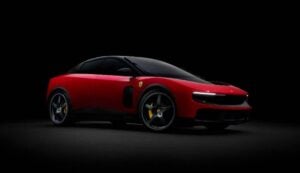
Ferrari presents Luce, the first electric car, and receives harsh criticism from fans and the market

Yuki Yamada posts photo with beard and grimace on Instagram and surprises fans

Costco sees record demand at U.S. gas stations with lower prices

Passenger tries to enter cockpit and forces diversion of United Airlines flight to Madison

Astronomer explains white light recorded after meteor falls near volcano in Philippines

Comedian Sakamoto-chan reveals type 2 diabetes remission after lifestyle changes

Avi Loeb says discovery of alien intelligence can unite humanity amid global crises

Police investigate death of Hilde Ann Lynn Helphenstein in room at Rosewood São Paulo

Avi Loeb suggests that dark comet 1998 KY26 could be Soviet probe Phobos 1