British review details historic impact of Toyota Corolla Levin AE86 on drift tracks

The winding roads of the Japanese mountains served as a laboratory for a revolution in sports driving during the 1980s. The sharp sound of engines revving loudly in the early hours of the morning marked the birth of a sport that would transform the relationship between man and machine on tracks around the world.
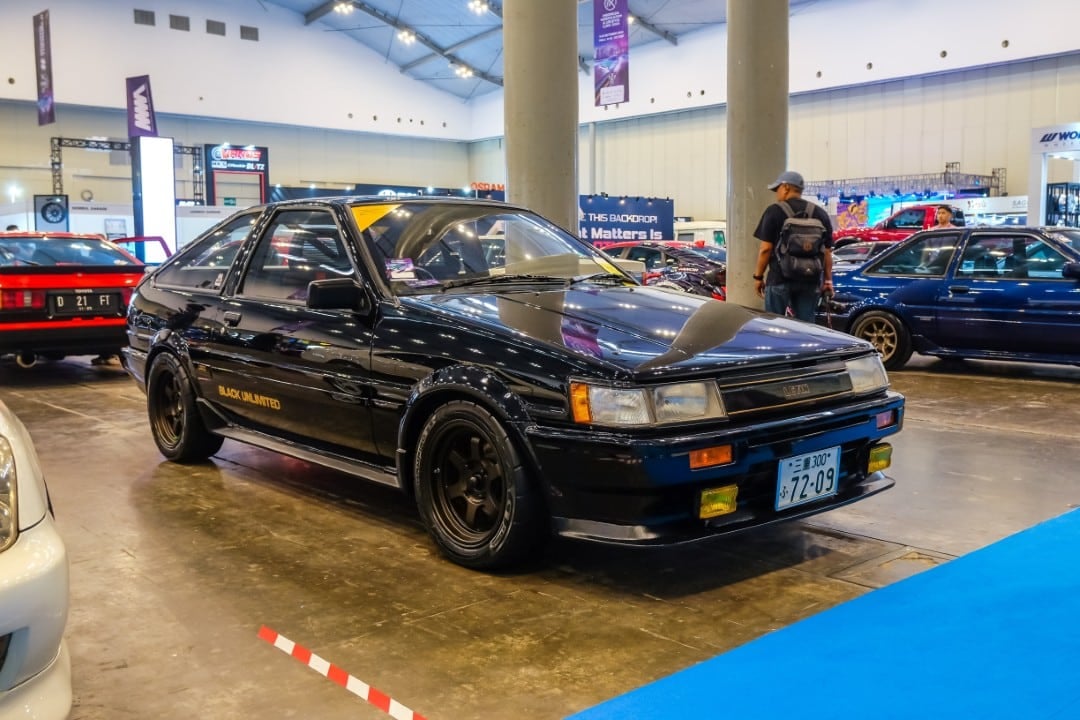
A rare example of the Toyota Corolla Levin AE86 has undergone rigorous testing conducted by an Top Gear UK journalist on a closed track. The vehicle, belonging to the Toyota UK collection, had its real performance evaluated to separate the myth created by pop culture from its true mechanical capabilities. The Japanese model originally hit the market in 1983. The automaker decided to keep rear-wheel drive on this particular sports coupe. The choice went against the trend of the time, which already directed most of the Corolla line towards front-wheel drive.
Classical Engenharia and design decisions in the global market
The manufacturer’s engineers chose to reuse structural components from the previous platform to guarantee the rear-wheel drive layout. The industrial strategy generated the internal code AE86. The Japanese public quickly dubbed the car Hachiroku, a term that means eight-six in the local language. No Reino Unido, the trading strategy adopted the name Corolla GT Coupe. The starting price at British dealerships was around 8,799 pounds. The value positioned the vehicle in direct competition with established models, such as the Golf GTI.
The heart of the project resided in the 1.6 liter DOHC 4A-GE engine, built from a technical collaboration with Yamaha. The engine delivered around 125 horsepower. The mechanical architecture required the driver to maintain high revs to extract maximum performance on the asphalt. The automaker distributed the vehicle through two different store networks in the Japão. The division generated notable aesthetic variations. The Corolla Levin GT sported traditional fixed headlights. The Sprinter Trueno, in turn, boasted retractable headlights.
Both configurations could be purchased in two- or three-door hatchback bodies. The British market only received a specific combination of design and finish. The restriction limited local sales to exactly 2,717 units until the end of production in 1987. The global volume, however, surpassed the mark of 360 thousand copies manufactured. The lightweight chassis made it easier for amateur drivers to exploit oversteer. Night practice on tight curves established the technical foundations for the professionalization of drifting.
Fiction Impacto and mechanical assembly technical specifications
The publication of the Initial D manga series in 1995 catapulted the vehicle’s status to a global level. The narrative placed the protagonist Takumi Fujiwara behind the wheel of the model during tofu deliveries and clandestine races. The literary work and its television adaptations attracted a new generation of enthusiasts to the automotive world. The car was not created with the aim of being a high-cost super sports car. The constructive simplicity turned the platform into a perfect base for severe modifications.
The original factory structure had unique characteristics that defined the car’s dynamic behavior on the streets and test tracks:
- Motor 4A-GE equipped with the T-VIS system focused on variable air intake.
- Peso total body weight less than 1,000 kg in basic factory configuration.
- Suspensão rigid axle based rear with limited slip differential option.
- Sistema rack and pinion steering calibrated with a shorter ratio.
Mecânicos and independent tuners have spent decades altering the original components to extract more strength and structural rigidity. The workshops replaced suspension parts, exhaust systems and intake ducts. The changes altered the behavior planned by the original designers. The constant evolution in garages justifies the fans’ current reverence. The base model had clear torque limitations when compared to the standards of modern automotive engineering.



Dynamic Comportamento during closed-loop evaluation
The test track revealed the true nature of the mechanical assembly under continuous stress. The 1.6-liter engine demonstrated agility by quickly rising to the 4,500 rpm mark. The breath continued vigorously until it reached the red line on the rev counter, positioned close to 7,600 rpm. The measuring equipment recorded the acceleration from zero to 100 km/h in approximately 8.3 seconds. The five-speed manual transmission had a long travel between gears. The lever, however, offered precision and lightness to facilitate quick changes.
The copy provided for the report had period updates, including an Apexi brand admission kit. The stainless steel exhaust system bore the signature of the Janspeed. The parts drastically modified the sound signature of the exhaust, but did not result in significant gains in raw power. The light steering required large movements of the steering wheel while negotiating the tightest curves on the route. The original calibration was aimed at comfort in daily urban traffic.
The soft suspension generated instability when entering corners at high speed. The rear demonstrated a tendency to stray from the ideal trajectory without the aid of a standard limited-slip differential. The braking system required a long initial pedal stroke before acting at full force. The low weight of the vehicle compensated for this characteristic and guaranteed safe braking. The maximum torque of 145 Nm appeared only in the highest speed ranges. The pilot needed to keep the engine revving above 5,000 rpm to get immediate throttle responses.
Legado in official competitions and influence on successors
Performance on official tracks validated the efficiency of the project. The Chris Hodgetts driver used the model to win titles in the Campeonato Britânico, Carros, and Turismo in 1986 and 1987. The vehicle outperformed opponents with larger engines. The victories against the BMW M3 and the Ford Sierra Cosworth highlighted the superiority of the chassis setup. The success consolidated the manufacturer’s prestige on the European motorsport scene.
The development philosophy has survived time and guided the creation of new products. The automaker applied the concepts to the contemporary GT86 and GR86 models. Engineer Nobuaki Katayama used lessons learned from the old chassis to develop modern vehicles. The experience influenced the dynamic setup of the Lexus IS200 sedan. Current cars have gained superior torsional rigidity and advanced electronic calibrations.
The cabin of the classic model featured a panel with easy-to-read analog instruments. The controls were positioned ergonomically. Banks guaranteed the necessary support for long trips. The interior environment prioritized mechanical functionality over luxury. The Top Gear UK evaluation concluded that the pleasure of driving the Toyota Corolla Levin AE86 comes from the pure interaction between driver and machine. Precise weight management matters more than raw engine power on the track.
Veja Tambem em Latest News (EN)

Italian Supreme Court confirms legality of hotel that offered only mineral water to customer

National Geographic Traveler Announces Travel Photography Contest Winners

Ferrari presents Luce, the first electric car, and receives harsh criticism from fans and the market

Yuki Yamada posts photo with beard and grimace on Instagram and surprises fans

Costco sees record demand at U.S. gas stations with lower prices

Passenger tries to enter cockpit and forces diversion of United Airlines flight to Madison

Astronomer explains white light recorded after meteor falls near volcano in Philippines

Comedian Sakamoto-chan reveals type 2 diabetes remission after lifestyle changes

Avi Loeb says discovery of alien intelligence can unite humanity amid global crises

Police investigate death of Hilde Ann Lynn Helphenstein in room at Rosewood São Paulo

Avi Loeb suggests that dark comet 1998 KY26 could be Soviet probe Phobos 1