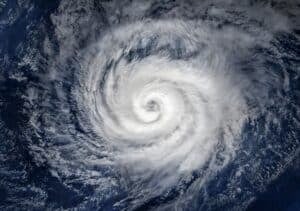
James Webb and Hubble Telescopes combine data and reveal Saturn’s atmosphere in unprecedented detail
The North American space agency presented on Wednesday the most detailed photographic set ever produced of the planet Saturno in the entire history of space exploration. The unprecedented material results from the union of data collected simultaneously by the Telescópio Espacial James Webb and the Telescópio Espacial Hubble, two of the most advanced instruments ever built by humanity. The equipment operates at different wavelengths of the electromagnetic spectrum, which allows scientists to analyze the different layers of the gas giant’s atmosphere in three dimensions and with unprecedented resolution.
Essa joint and innovative approach highlights dynamic phenomena occurring in the planet’s clouds and provides a complete picture of its internal and external structure. Enquanto one observatory focuses on visible light, the other penetrates dense gas formations through infrared radiation. Overlaying this crucial information makes it possible to map sudden temperature variations, high-speed wind currents, and exact chemical composition at altitudes that previously remained completely hidden from traditional ground-based or lower-orbit astronomical instruments.

Combined Tecnologia reveals hidden layers of gas giant
The complementary operation of the two telescopes represents a historic milestone in planetary observation by Sistema Solar. Hubble, which has been monitoring deep space for more than three decades from Terra’s low orbit, captures visible light. Esse is the spectrum similar to that perceived by human eyes in everyday life. On the other hand, James Webb, positioned more than a million kilometers away from our planet, operates in the infrared range. Cutting-edge technology can detect the heat emitted by celestial bodies and identify chemical elements that penetrate the thickest and deepest layers of Saturn’s stormy clouds.
The union of these two observation fronts creates a detailed map of the vertical variations present on the planet. Researchers are thus able to examine successive sections of the complex structure of Saturno. The process works as if scientists were slicing up atmospheric layers for in-depth and systematic study.
- The Hubble registers the familiar colors of the external surface, highlighting the characteristic shades of yellow and blue.
- James Webb reveals the interior of the atmosphere, mapping air currents and suspended particles at different altitudes.
- Data integration builds a three-dimensional model that facilitates understanding of the celestial body’s climatic evolution.
Essa technological partnership between equipment launched more than 30 years apart significantly expands the scientific community’s analysis capacity. Astronomers now have precise tools to directly observe how winds and pressure waves influence the visible and invisible features of Sistema Solar’s second-largest planet.
Dinâmica atmospheric and long-lasting storms
The new images processed by scientists confirm that the atmosphere of Saturno maintains intense and constant meteorological activity. Records show extremely high-speed winds, massive storms that cover huge areas and air currents that persist for long periods. Muitas Sometimes, these phenomena last for years or even decades without interruption. One of the elements that most attracts the attention of planetary climate experts is the so-called ribbon wave. Trata is a fast, meandering flow of air that extends continuously across the mid-latitudes of the planet’s northern hemisphere.
Recent data also identifies the traces of a colossal storm that hit the planet between 2010 and 2012. The event marked the decade. Além from the marks left by this past phenomenon, the instruments detected the emergence of new stormy systems forming in the Southern Hemisphere. Tracking these weather patterns helps researchers understand how the gas giant’s global climate evolves and changes over time.
Outro A highlight in the observations of James Webb is the greenish color identified in the polar regions of Saturno. Essa peculiar hue intrigues researchers. The visual effect may result from the presence of specific aerosols suspended in the upper atmosphere. A second hypothesis points to auroral activity, a luminous phenomenon that occurs when highly energetic particles interact violently with the planet’s strong magnetic field.
Anéis of ice and moons in evidence in the records
Saturno’s complex ring system gains an accentuated and completely unprecedented brightness in captures made by the James Webb telescope’s ultrasensitive sensors. Isso occurs because water ice, the main and most abundant component of these gigantic orbital structures, intensely reflects light in the infrared range captured by the observatory. Extremely delicate Estruturas become clearly visible. Divisões narrows between the rings, subtle ripples caused by gravity, and regions of higher density of material appear when scientists compare the two sets of photographic data side by side.


Essas detailed observations contribute decisively to the understanding of the formation, age and evolution of rings throughout the history of Sistema Solar. The clarity achieved by space instruments makes it possible to analyze the distribution of ice and rock particles with a precision that previous missions were unable to achieve from Earth orbit.
Além of the rings, several moons that orbit the planet were recorded with extreme clarity in the new images released by the agency. Entre the natural satellites identified by name are Janus, Dione, Encélado and Mimas. In one of the specific captures taken by Hubble, the shadow cast by the moon Mimas on the cloudy surface of Saturno highlights the high degree of precision and resolution of current astronomical observations.
Laboratório natural for the study of extreme fluids
Para the international scientific community, Saturno functions as a true physics laboratory on a planetary scale. The extreme and inhospitable environment lends itself to the in-depth study of fluid dynamics under conditions of overwhelming pressure and temperature that could never be replicated in research facilities at Terra. The combined data from the telescopes shows how incredibly powerful gravitational and thermal forces shape the gas giant’s atmosphere. Essas forces are able to maintain stable weather patterns for prolonged periods, defying traditional climate models.
The images capture minute details of not just the main globe, but the entire Saturnian system. The material expands general knowledge about the gravitational interaction between the planet, its rings and its dozens of moons. Space agency researchers continue to process and analyze the vast volumes of records to extract additional information about the exact chemical composition and complex atmospheric movements.
The exceptional quality of the records obtained demonstrates the joint advancement of the observation capabilities of the two space telescopes. Detalhes structures that were previously considered difficult or impossible to observe from the vicinity of Terra now appear with complete clarity. The result reinforces the immense scientific value of combined observation in different light spectrums for deep space exploration.
Monitoramento ongoing and upcoming seasonal changes
The observation work of Hubble, which has monitored Saturno for decades through continuous programs, now receives definitive reinforcement with the entry of James Webb into operation. Essa historical continuity allows scientists to track atmospheric changes from year to year. The joint effort builds an invaluable database for modern astronomy and future generations of researchers.
Nos In the coming years, new image capture campaigns should record the seasonal changes that occur on the planet. Como Saturno’s orbit around Sol takes almost 30 Earth years to complete, the seasons last more than seven years each. Alguns Current atmospheric patterns can change drastically or become temporarily hidden as the seasonal cycle progresses in the Northern and Southern Hemispheres.
Maintaining space monitoring programs ensures that astronomers can monitor these transformations in a systematic and uninterrupted manner. The ongoing combination of Hubble and James Webb technologies promises to reveal even more concrete data about the formation of gas giants and the evolution of planetary systems over the coming decades of exploring the cosmos.
Veja Tambem em Latest News (EN)

Italian Supreme Court confirms legality of hotel that offered only mineral water to customer

National Geographic Traveler Announces Travel Photography Contest Winners

Ferrari presents Luce, the first electric car, and receives harsh criticism from fans and the market

Yuki Yamada posts photo with beard and grimace on Instagram and surprises fans

Costco sees record demand at U.S. gas stations with lower prices

Passenger tries to enter cockpit and forces diversion of United Airlines flight to Madison
Astronomer explains white light recorded after meteor falls near volcano in Philippines

Comedian Sakamoto-chan reveals type 2 diabetes remission after lifestyle changes

Avi Loeb says discovery of alien intelligence can unite humanity amid global crises

Police investigate death of Hilde Ann Lynn Helphenstein in room at Rosewood São Paulo
Avi Loeb suggests that dark comet 1998 KY26 could be Soviet probe Phobos 1