Vivo X300s device hits the market with Dimensity 9500 chip and 7100mAh battery in March
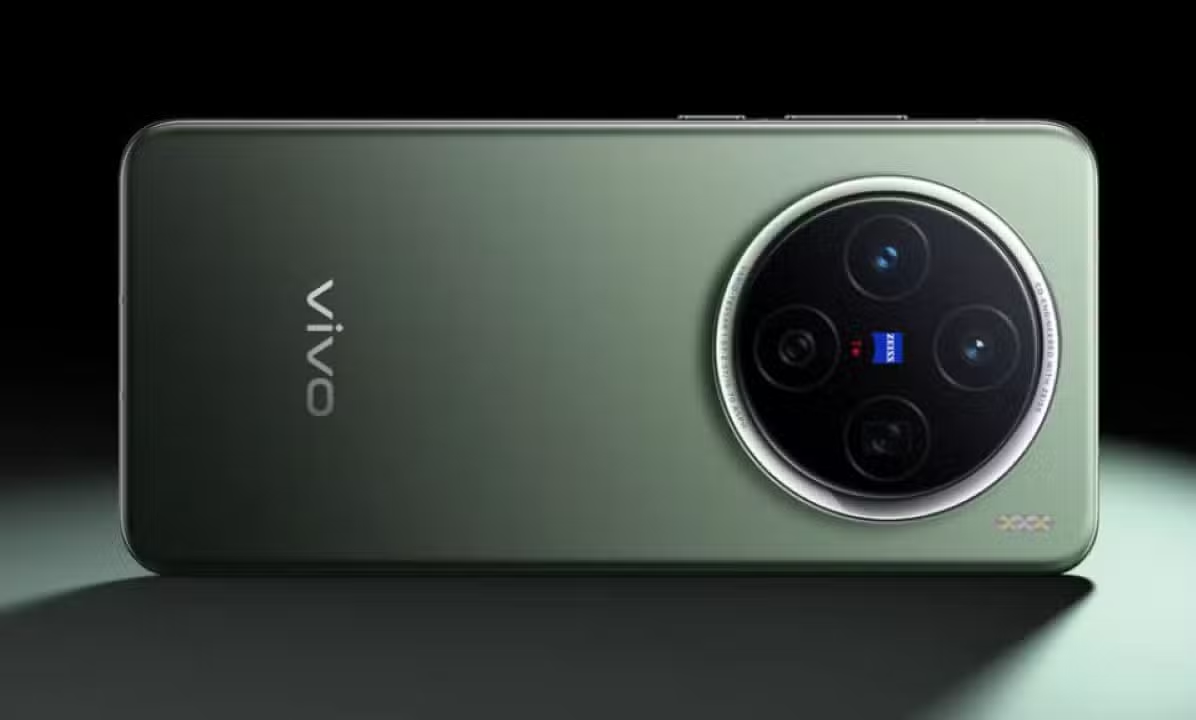
The manufacturer Vivo has scheduled the launch of the Vivo X300s smartphone for March 30th in the city of Shenzhen, at China. The device will be presented to the market at a joint event with the X300 Ultra model, scheduled for 7pm local time. Preliminary Dados devices emerged on the Geekbench platform, revealing technical specifications aimed at the high-performance segment. The Asian brand’s new bet seeks to consolidate space among premium devices in 2026.
The model arrives equipped with the MediaTek Dimensity 9500 processor and operates with the Android 16 system from the factory. The internal architecture includes a 7100mAh battery, the largest capacity ever implemented in the company’s X line. The hardware combination aims to serve users who demand fast processing and long periods of continuous use. The device incorporates advanced resistance certifications. The high-resolution photographic set completes the technical package.
Vivo X300 Ultra , Vivo X300s & Vivo Pad 6 Pro official renders are out ! 🇨🇳 launch : 30th March ✅
Vivo Pad 6 Pro specifications :
✅ 13.2" 4K 144Hz LCD
✅ Snapdragon 8 Elite Gen 5
✅ 13000mAh🔋90W⚡
✅ LPDDR5X RAM UFS 4.1 storage
✅ Eight speakers 🔊
✅ 13MP main + LED flash… pic.twitter.com/WFExfsDurI— Debayan Roy (Gadgetsdata) (@Gadgetsdata) March 23, 2026
Desempenho and benchmark test scores
Records in the Geekbench database demonstrate the processing capabilities of the Vivo X300s under different stress levels. The smartphone reached the mark of 3310 points in the single-core evaluation, also known as single-core. In the multi-core test, which requires the simultaneous operation of multiple cores, the device recorded 10141 points. Esses numbers place the equipment in a competitive position compared to other high-end devices available on the current market.
The MediaTek Dimensity 9500 chipset has an octa-core structure designed to optimize task distribution. The component has a main core that reaches frequencies of up to 4.21 GHz, responsible for extremely demanding operations. The system also integrates three high-performance cores operating at 3.5 GHz and four energy-efficient cores clocked at 2.7 GHz. The Mali-G1 Ultra MC12 graphics processing unit manages the rendering of complex images.
Para maintain thermal stability during operation, the manufacturer incorporated a vapor chamber refrigeration system called Ice Pulse Fluid. Essa technology dissipates the heat generated by internal components, preventing sudden drops in performance during prolonged sessions. RAM memory options reach 16GB in the LPDDR5X standard, while internal storage uses UFS 4.1 technology, with variants that offer up to 1TB of space. Essa configuration ensures fluid transition between applications.
Especificações screen and physical structure
The front panel of the Vivo X300s features a flat AMOLED screen with a diagonal extension of 6.78 inches. The display delivers 1.5K resolution, providing high pixel density for reproducing texts and visual media. The refresh rate reaches 144Hz, a rate that results in smoother image transitions when navigating menus and playing fast-action video games.
The external construction of the device uses a metal structure that provides rigidity to the chassis and protects the internal components against moderate impacts. The design project obtained IP68 and IP69 certifications, certifying complete sealing against the ingress of fine dust. Esses seals also guarantee the device’s survival in temporary submersion in fresh water and resistance against water jets at high pressure and temperature.
Interaction with the security system occurs through a 3D ultrasonic fingerprint reader in version 2.0, positioned under the screen. The smartphone’s physical interface includes the following hardware elements:



- USB-C 3.2 connection Porta Gen 1 for high-speed data transfer.
- Alto dual speakers with symmetrical calibration for stereo audio reproduction.
- Motor linear vibration on the X axis, responsible for precise tactile feedback.
- Opções with external finish in green, purple, white and black.
The combination of these physical factors aims to deliver an ergonomic and durable user experience. The vibration motor acts in sync with operating system alerts and in-game interactions, providing immediate physical responses to user commands on the touchscreen.
Sistema cameras with advanced technology
The photo module located on the back of the Vivo X300s houses three distinct sensors for different visual applications. The main camera uses a 200MP sensor equipped with optical image stabilization, a mechanism that reduces blur caused by tremors in the user’s hands. Essa central lens captures high levels of detail even in environments with unfavorable lighting, processing information through algorithms integrated into the processor.
The rear set is complemented by two auxiliary cameras of 50MP each. The first acts as an ultrawide lens, allowing the capture of wide scenes and photographs of large groups without the need for physical distancing. The second lens consists of a telephoto periscope, designed to perform optical approaches to distant objects without significant loss of quality. On the front, a 50MP sensor manages video calls and capturing self-portraits.
Todo, the image capture system has adjustments and calibrations provided by Zeiss, a traditional company in the optical sector. The partnership between the brands results in color processing that is more faithful to reality and the reduction of visual distortions at the edges of photographs. The Android 16’s camera software offers specific capture modes that take advantage of the hardware to simulate professional depth-of-field effects.
Autonomia Battery and Connectivity Options
The smartphone’s power supply depends on a battery with a nominal capacity of 7100mAh. Este charging volume exceeds the usual standards of the mobile device industry in 2026, ensuring uninterrupted operation of the device during extended work or entertainment days. The energy management carried out by the Dimensity 9500 chip acts directly to reduce the consumption of background processes, extending the real autonomy of the equipment.
The recharging system supports high powers to minimize the time the device remains connected to the socket. Cable charging reaches the 90W mark, while wireless charging operates at up to 40W of power. The manufacturer implemented the bypass charging feature, a technology that directs power from the source directly to the motherboard during intense use, bypassing the battery to prevent the chassis from overheating.
In terms of data communication, the Vivo X300s offers full support for 5G telephone networks, allowing fast downloads in areas covered by operators. The device also integrates the Wi-Fi 7 standard, which reduces latency in fixed internet connections and increases signal stability. The updated Bluetooth protocol ensures fast pairing with headphones and smart watches.
Configurações market and official launch
The memory variants made available by the company allow consumers to choose the configuration that best suits their storage needs. The Vivo X300s catalog includes versions with 12GB of RAM and 256GB of internal space, as well as options with 12GB of RAM and 512GB of storage. Para users who demand maximum capacity, the brand offers models with 16GB of RAM combined with 512GB or 1TB of physical memory.
The official presentation on March 30th at Shenzhen will serve to detail the launch prices of each of these versions in the Asian market. The event will also clarify the smartphone’s distribution schedule for other continents throughout the year. The information confirms the manufacturer’s strategy of competing directly with the main lines of premium devices in the telecommunications sector.
Veja Tambem em Latest News (EN)

Avi Loeb explains meteor explosion that shook Massachusetts with 2% energy from the Hiroshima bomb

Courtney Clenney’s defense inspects murder knives at Florida hearing

Jhon Durán agrees with Galatasaray and returns to Turkish football

List brings together 11 cozy science fiction games for relaxing experiences in space; check out what they are

Max Domi faces complications after back surgery and is out indefinitely from the Toronto Maple Leafs

William Pacho renews with PSG after two-time Champions League title

Adidas presents the Colombian team’s new white uniform for the 2026 World Cup

Chyler Leigh reveals regret about not filming scene with Eric Dane on Grey’s Anatom

Taylor Swift announces original song for Toy Story 5 after rumors

Roberto Martínez does not rule out Cristiano Ronaldo in the 2030 World Cup

Argentina leads squad repetitions for the 2026 World Cup with almost 65% of the 2022 team