

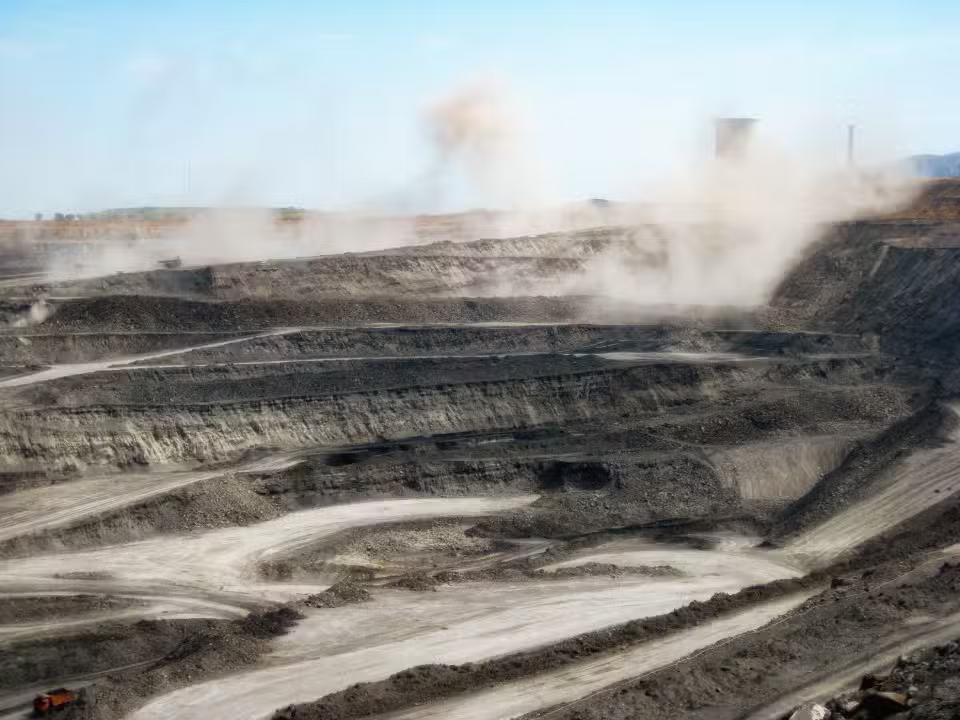
An explosion hit the Liushenyu coal mine on May 22. The accident occurred in the province of Shanxi, the main coal-producing region of China. Authorities confirmed 82 deaths and more than 120 injuries. Sobreviventes reported thick dust and a desperate rush for the exit. Rescue Equipes still working on site.
The impact of the tragedy revives memories of a past marked by frequent accidents in the industry. Especialistas point to security flaws and irregular operations. The mine belongs to the Tongzhou group.
Sobreviventes describe chaos after explosion
A worker who escaped told state broadcaster CCTV that the detonation knocked down everyone at the entrance. Dust took over the environment and blocked vision. Ele ran for over ten minutes until he lost consciousness. Outros reports indicate that the explosion spread quickly through the tunnels.
Muitos miners worked without tracking devices. Isso complicated the localization work during the rescue. Smoke and instability in the galleries delayed operations. Até at the moment, the chances of finding survivors are slim.
- The explosion occurred in a mine classified as high methane
- Muitos workers did not wear mandatory tracking equipment
- Túneis Secrets and Inaccurate Floor Plans Hindered Relief
- The Tongzhou group had already been fined for security violations in 2024
Investigação points out serious security breaches
Chinese authorities have identified serious irregularities in the operation of the Liushenyu mine. The Tongzhou group, responsible for exploration, faces control measures. Outras company units had activities paralyzed.
Relatórios preliminaries mention that only half of the workers present on the day of the accident were officially registered. Dispositivos traces were waived to hide unauthorized extractions in specific layers. The mine was already on the National Mine Safety Administration’s high-risk list.
Industry Profissionais say high-methane mines require strict ventilation and monitoring protocols. An explosion of this magnitude usually involves accumulation of gas or coal dust combined with an ignition source.
Shanxi concentrates production and history of tragedies
The province of Shanxi accounts for almost 30% of national coal production. The region is home to vast reserves of high-quality metallurgical coal. Durante decades, the sector boosted local economic growth.
Acidentes serious marks the industry’s past. Entre 1980 and 2010, the annual average number of deaths in Chinese mines exceeded 5 thousand people. Reformas implemented over the last two decades have drastically reduced fatality rates. Mesmo Thus, the Liushenyu episode shows that risks persist.
The central government closed thousands of small, irregular mines. Investimentos in automation and gas detection systems also contributed to the improvement. Ainda therefore, experts warn of the need for constant vigilance.
Transição energetics lives with dependence on coal
China accelerates the expansion of renewable energy. The national plan foresees doubling the supply of clean energy by 2035 and achieving carbon neutrality in 2060. Painéis solar and wind turbines are gaining ground in several regions.
Coal still occupies a central role in the energy matrix. The demand for electricity in large cities keeps production high. The tragedy at Shanxi reignites the debate over the pace of the transition.
The accident comes as the country seeks to balance safety, production and environmental goals. Autoridades reinforce that the sector cannot relax in preventive measures.
Medidas control and next steps
The Tongzhou group is under formal investigation. The company’s Executivos were placed under control. Operations at the company’s other mines remain suspended.
Equipes techniques remain on site to assess the underground structure. The National Mine Safety Administration coordinates the work. Final Relatórios on the causes should be released in the coming weeks.
The episode reinforces the importance of strict compliance with regulations. Especialistas argue that technological advancement and supervision can prevent repetitions.