Huawei schedules launch of HarmonyOS 7 system with new artificial intelligence features
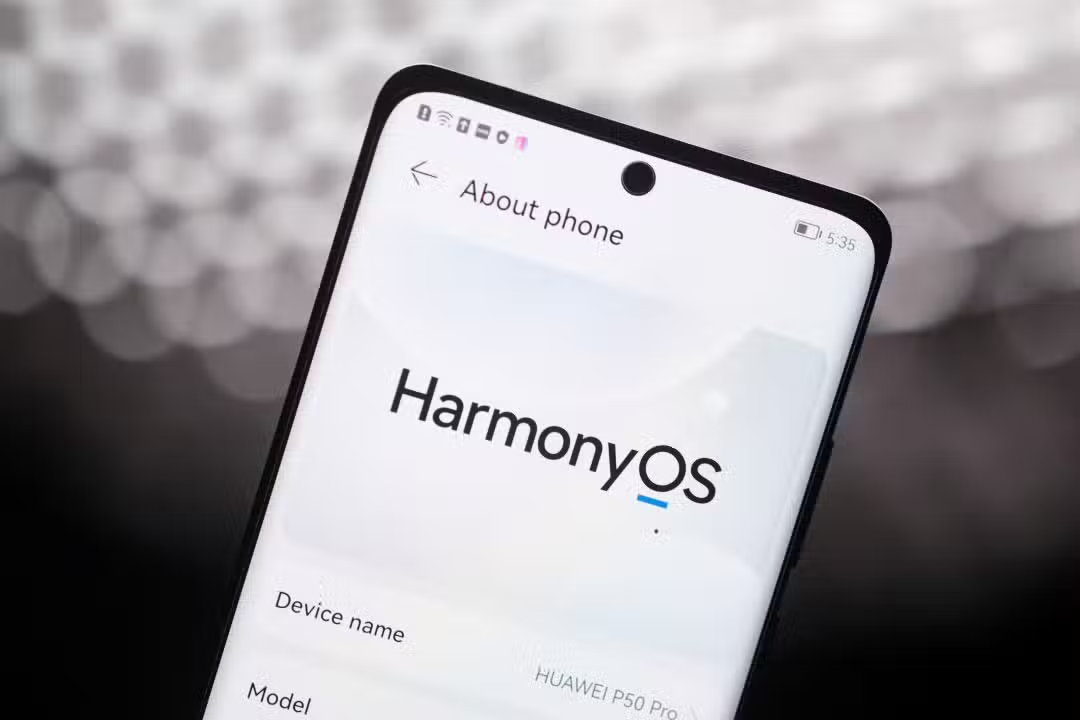
Huawei is preparing the official presentation of the HarmonyOS 7 operating system for the month of June 2026. The announcement will take place during the company’s annual developer conference, known as HDC. The new version of the software brings a profound redesign based on artificial intelligence. The company’s Engenheiros has focused development efforts on creating a more autonomous digital environment. The update will first reach the Chinese market before global expansion.
The Asian manufacturer invests in building an integrated ecosystem that connects different categories of electronics. The software manages everything from smartphones and tablets to smart watches and personal computers. The core strategy involves reducing the user’s dependence on manual commands. The Celia AI virtual assistant takes a leading role in carrying out complex tasks. The operating system uses advanced language models to interpret the context of use in real time.
Processamento local and integration of artificial intelligence on devices
The HarmonyOS 7 architecture prioritizes data processing directly on the device’s hardware. Essa technical approach reduces the need to send information to cloud servers. The local execution of artificial intelligence algorithms guarantees greater speed of response to commands. User privacy also receives a significant boost with local retention of sensitive data. The system optimizes battery consumption during operations that require high computational power.
Sharing resources between different devices connected to the same account represents another pillar of the update. A user can start editing a document on their smartphone and complete work on their tablet seamlessly. The system’s artificial intelligence identifies the proximity of devices and suggests transferring the task. Fluid communication between devices uses low latency connectivity protocols. The company works on specific optimizations for 5G networks and future telecommunications infrastructures.
The update rollout will follow a staggered schedule after the official release. Owners of premium line smartphones such as the Mate and Pura series will receive the software in the first phase. The manufacturer uses high-performance devices to monitor system stability in intense use scenarios. Collecting technical data during the initial weeks guides necessary adjustments before release to intermediate models.
Novas operational capabilities of Celia AI virtual assistant
The update transforms Celia AI into an intelligent agent capable of interacting with third-party applications. The virtual assistant gains the ability to understand complex instructions and perform multiple actions in sequence. The language model integrated into the operating system interprets conversational nuances and regional terms. The tool supports voice commands, text input and analysis of images captured by the device’s camera.
The practical functionalities of artificial intelligence cover various daily corporate and personal tasks. The software can analyze long documents and generate structured summaries in a few seconds. File organization in internal memory occurs automatically based on content and creation date. Photo editing receives tools that remove unwanted objects and adjust lighting without the need for additional applications.
The HarmonyOS 7 development framework offers new possibilities for software creators. The Huawei provides a set of application programming interfaces focused on artificial intelligence.
- Application-native Integração with the intelligent agent framework.
- Processamento accelerated visual and natural language tasks.
- Sincronização real-time data across multiple devices.
Open source allows independent developers to incorporate Celia AI functions into their own projects. The strategy aims to enrich the brand’s app store with innovative solutions. Providing simplified development tools reduces the time required to create new programs. The company offers technical support and detailed documentation to facilitate the transition of software studios.



Independência technology and software ecosystem expansion
The development of HarmonyOS 7 consolidates Huawei’s distance from open source platforms maintained by other corporations. The independence trajectory gained strength with the NEXT version, which eliminated external software libraries. The core of the current operating system has a proprietary architecture developed entirely by the company’s engineers. Essa autonomy guarantees full control over the update cycle and the implementation of security protocols.
The expansion of the operating system goes beyond the limits of mobile telephony and reaches the computer market. Industry Projeções indicate an increase in adoption of the software on corporate laptops and desktops. The graphical interface automatically adapts to the screen size and available input method, be it touch, mouse or keyboard. The standardization of the digital environment reduces the learning curve for users who purchase new brand equipment.
The manufacturer’s cloud services infrastructure complements the operating system’s capabilities. Remote backup storage and settings synchronization occur invisibly in the background. Artificial intelligence manages data traffic to avoid excessive consumption of mobile internet franchises. The network architecture supports future integration with more advanced communications technologies.
HDC 2026 conference Programação and testing schedule
The 2026 edition of the HDC conference will serve as the central stage for the technical demonstration of the software. The event brings together programmers, industry executives and digital security experts. The schedule includes in-depth panels on artificial intelligence architecture and hands-on coding sessions. The company traditionally releases the first test build to registered developers shortly after the keynote.
The technical community analyzes the manufacturer’s official forums in search of information about the compatibility of old devices. Preliminary Relatórios points to improvements in RAM memory management, which could benefit devices with limited hardware. Source code optimization results in smoother animations and shorter loading times for heavy applications. The engineering team maintains a direct channel of communication with testers to identify programming flaws.
The operating system’s global launch schedule differs from the calendar applied to the Asian market. International versions of the software require linguistic adaptations and adjustments to comply with local data protection regulations. The virtual assistant receives specific training to understand different languages and cultural contexts before being released on other continents. The manufacturer remains focused on code stability during all update distribution phases.
Veja Tambem em Latest News (EN)

Avi Loeb explains meteor explosion that shook Massachusetts with 2% energy from the Hiroshima bomb

Courtney Clenney’s defense inspects murder knives at Florida hearing

Jhon Durán agrees with Galatasaray and returns to Turkish football

List brings together 11 cozy science fiction games for relaxing experiences in space; check out what they are

Max Domi faces complications after back surgery and is out indefinitely from the Toronto Maple Leafs

William Pacho renews with PSG after two-time Champions League title

Adidas presents the Colombian team’s new white uniform for the 2026 World Cup

Chyler Leigh reveals regret about not filming scene with Eric Dane on Grey’s Anatom

Taylor Swift announces original song for Toy Story 5 after rumors

Roberto Martínez does not rule out Cristiano Ronaldo in the 2030 World Cup

Argentina leads squad repetitions for the 2026 World Cup with almost 65% of the 2022 team