

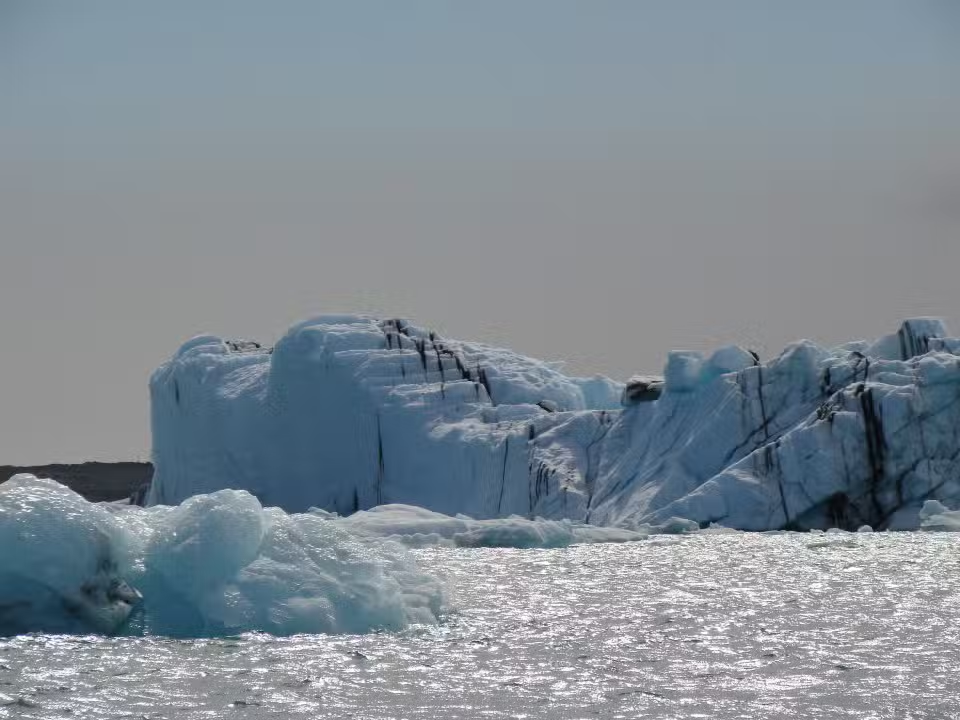
Pesquisadores have identified an extensive underwater passage hidden beneath the Thwaites glacier, located in Antártida. The geological structure functions as a direct channel for ocean currents. The discovery changes the understanding of the stability of polar mass. The continuous flow directs waters with higher temperatures to the base of the ice. Isso causes a significant acceleration in the region’s melting process.
The phenomenon adds a new level of complexity to current climate studies. The glacier has a crucial influence on controlling global ocean levels. Previous Estudos already pointed to a sharp loss of volume in the area. The presence of this hidden mechanism, however, demonstrates that erosion occurs more quickly and silently than mathematical models predicted. Especialistas assess that the internal dynamics of the polar structure need immediate review.
Mapeamento reveals direct route to warm ocean currents
The identification of the submarine channel occurred through the use of advanced seabed mapping technologies. Cientistas have been monitoring the Thwaites glacier for several years. The ice mass is considered one of the largest and most unstable on the entire Antarctic continent. The recent results surprised observation teams. The equipment revealed a complex topography that facilitates the entry of heated fluids.
Anteriormente, the scientific community assumed that the base of large glaciers remained isolated from the main flows of warm water. The new underwater structure acts exactly as an expressway for these currents. The strategic location of the channel allows it to bypass natural barriers in the underwater relief. Ocean waters directly reach the lower, more vulnerable layers of ice.
Esse direct contact changes the basal temperature of polar formation. The heat transferred by the water weakens the foundation that supports the glacier’s colossal weight. The discovery highlights a powerful natural mechanism. The process intensifies the degradation of the structure continuously, without showing visible signs on the white surface of Antártida.
Erosion Dinâmica at the base of the polar structure
Hot water flows penetrate deeper and deeper into the Thwaites glacier. The researchers explain that the hidden underwater channel serves as the main access route. Melting dynamics undergo a drastic change with this constant intrusion. The natural corridor at the bottom of the ocean eliminates the thermal protection that the ice had.
Water with high temperatures reaches the deepest and densest strata of the formation. The continuity of this physical contact determines the rate of mass loss. The process of basal erosion has specific characteristics that concern glaciologists. The mechanics of melting involve multiple simultaneous factors.
- Fluxo directed: The topography of the channel guides hot water directly into the base of the glacier.
- Direct Contato: The heated currents maintain constant interaction with the lower surface of the ice sheet.
- Erosão from bottom to top: The structure’s foundation suffers continuous wear, generating profound structural instability.
- Active Derretimento: Uninterrupted renewal of ocean water prevents cooling and keeps degradation accelerated.
- Unexpected Aceleração: Volume of ice lost exceeds initial estimates from traditional climate models.
The level of melting generated by this phenomenon exceeded all predictions established in recent years. The scientific community is focusing efforts to understand the full extent of the influence of this underwater corridor. The stability of the glacier directly depends on the integrity of its base, which is now under constant thermal attack.
Impacto direct to sea level rise projections
The colossal volume of ice stored in the Thwaites glacier makes the situation a global warning point. Polar structure receives intense investigation as it is one of the largest potential contributors to ocean rise. The total collapse of this single glacier has the capacity to raise sea levels by approximately 65 centimeters. The impact would alter the world’s coastal geography.
The weakening of the base, driven by the submarine channel, substantially worsens risk projections. The loss of stability is not just limited to the Thwaites area. Accelerated melting can remove the physical support that holds other masses of ice in place. Isso would cause a ripple effect throughout the western region of Antártida.
The consequences of an event of this magnitude would affect marine ecosystems and coastal urban centers. Comunidades coastal areas around the planet would face severe infrastructure and security challenges. The urgency to monitor basal melt mechanisms has become an absolute priority for international research institutes.
Global Warming Influência in the Melt Cycle
The increase in the planet’s average temperatures has a direct influence on the intensification of this geological process. Global warming raises the overall temperature of ocean waters. Warmer water travels through marine currents until it reaches the Antarctic continent. When channeled through the underwater corridor, thermal energy accelerates the destruction of the ice base.
The interaction between natural topography and climate change creates a negative feedback loop. Ongoing greenhouse gas emissions fuel ocean warming. The warmer ocean provides more energy for underwater channels. The result is the intensification of the melting of polar structures and the amplification of the risks of global floods.
Especialistas warn that reversing this situation requires coordinated actions on a global scale. Reducing atmospheric emissions represents the only way to limit warming ocean currents. Sem As water temperatures decrease, the submarine channel will continue to operate as a natural accelerator of glacial erosion.
Autonomous Tecnologias guide next phases of research
The finding in Thwaites glacier raises the hypothesis that other hidden mechanisms exist in Antártida. Similar Estruturas may be acting silently beneath different ice masses on the continent. The next stages of scientific studies will focus on expanding underwater mapping. The central goal is to accurately quantify the total impact of these channels on polar melting.
Advanced monitoring will depend on the intensive use of autonomous underwater vehicles. The robotic equipment will navigate beneath the ice shelves to collect primary data. Remote Sensores will measure the exact temperature of the water, the speed of ocean currents and the remaining thickness of the glacial base. Technology allows access to areas previously considered unexplorable.
The information collected by research teams will feed new supercomputers. Ongoing research provides the parameters needed to refine global climate models. Accurately understanding the melt dynamics of the Thwaites glacier will allow governments and institutions to prepare more effective adaptation strategies for the future of coastal zones.