James Webb Space Telescope identifies 10 billion-year-old chemistry in interstellar comet 3I/Atlas

The interstellar comet 3I/Atlas presents chemical characteristics that refer to the initial stages of formation of Via Láctea. Recent Observações tests conducted with Telescópio Espacial James Webb and the ALMA observatory identified rare isotopic ratios in the object. The space rock has been traveling on a hyperbolic trajectory through the solar system since its discovery by the ATLAS project on Chile. The data collected rules out any artificial origin and reinforces the natural nature of the celestial body.
The high speed of the cosmic visitor allowed astronomers to capture unprecedented details about the emission of gases and dust during the approach with Sol. Pesquisadores noted that the composition differs substantially from patterns found in local comets. The ejected material acts as a direct sample from a distant star system. Ongoing analysis helps the scientific community understand the ancient environments where the galaxy’s first planets formed.
Isotopic Assinatura reveals formation at extreme temperatures
The water detected in 3I/Atlas exhibits a deuterium to hydrogen ratio much higher than the average recorded in the Earth’s vicinity. Measurements point to a rate close to 0.95%, which represents more than ten times the volume found in bodies in our system. Essa specific concentration indicates that ice formation occurred in environments with temperatures below 30 kelvin. The scenario suggests an origin in dense and extremely cold molecular clouds.
Cientistas uses galactic chemical evolution models to cross-reference this data and estimate the age of the rocky material. The discrepancy between the comet’s isotopic signature and current interstellar cloud averages helps trace the object’s history. The evidence indicates that the celestial body was consolidated in a primordial phase of Via Láctea, characterized by a considerably lower metallicity. The high level of deuterium acts as a reliable marker of this remote past.
International Equipes investigate how intense ionization processes could have enriched the ice structure with heavy isotopes billions of years ago. The recent results transform the visitor into an observation window into ancient astronomical phenomena. The preservation of these chemical features over such an extensive journey challenges traditional models of astrophysics. Cross-referencing information from multiple telescopes guarantees the accuracy of published discoveries.
Emissão Organic Compounds and Gas Dynamics
Monitoring the 3I/Atlas coma revealed the significant presence of molecules such as methanol, hydrogen cyanide and methane. Esses elements act as fundamental building blocks for chemical reactions that precede biological processes under favorable conditions. The detection of these volatiles reinforces the theory that the basic ingredients for complex chemistry already existed in ancient star-forming regions. The release of the material varied considerably as the distance from Sol decreased.
The mixture of gases expelled by the comet has a clear predominance of carbon monoxide and carbon dioxide. Water vapor appeared in relatively low proportions during specific phases of astronomical observation. Essa dynamics create challenges for researchers trying to apply the sublimation models used on local celestial bodies.
- Carbon isotope ratios vary between 123 and 191 in measurements.
- The chemical activity exceeded expectations for objects of similar size.
- The outer crust trapped the volatile materials inside the core.
The irregular release of the compounds suggests that a hardened outer layer trapped the gases for a long period. Essa crust formed due to continuous exposure to cosmic radiation and the extreme cold of interstellar space. Progressive solar heating managed to penetrate this barrier and initiate the intense sublimation observed by terrestrial and space instruments. The shielded surface hypothesis explains the delay in the chemical activity of the object during its passage.



Gravitational Interação with Júpiter refines route calculations
The comet crossed Júpiter’s sphere of gravitational influence in March 2026. The gas giant did not capture the object, but the proximity allowed the recording of subtle dynamic effects on the hyperbolic trajectory. Essa phase of the journey generated new measurements of speed and spatial orientation. The data collected during the encounter refines mathematical calculations about the exact origin of the celestial body.
Imagens captured during the period of maximum approach shows structural variations in the tail and antitail of 3I/Atlas. Astronomy teams monitor how the planet’s gravitational pull interacted with the constant flow of dust and gas. Visual records help validate numerical simulations of encounters between interstellar visitors and high-mass planets. The opportunity also allowed complementary observations by probes that were already en route to the Jovian system.
The passage through the largest planet in the solar system did not change the comet’s final destination, which will continue its journey towards deep space. Maintaining the original route confirms the high speed of movement of the object since its entry into our neighborhood. Astronomers take advantage of each step of the way to test the limits of current detection instruments. The accuracy of the measurements exceeds standards established in previous decades of space research.
Technological Avanço drives astronomical discoveries
The ability to detect faint emissions from distant objects has transformed the study of interstellar chemistry in recent years. Telescópio Espacial James Webb and ALMA operate with a sensitivity that reveals nuances previously inaccessible to scientists. Combining data from multiple observational platforms confirms trends that might appear to be anomalies in isolated analyses. The increase in the number of identified celestial bodies directly reflects the improvement of automated sky scanning systems.
The body of evidence consolidates the theory that 3I/Atlas was formed between 10 and 12 billion years ago. Material ejected during the early stages of planetary formation traveled through the cosmos until it crossed Terra’s orbit. The preservation of these chemical structures turns the comet into a valuable reliquary for modern science. Continuous monitoring of the object will ensure sufficient data volume for future analysis.
Academic debate now focuses on honing in on the theoretical mechanisms that explain the unique signatures found in ancient ice. Observations will remain active even after the celestial body has definitively distanced itself from Sol. The case sets a new standard for tracking hyperbolic visitors crossing the solar system. The scientific community plans to compare this information with future discoveries to map the galaxy’s diversity.
Veja Tambem em Latest News (EN)

New Anker 300 W and 26,250 mAh portable battery hits the Chinese market with high compatibility

Disney confirms releases of Avatar 4 and 5 for 2029 and 2031 after sales of Fire and Ash
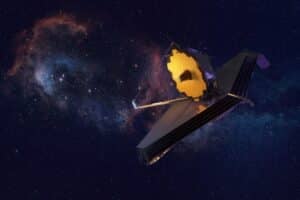
James Webb Telescope maps web of primordial gas that connects galaxies after the Big Bang

Taylor Swift announces original song “I Knew It, I Knew You” for Toy Story 5

Scott Pelley accuses CBS News boss of murdering 60 Minutes in staff meeting

Civil Police investigate suspicious death of American Hilde Ann Lynn at the Rosewood São Paulo hotel this Sunday

Famous TikToker’s father denies embezzling millions from daughter Charli D’Amelio

Tottenham seeks definitive agreement with Manchester City to buy Brazilian Savinho

Chrysalis spacecraft concept proposes 400-year journey with 2,400 people to Proxima Centauri b

Former Rockstar artist guarantees that Crimson Desert rivers surpass Red Dead Redemption 2
Tottenham opens talks with Manchester City to sign striker Savinho