Japan details 5 social benefits and 5 pensions for citizens in June 2026
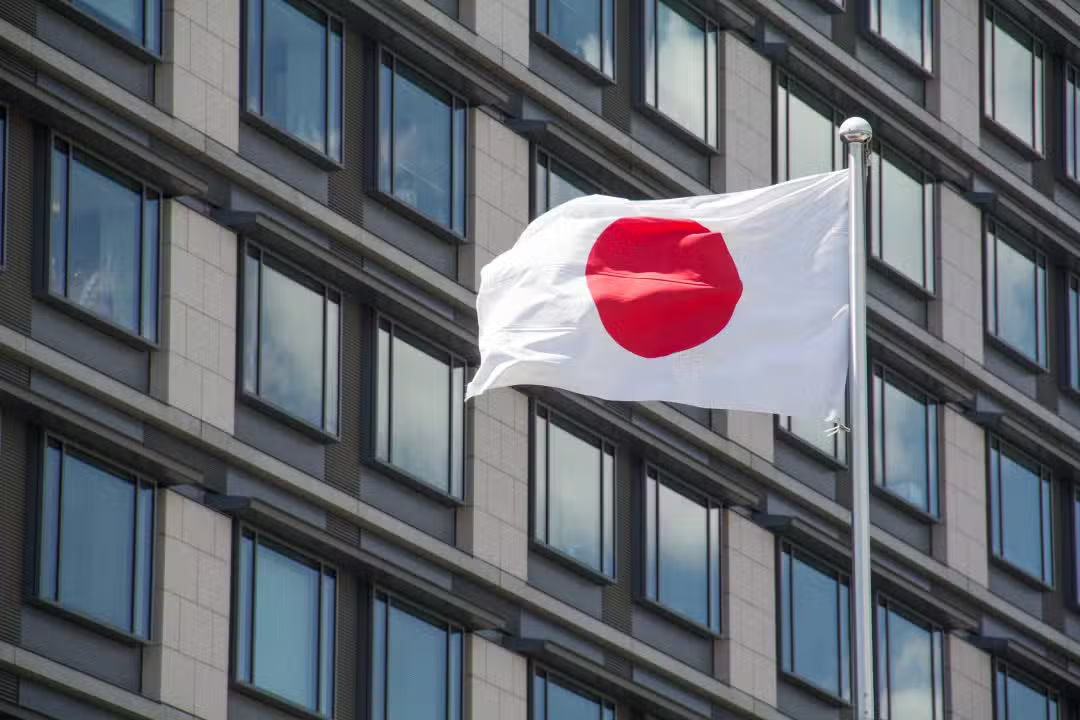
The Japão government strengthens the social security framework by detailing the conditions and rules for five social benefits and five types of retirement. The guidelines will come into effect from June 2026. Este set of measures aims to ensure comprehensive support at various stages of life for Japanese citizens, in accordance with current demographic needs.
The initiative reflects the authorities’ continued commitment to adapting the social protection system to structural changes in society. The new provisions range from family support in raising children to financial security in old age. Cidadãos are encouraged to consult the official documents to understand the eligibility criteria and application processes.
Principais social benefits for June 2026

Cinco social assistance programs stand out in government planning for next year. Cada has specific requirements and payment methods designed for different audiences, offering an essential safety net. The exact amounts for June 2026 will be adjusted annually, but the structure of the programs remains consistent.
Subsídio to Criação of Filhos (Jidō Teate) focuses on helping families with the expenses inherent in raising children. Este benefit is aimed at Japanese residents with children from birth to elementary school completion. The amounts are differentiated according to the child’s age and family income, with payments made quarterly to cover essential costs such as food, clothing and school supplies.
Auxílio-Unemployment (Shitsugyō Kyūfu) provides temporary financial support for workers who have lost their jobs. Citizens who have contributed to unemployment insurance for a minimum period, generally varying between 6 and 12 months in the two years prior to the request, are eligible. Payment is proportional to the last salary received and granted for a specified period of time, facilitating reintegration into the job market.
Já o Auxílio-Housing (Jūtaku Teate) offers assistance to cover rent or other housing-related expenses, aimed at low-income families. Eligibility criteria include income limits and family composition, ensuring that support reaches those who need it most. The amount of financial aid varies depending on the region of residence and the number of family members.
Benefício of Doença and Lesão (Shōbyō Teatekin) is crucial financial support for policyholders unable to work due to health problems or accidents. Trabalhadores formally enrolled in health insurance are entitled to the benefit, which covers a period of leave after medical confirmation. Este support ensures a source of income during recovery, mitigating financial impacts.
Ultimately, Apoio to Educação (Shūgaku Enjo) seeks to reduce the financial burden on families facing severe economic hardship. Ele helps cover essential educational expenses, including purchasing school supplies, daily lunches, and participation in excursions or extracurricular activities. Este benefit is fundamental to ensuring equity in access to education.
Retirement Modalidades for Japanese Citizens
Japão maintains a robust pension system, offering various retirement options for its citizens. Essas pensions are designed to ensure financial stability in old age, in cases of disability or for dependents after the death of a contributor. The structure is based on a mandatory public pillar and complementary options.
Pensão Nacional (Kokumin Nenkin) represents the fundamental pillar of the Japanese pension system. Todos residents of the country aged between 20 and 59 must contribute, including self-employed people, farmers and students. Receiving the benefit generally begins at age 65, and is calculated based on the actual years of individual contributions to the system.
Para formal workers, there is Pensão of Empregados (Kōsei Nenkin), which complements Pensão Nacional. Este scheme is aimed at individuals employed in companies and other organisations. The contribution is made jointly between the employee and the employer, and the value of the pension is calculated based on the average salary and the length of service dedicated to the career.



Pensão by Invalidez (Shōgai Nenkin) provides financial support to people who have developed a disability that limits their ability to work. Those eligible are taxpayers of Pensão Nacional or Pensão of Empregados who acquired disability during the contribution period. The benefit is classified into different degrees of disability, which directly influence the amount received by the insured.
In the event of the death of a taxpayer, Pensão by Sobrevivência (Izoku Nenkin) provides financial security to their dependents. The most common beneficiaries are the spouse and children, under specific conditions established by social security law. The award and value of the pension depend on the deceased’s contributions to Pensão Nacional or Pensão from Empregados.
Adicionalmente, Pensões Privadas and Empresariais (Kojin Nenkin and Kigyō Nenkin) act as complementary schemes to public pensions. Elas are offered by companies, through specific plans, or hired individually by citizens seeking greater security. Esses plans generally offer tax incentives and greater flexibility in personal financial planning, allowing for more customized planning.
Requisitos and request process
Para To access benefits and pensions on Japão, citizens must follow a standardized application process. The Japanese government seeks to simplify these procedures, offering clear guidelines and service platforms. It is essential to gather complete documentation before initiating any formal application.
Key documents and steps include:
- Documentos valid ID cards such as Japanese passport or My Number card.
- Comprovante of residence in Japão, attesting to the applicant’s current address.
- Extratos details of social security contributions, essential for calculating pensions.
- specific Certidões, such as birth, marriage or death, depending on the type of benefit desired.
- Preenchimento of official forms, available at government agencies or online.
- Informações bank accounts for direct deposit of payments.
The first step is to check eligibility for the desired benefit. Next, the citizen must collect all necessary documentation, ensuring it is up to date and compliant. The submission process can be done in person at a government agency or, in many cases, digitally through the specific Ministério portals of Saúde, Trabalho and Bem-Estar. Após submission, there is a review period, and the response is communicated to the requester, including details about the start of payments.
Pagamentos and attractions of the Japanese system
The Japão social security system stands out for its organization and the scope of services provided to citizens. Payments of benefits and pensions are made directly to the bank accounts designated by the beneficiaries. Esta practice guarantees efficiency and punctuality, elements valued by the population.
Transparent fund management is a fundamental feature. The attractions of the Japanese system include its broad coverage, which extends from birth with family support to retirement with multiple pension options. Financial security for citizens is a priority, reflecting a lasting commitment to social well-being. The stability of the system is constantly reviewed and adjusted to meet the demands of a demographically evolving society.
Veja Tambem em Latest News (EN)

Preliminary agreement between Iran and the US is suspended after Israeli bombings in Lebanon

Alaskan Bush People star Matt Brown found dead in river at age 43 after disappearing

Nvidia announces Rtx Spark chip to reinvent the PC and challenge Intel and Apple

44-year-old man tries to abuse 5-year-old girl in Tyumen and is stopped by children in Russia

Global restructuring of manufacturer OnePlus affects leadership and Robin Liu leaves command in India

Anvisa authorizes Ypê to resume production in Amparo from this Monday

Nintendo releases technical updates to stabilize ten games from the original console on Switch 2

Samsung discards AES technology for the S Pen and maintains classic system on the Galaxy S27 Ultra

Jay-Z concerts at Yankee Stadium see bleacher tickets sell for $12,000 on resale

Apple device maintains high performance and attracts consumers with A18 chip and advanced cameras in 2026

Xbox Partner Preview stream reveals never-before-seen details on Stranger Than Heaven and S.T.A.L.K.E.R. 2