Samsung Galaxy A57 smartphone innovates with premium lens transition and hits stores in April
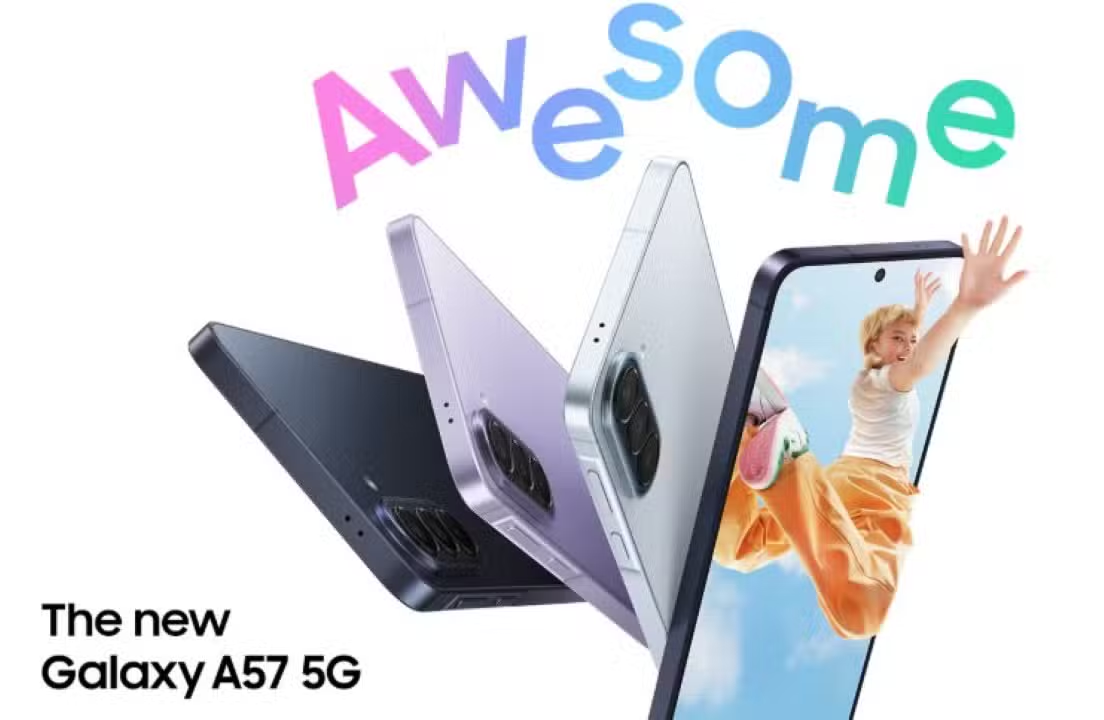
The South Korean manufacturer officially launched the Samsung Galaxy A57 smartphone with updates focused on users’ photographic experience. The mobile device, introduced to the global market on March 25, 2026, introduces a blur-free zoom transition system between the rear cameras. The novelty brings the device closer to the intermediate category of the brand’s high-cost models, eliminating visual delays during framing changes.
The new feature in the Galaxy A family acts directly on the alternation between the standard main lens and the wide-angle sensor. Consumidores that record videos or capture dynamic images notice the change in the fluidity of the native application interface. The company has focused development on software optimizations and signal processing to deliver faster, more responsive navigation in everyday use.
First look at the Galaxy A57 5G. Clean design, smooth zoom transitions, and enough power to get you into a quick game. pic.twitter.com/FBLVTYwFCD
— GadgetMatch (@gadgetmatch) March 25, 2026
The advancement in the intermediary photographic interface
The main technical change in the Samsung Galaxy A57’s camera application lies in the communication between the optical sensors during continuous use. The transition from the 1x view to the 0.6x perspective occurs seamlessly, without the traditional frame skipping seen in previous generations. Essa technical feature requires precise alignment between the photographic hardware and the operating system’s image processing algorithms.
The company’s Engenheiros has adjusted the shutter response time and lens synchronization to ensure that video recording does not suffer from visual interruptions. The gain in usability meets a frequent demand from content creators who use intermediate smartphones for publications on social networks. The smoothness of lens changes raises the category standard and sets a new benchmark for direct competitors in the mobile technology market.
Especificações lens assembly techniques
The rear image capture module maintains a versatile configuration for different lighting and distance scenarios. The primary sensor operates with a resolution of 50 megapixels and integrates optical image stabilization, a fundamental component to avoid blurry photos. Esse core component also offers native support for recording videos with high dynamic range, balancing light and dark areas of the scene.
- Main 50-megapixel Sensor with optical stabilization and high dynamic range video support.
- 12-megapixel ultra-wide-angle Lente for capturing landscapes and large groups of people.
- Câmera 5 megapixel macro dedicated to photographs of objects at extremely short distances.
- Sensor 12-megapixel front-facing camera optimized for self-portraits and high-definition video calls.
The wide-angle camera delivers an expanded field of view without excessively distorting the edges of the photograph, maintaining color fidelity. The 5-megapixel macro component acts as a complementary tool for capturing tiny textures and details that go unnoticed by the naked eye. On the front of the panel, the 12 megapixel sensor guarantees clear recordings and supports video capture in 4K resolution.
Processamento imaging and artificial intelligence
The photographic performance of the Samsung Galaxy A57 depends heavily on the new image signal processor built into the device’s chipset. The electronic component speeds up the reading of data captured by the lenses and applies automatic corrections in fractions of a second. The Nightography system, focused on nighttime environments, received an updated algorithm that reduces digital noise and grain in places with low incidence of light.
The device’s artificial intelligence identifies specific elements of the scene, such as faces, animals and vegetation, adjusting contrast and saturation independently. Object recognition works in real time, allowing autofocus to follow the main subject even when it is moving. The gallery software also incorporates advanced editing tools such as erasing unwanted elements and remastering old portraits.



Essas editing functions eliminate the need to install third-party applications and simplify the common user’s workflow. The deep integration between photographic hardware and machine learning resources reflects the manufacturer’s strategy of democratizing technologies previously restricted to the Galaxy S line. The practical result is a higher rate of usable photos right after the initial click.
Desempenho general and hardware characteristics
The smooth operation of the camera and the One UI operating system is based on the processing power of the Exynos 1680 chip. The silicon component manages everyday tasks with energy efficiency and supports the execution of electronic games with moderate graphical demands. The smartphone leaves the factory with the most recent version of the brand’s interface, built on the Android 16 architecture, with security updates guaranteed for multiple years.
The autonomy of daily use is provided by a battery with a capacity of 5,000 milliampere-hours, designed to withstand long journeys away from the socket. The energy component accepts quick recharging of up to 45 watts via cable, reducing waiting time connected to the electrical network. The screen with Super AMOLED technology displays images with high contrast and operates with a refresh rate of 120 hertz, ensuring smooth animations on the interface.
The external design of the equipment features reduced thickness and lighter weight compared to the previous generation, making it easier to handle with just one hand. The chassis structure maintains IP68 certification, which attests to the product’s resistance against dust ingress and accidental submersion in fresh water. The device offers random access memory options starting at 8 gigabytes, ensuring the maintenance of multiple applications open in the background.
Preço Suggested and Global Release Schedule
The commercial schedule for the Samsung Galaxy A57 establishes the start of official sales for April 10, 2026 in selected markets. The product will be distributed gradually, reaching different continents over the weeks following the global announcement. European retailers will receive the first units with a starting suggested price of 529 euros for the entry-level configuration.
Consumers will find the device in internal storage variants ranging between 128 gigabytes, 256 gigabytes and up to 512 gigabytes depending on the region. The model has already undergone approval processes at regulatory agencies in several countries, indicating a large-scale launch strategy. The expectation of the Brazilian market points to the arrival of the equipment in a short space of time, with values adapted to the local tax reality.
The pricing strategy positions the smartphone as a viable alternative for customers looking for robust specifications without the cost of a high-end model. The availability of different colors aims to attract different public profiles, consolidating the manufacturer’s presence in the segment with the highest sales volume. The technological package offered reflects the maturity of the intermediate category in the current mobile telephony scenario.
Veja Tambem em Latest News (EN)

Galaxy S26 line gains automatic integration with Apple’s AirDrop through Quick Share

HyperOS 3.1 system with Android 16 arrives on Xiaomi cell phones without public testing phase

Accident on BR-116 leaves 16 dead in a family in Santa Terezinha, Bahia

IOS 26.4 update arrives on iPhone with advanced security and playlists generated by artificial intelligence

Iván Cepeda backs down and denies evidence of irregularities in Colombia’s elections

Chris Robinson responds to boos from fans at The Black Crowes concert in Florida

Manufacturer OnePlus prepares portable Android console with exclusive physical controls for shooting games

Apple releases iOS 26.4 for iPhone with new emojis and advanced audio features

New Anker 300 W and 26,250 mAh portable battery hits the Chinese market with high compatibility

Disney confirms releases of Avatar 4 and 5 for 2029 and 2031 after sales of Fire and Ash

James Webb Telescope maps web of primordial gas that connects galaxies after the Big Bang