
First detection of life outside Earth should occur in world with more intense biosignature

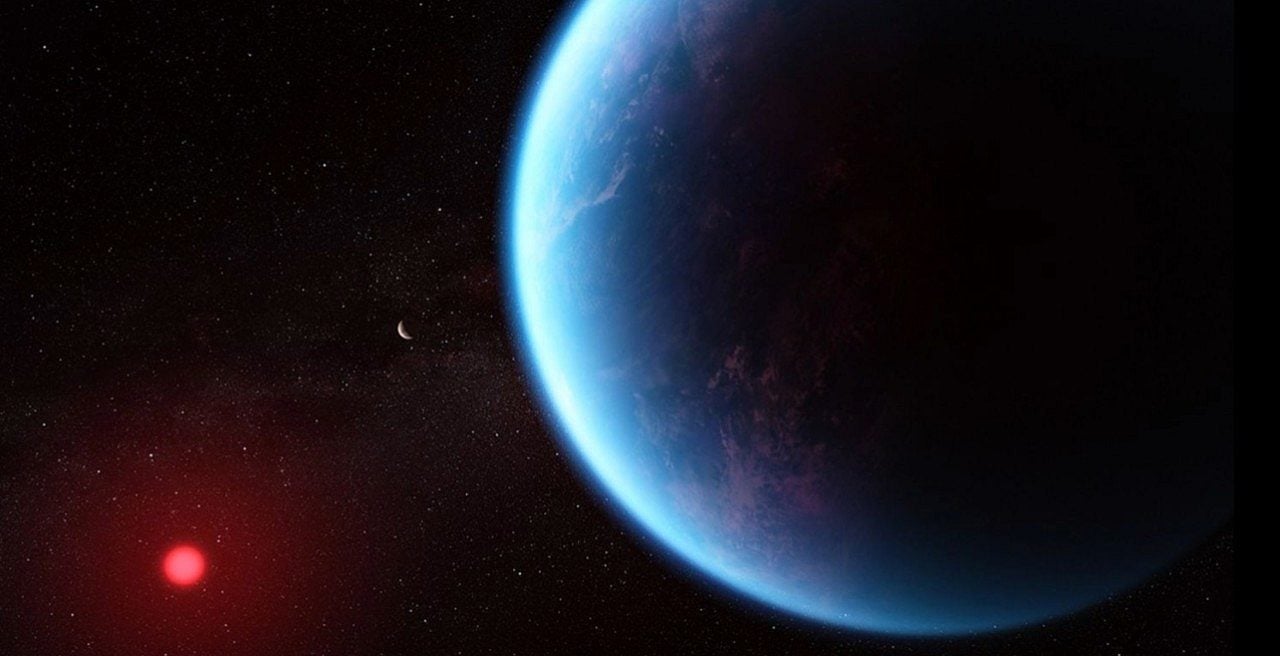
New research from Goddard Space Flight Center highlights an important bias in the hunt for signs of life on other planets. Astronomers should not expect to find the most common form of biosignature first. Instead, the first chemical clue will come from the planet emitting the strongest signal.
Essa conclusion follows a historical pattern in astronomy. The first confirmed exoplanet orbited a pulsar. The first quasar was the brightest visible from Terra. The first hot Júpiter was a gas giant in orbit for just four days.
The paper, led by Ravi Kopparapu, applies this logic to future life detectors. Telescópios like James Webb and the upcoming Habitable Worlds Observatory have detection thresholds. Planetas that overcome these thresholds more easily appear earlier, even if they are rare.
Telescópios favor targets with thick atmospheres
James Webb analyzes starlight filtered through atmospheres during transits. Sub-Neptunes, larger than Terra and with hydrogen-rich atmospheres, generate enormous spectral signals. One example is K2-18b, about 2.6 times the size of Terra and 124 light years away. Seu biosignature signal could be 32 times stronger than that of a world analogue to Terra.
Essa difference in intensity has a large impact on the volume of observable space. A planet twice as detectable can be found in a volume eight times as large. In the case of sub-Neptunes like K2-18b, the class could be 30,000 times rarer than worlds similar to Terra and still come up first in searches.
- K2-18b orbits a cool red dwarf star
- Possui thick hydrogen atmosphere
- Situa is in the habitable zone of the system
- Gera amplified spectral signal
- Debate on habitability remains open
Viés detection repeats in future observatories
Habitable Worlds Observatory, designed to study planets the size of Terra in habitable zones, faces a similar challenge. Mesmo focused on terrestrial targets, the first signal detected will be stronger spectral features. Não is necessarily the most common atmospheric state.
Terra itself has changed its biosignatures over time. Atmosfera rich in methane in Arqueano, low in oxygen in Proterozoico and rich in oxygen today. Cada phase offers different levels of detectability depending on the wavelength used by the telescope.
Astrônomos already knows this effect in other fields. The first asteroid samples were the largest. The first black holes detected were the most massive. Selection by brightness dominates the initial catalogues.
Implicações for interpretation of future findings
Encontrar any biosignature would represent a huge advance. Porém, researchers caution caution in interpretation. If the first signal seems unusual or different from Terra, this should not be surprising. Do Likewise, if it looks familiar, one should not conclude that life outside of Terra follows the same pattern.
The study reinforces the need for multiple observations and models to contextualize findings. A strong biosignature does not guarantee representation. Ela just indicates that the planet was in the right place, with the right conditions to be seen first.
Contexto history of the search for exoplanets
Desde the discovery of the first exoplanet in 1992, astronomy has accumulated thousands of candidates. The Kepler telescope changed the game by revealing the abundance of worlds. Agora, James Webb begins to probe atmospheres in unprecedented detail.
The transition to the era of biosignatures requires a clear understanding of observational biases. Sem she, scientists can jump to conclusions about the distribution of life in the universe.





