
Harvard astrophysicist details cosmic risks and defends new space investments at Boston conference

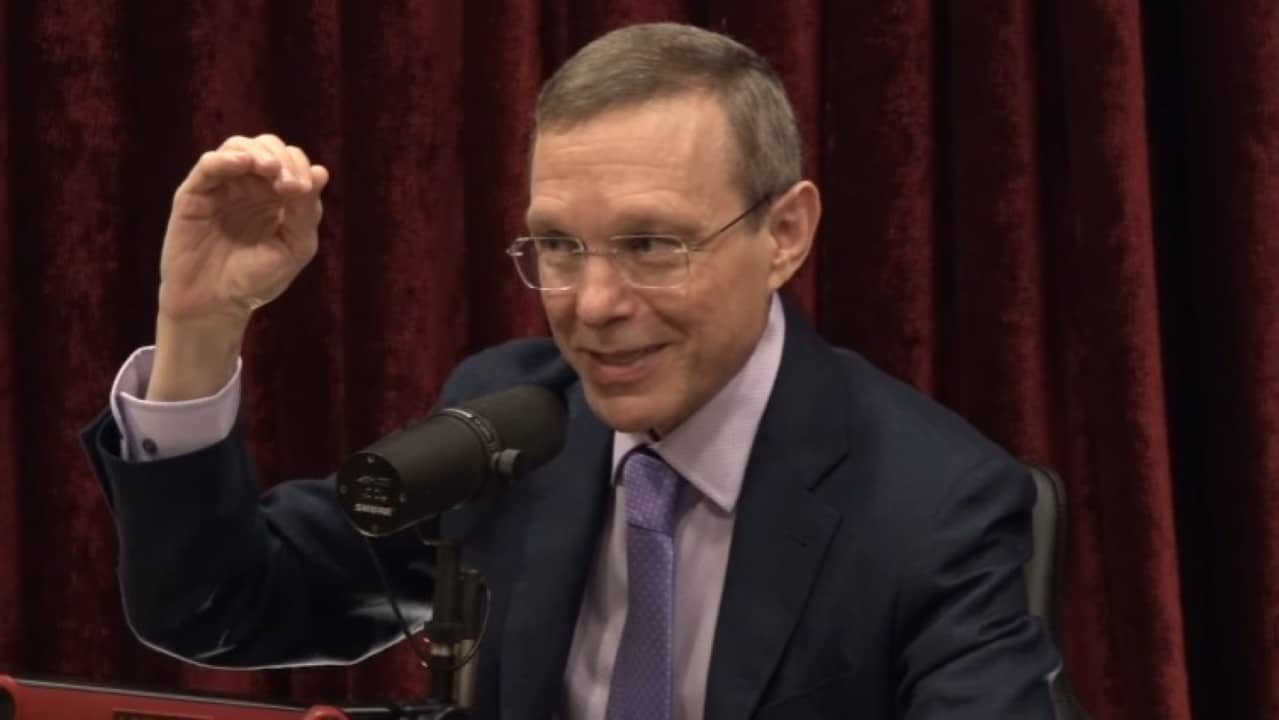
The astrophysicist from the university of Harvard, Avi Loeb, participated in a conference aimed at financial market investors in the city of Boston, at Estados Unidos. The researcher used the meeting to detail capital allocation opportunities in the space exploration sector. The presentation took place last Tuesday and brought together professionals interested in the economic prospects of the aerospace sector. The scientist argued that humanity’s long-term survival depends directly on the ability to monitor and understand the environment beyond the Earth’s atmosphere.
Para illustrate the urgency of the topic, the academic cited a meteor explosion recorded two days earlier over the capital region of Massachusetts. The astronomical event released an amount of energy equivalent to 2% of the atomic bomb that hit the city of Hiroshima. The analogy served to reinforce the planet’s vulnerability to external threats. The researcher recalled the case of dinosaurs. The species became extinct because it did not have the technology to monitor and deflect space rocks on a collision course with Terra.
Explosão meteor over the metropolitan region exemplifies threats
The incident that occurred on May 30 involved a meteor approximately one meter in diameter. The celestial body exploded at an altitude of 60 kilometers. The release of energy reached the mark of 300 tons of TNT explosives. Moradores from different parts of the Grande Boston metropolitan region reported hearing a significant bang at the time of the event.
The recent case acted as a starting point for the scientist’s main thesis. Avi Loeb maintains that the existential risks to humanity go beyond the impact of natural asteroids and comets. The astrophysicist mentioned the possibility of technological probes of extraterrestrial origin representing another type of variable in the space environment. Para mitigate these uncertainties, advanced search equipment plays a key role. The NSF-DOE Rubin Observatory works to discover and continuously track these near-planet objects.
Monitoring requires technical precision to avoid misinterpretation. Objetos that exhibit non-gravitational acceleration without visible outgassing can easily be confused with dark comets. Caution in analyzing astronomical data prevents errors during the visual and spectral identification process. The precision of modern telescopes makes it possible to separate natural phenomena from anomalies that require in-depth investigation.
Pesquisa associates dark comet with Soviet probe lost in space
Durante the date of the conference, Avi Loeb also signed as co-author on a scientific article that proposes a new interpretation for a known space object. The document presents evidence that connects the dark comet named 1998 KY26 to the Phobos 1 probe. The Soviet space mission was launched with the aim of studying the moons of Marte. The equipment failed in 1988 after receiving an incorrect command sent from a control base on Terra. The loss of communication turned the structure into space junk adrift in the solar system.
The study authors point out that the current orbits of the two objects present a high degree of mathematical compatibility. The research team modeled two 1.9 kilometer per second propulsive pulses that would have aligned the trajectories precisely. The calculated value would be perfectly within the operational capacity of the Phobos 1. The Soviet probe carried a powerful propulsion system. The engine was powered by a mixture of nitric acid and amine, which would justify the change in route observed in the theoretical model.
The scientific article lists six technical reasons to support the hypothesis of the dark comet’s artificial origin. Observations of the object already total more than 230 records documented by different observatories around the world. Definitive proof of the identity of 1998 KY26 will require physical verification. Visual and material confirmation is expected to occur in July 2031. The Japanese Hayabusa2 space mission is scheduled to land on the object’s surface to collect direct data.
Histórico of failures in classifying artificial objects
The confusion between natural celestial bodies and human-made equipment has precedents in modern astronomy. In January 2025, Minor Planet Center misclassified the Tesla Roadster vehicle as asteroid 2018 CN41. The car had been launched into space by the company SpaceX years earlier. The international organization had to correct the flaw in the database immediately after identifying the error. The episode demonstrates the difficulty of cataloging dark objects that reflect little sunlight.
Harvard’s astrophysicist uses these documented examples to question other classifications established by the scientific community. Avi Loeb hypothesizes that a similar error may have occurred during the passage of interstellar visitor 1I/’Oumuamua through the solar system. Adopting a more rigorous analysis method avoids applying hasty labels to bodies that exhibit unusual dynamic behavior. Methodological prudence ensures that technological artifacts are not summarily dismissed as mere space rocks.
Impactos economic and practical applications of aerospace technology
The confirmed discovery of interstellar visitors or extraterrestrial artifacts would have the potential to generate immediate impacts on global financial markets. The uncertainty arising from an event of this magnitude could shake investors’ confidence in traditional government institutions. Durante presentation, the scientist mentioned recent discussions about a possible transparency directive and disclosure of information about unidentified flying objects. The issue gained political strength during the term of former president Donald Trump in Estados Unidos.
Contact with advanced technologies of external origin could result in unprecedented financial gains for the global economy. Reverse engineering unknown materials would bring exponential leaps in the population’s quality of life and increased human longevity. The contemporary space sector already offers a wide range of practical and profitable applications for private capital. Investment opportunities cover several strategic areas:
- Global Comunicação via low-orbit satellite constellations.
- Sistemas for national security and border monitoring.
- Instalação from data processing centers outside the Earth’s atmosphere.
- Desenvolvimento of infrastructure for space tourism.
- Extração commercial for rare minerals in nearby asteroids.
- Utilização of the lunar isotope helium-3 as fuel for thermonuclear reactors.
- Pesquisa and manufacturing advanced technologies in low gravity environments.
Esses market segments attract increasing volumes of venture capital and corporate investment funds. The modern space race serves as the sector’s main growth engine. The geopolitical and commercial competition between Estados Unidos and China accelerates the development of new projects. The mastery of new aerospace technologies generates a continuous cycle of innovations that end up being adapted for commercial and industrial use on the Earth’s surface.
Cosmic Arqueologia and the advancement of human knowledge
Space exploration drives the development of fundamental scientific knowledge in parallel with financial returns. Avi Loeb recalled that the study of the cosmic background radiation and echoes from Big Bang allows humanity to trace its own origins in the universe. The practice of cosmic archeology works to search for and recover relics and data from remote periods of galactic formation. Deep observation of the cosmos works like a time machine for researchers.
The advancement of exploration missions helps to reveal how the conditions necessary for the emergence of life formed on Terra. Continued funding on this research front combines the practical need for planetary defense with the expansion of humanity’s intellectual frontier. The scientist argues that capital directed towards space infrastructure represents one of the most intelligent and strategic applications of financial resources available today.
The event in the city of Boston managed to unite the risk and return metrics of the financial market with the long-term perspectives of modern astronomy. The presentation structured by the researcher mixed concrete observational data, warnings about existential risks and profitability projections for the next decade. The scientific debate remains open while the community awaits definitive data from the Hayabusa2 probe. The central conclusion of the meeting reinforced that ignoring the space environment is no longer a viable option for the economy and global security.





