
Chery confirms assembly of the Omoda 4 hybrid compact SUV in Brazil in 2026 with a starting price lower than the Fiat Pulse


The Chinese manufacturer Chery has set the last quarter of 2026 for the start of sales of the Omoda 4 sports utility vehicle on the national market. The new vehicle will arrive at dealerships with a full hybrid engine and prices set between R$120,000 and R$140,000. The automaker’s strategy focuses on attracting consumers who seek electrification without the high costs of higher categories. The model will enter into direct competition with utilities already consolidated in the country.
The market positioning of the Omoda 4 aims to destabilize the price list charged by traditional brands in the compact SUV segment. Modelos like Fiat Pulse, Renault Kardian and Volkswagen Tera currently operate in higher value ranges, even offering less complex mechanical assemblies. The introduction of a complete hybrid system at a lower initial cost requires adaptation from competitors. National production in Itatiaia, Rio and Janeiro, makes this competitive edge possible.
Estratégia pricing and positioning in the national market
The value table projected for the Omoda 4 establishes a considerable financial difference in relation to the main SUVs available in the Brasil. The Fiat Pulse, in its mild hybrid version Impetus, costs R$151,490 at dealerships. The Renault Kardian Iconic reaches the mark of R$ 149,990. The Volkswagen Tera Highline is sold for R$146,190. The Toyota Corolla Cross, which has hybrid technology similar to the Chinese model, surpasses the R$160,000 barrier.
Essa discrepancy of up to R$ 30 thousand on the final label changes the dynamics of choice for Brazilian buyers. Consumers sensitive to the initial price will find the Chery utility vehicle a viable alternative to entering the electrified vehicle segment. The lack of need for external charging attracts drivers who live in condominiums without infrastructure for pure electric cars. Automakers installed in the country for longer will need to review equipment packages to justify the difference in cost.
The aggressive pricing policy reflects a common tactic by Asian manufacturers in global expansion. The company sacrifices part of the profit margin per unit to guarantee volume of registrations in the first months of sales. Building a solid customer base makes it easier to introduce more expensive models in the future. The Brazilian automotive market responds quickly to real reductions in acquisition value, especially in high-volume categories.
Conjunto Mechanical and Utility Energy Efficiency
The Omoda 4’s propulsion system integrates a 1.0-liter combustion engine, equipped with a turbocharger and three cylinders, with an auxiliary electric thruster. The mechanical combination generates a combined power of 130 horsepower. The technical highlight of the project lies in the delivery of power to the wheels. The vehicle reaches 22.9 kgfm of torque, equivalent to 225 Nm.
Esse torque index puts the Chinese model at the top of its category in terms of traction capacity. The additional force improves performance when overtaking on the road and facilitates the transport of maximum load without significant loss of performance. The immediate response of the electric motor eliminates the delay characteristic of conventional turbo engines when starting from traffic lights. Electronic management distributes energy autonomously.
The full hybrid architecture eliminates the need for cables and charging stations. The system recovers kinetic energy during braking and deceleration, storing the charge in a compact battery. The on-board computer decides the exact moment to activate the electric motor or the combustion engine, always prioritizing maximum fuel efficiency. Emissions of polluting gases drop significantly on low-speed urban journeys.
Dimensões physical and visual elements of the project
The physical size of the Omoda 4 exceeds the traditional measurements of compact sports utility vehicles sold in the Brasil. The total length reaches 4.40 meters. The elongated body expands the legroom available for passengers in the rear seat and increases the volumetric capacity of the trunk. The structure brings the Chinese vehicle closer to models belonging to higher categories in terms of habitability.
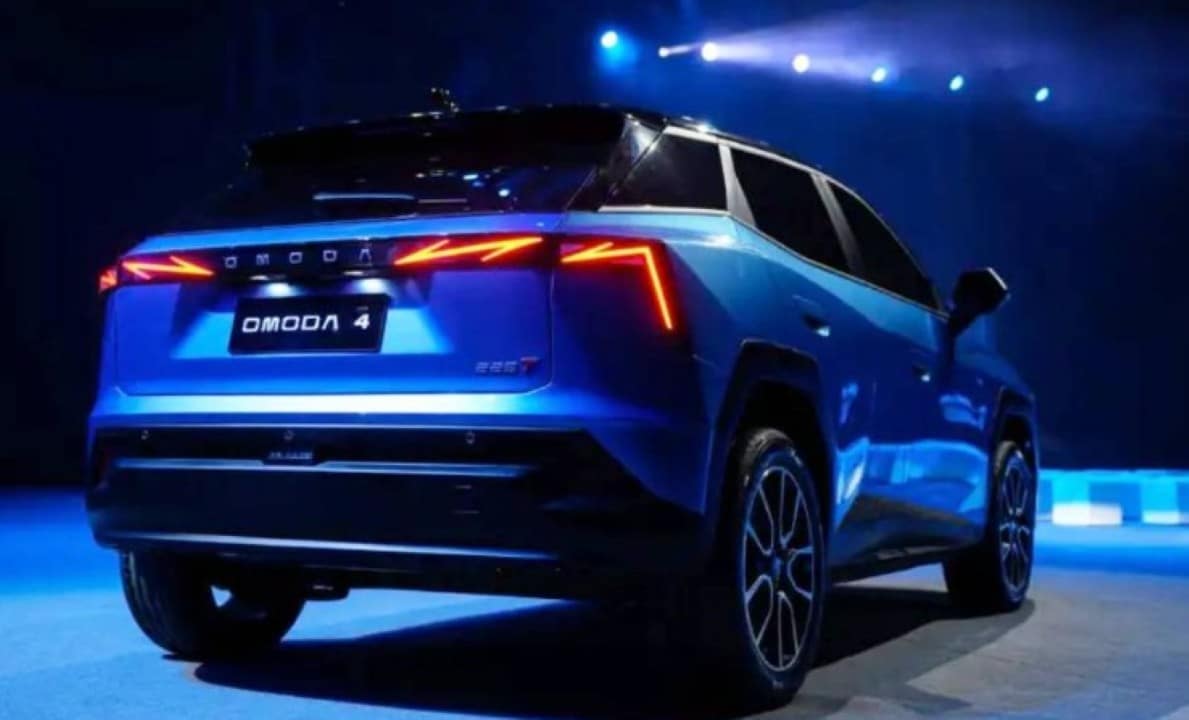
The development team sought references in the European high-luxury segment to design the car’s external lines. The front look features LED headlights with angular cutouts and a prominent grille. The rear has taillights joined by a horizontal light bar. The inspiration declared in Lamborghini Urus gives the product a striking visual identity.
The interior finish follows the technological proposal of the body, integrating components aimed at comfort and connectivity. The cabin offers the following standard items in higher versions:
- Central multimedia with vertical screen integrated into the main panel.
- Quadro fully digital instrumentation and configurable by the driver.
- Sistema parking brake with electronic activation.
- Bancos ergonomics with high resistance synthetic leather covering.
The horizontal arrangement of the dashboard creates a feeling of spaciousness in the cabin. The materials used on the doors and center console aim to increase the consumer’s perception of quality. The ergonomics were adjusted to meet the standards of the Western market, moving away from the old low-cost Asian designs.
Nacionalização of assembly and impact on the industry
The financial viability of the project directly depends on the local production strategy adopted by Chery. The automaker will use the CKD assembly system, an acronym in English for completely disassembled vehicles. Parts will arrive from Ásia and will be joined together on the assembly line located in Itatiaia, in the Rio state of Janeiro. The manufacturing unit belonged to Jaguar Land Rover and will come under the control of the Chinese operation.
Manufacturing in the national territory exempts the vehicle from the heavy import taxes applied to ready-made cars. The company also gains access to government credit lines and regional tax incentives for the automotive sector. The pre-existing industrial infrastructure in southern Rio de Janeiro accelerates the launch schedule, as it reduces the need to build new warehouses and test tracks. Hiring local labor strengthens the region’s economy.
The arrival of the Omoda 4 manufactured in the Brasil changes the long-term planning of competing brands. The offer of a full hybrid vehicle at the price of a combustion car forces an early technological update in the sector. European and American manufacturers will need to accelerate their own electrification projects to avoid losing share in a highly profitable segment. The end consumer reaps the benefits of this commercial dispute through access to cleaner and more efficient technologies.





