Solar flares cause G3 storm and northern lights can be seen in Illinois and Oregon
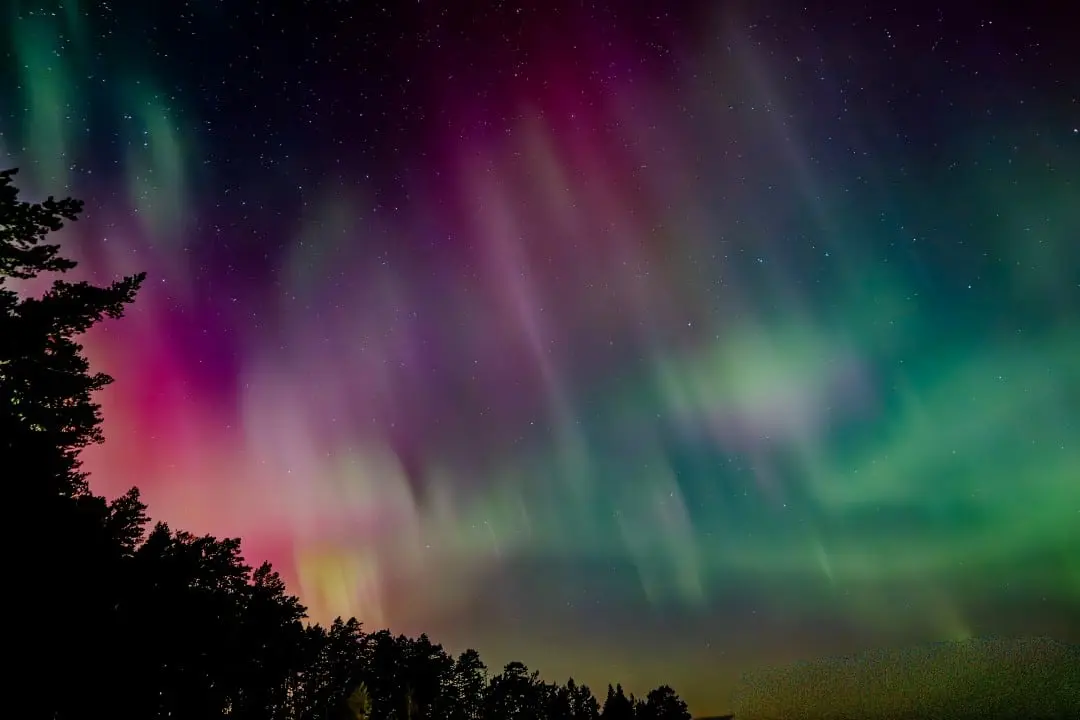
Centro of Previsão of Tempo Espacial of Administração Nacional Oceânica and Atmosférica (NOAA) has issued a G3 level alert for a strong geomagnetic storm hitting Terra between June 4th and 5th. The cosmic event is the result of multiple coronal mass ejections that broke off from Sol and traveled towards our planet. The interaction of these charged particles with the Earth’s magnetic field should intensify auroral activity. Observadores of the night sky in several regions of Estados Unidos will have the opportunity to witness the northern lights at lower latitudes.
The phenomenon occurs after a sequence of intense solar eruptions recorded by observatories. Active region 4455, located on the surface of Sol, released explosions classified in categories M9.3, M7.7 and X1 in an interval of less than 24 hours. Essas explosions released immense clouds of plasma that now interact with Terra’s magnetosphere. Especialistas in space weather monitor the possibility of a merger between these different ejections along the way. Esse scenario would magnify the impact of the event on the space environment close to the planet.
Formação of the phenomenon and the impact of coronal mass ejections
Coronal mass ejections travel through space at very high speeds. Durante this path, some of these plasma clouds may combine, creating a structure that scientists classify as a cannibal ejection. Essa configuration raises the risk of a more severe geomagnetic storm as the shock wave carries a higher particle density. The first contact with Terra’s magnetic shield was expected to occur during Thursday afternoon, considering Costa Leste’s American time zone. The effects are expected to persist until Friday.
Predictions indicate that peaks of greatest magnetic activity should occur in specific windows. The models point to greater intensity between 2pm and 5pm, and a second pulse between 8pm and 11pm, at the equivalent time of Brasília. Fora of these ranges, conditions should remain at a moderate G2 rating. The exact timing depends on the interaction of the plasma clouds with Terra’s magnetic field lines. Mudanças of a few hours in forecasts remains likely due to solar dynamics.
More on this story: Magnitude 5.7 solar flare increases chances of aurora borealis this week
Expansão of visibility for North American states
The aurora borealis are normally restricted to the extreme polar regions of the globe. However, during storms classified as G3, the auroral ring expands and descends into mid-latitudes. Estados like Illinois and Oregon integrate the possible visibility range, according to maps updated by NOAA. Outros states in the northern portion of the United States, including Washington, Minnesota and Maine, also present excellent potential for viewing colored lights in the night sky.
The most suitable time to observe the phenomenon is just after dark on June 4th and during the early hours of June 5th. Enthusiasts in areas with clear skies should look towards the northern horizon. The presence of Lua may slightly interfere with color contrast, but it will not be enough to impede the spectacle. Patience is key, as auroras often appear in intermittent waves.
Condições ideal and recommended equipment for observation
Para To maximize the chances of seeing the Northern Lights, observer preparation plays a crucial role. Light pollution generated by large urban centers easily overshadows the phenomenon’s more subtle glows.
See Also

Motorola’s new foldable cell phone surpasses the weight of the iPhone 17 Pro Max and gets a discount
Libra: Yukari Ishii’s horoscope predicts brightness and negotiation phase from August 17th to 23rd
Influence of the August 16 moon on skin care and well-being
- Busque regions away from city lights to ensure a dark sky.
- Utilize spatial forecasting applications to track indices in real time.
- Posicione in locations with an unobstructed view of the northern horizon.
- Ajuste cameras for long exposures, between 10 and 30 seconds.
Using appropriate equipment transforms the observation experience. Câmeras with long exposure capability can capture light over several seconds, revealing details that go unnoticed by the naked eye. Modern cell phone Aparelhos in night mode also produces stunning images. Sharing these records helps researchers map the true extent of the aurora in different regions.
Efeitos in technological infrastructure and continuous monitoring
Além of the visual spectacle, G3 class geomagnetic storms have the ability to affect technological systems. Satélites in low orbit may experience temporary guidance and communication problems due to increased atmospheric drag. Electricity distribution networks run the risk of suffering voltage fluctuations in more intense cases. Sistemas radio navigation and GPS signals also sense interference.
Companies that operate critical infrastructure follow strict protection protocols whenever an alert is issued. Até At this time, there are no reports of serious impacts or significant disruptions to essential services. The G3 level is considered strong, but is still far from the extreme categories. NOAA teams continue to update the bulletins constantly, adjusting forecasts as new data arrives from satellites.
Learn more: Strong solar storm causes NOAA warning and northern lights may shine in 23 US states
The current solar cycle and the frequency of extreme events
The origin of this intense magnetic activity is linked to the behavior of our star. Region 4455 has shown exceptional magnetic instability in recent days. The powerful flares released energy that formed the multiple coronal mass ejections. Essa region continues to be monitored around the clock, as its structure suggests that additional eruptions are not ruled out. Essa possibility can keep the alert active for an extended period.
Este event reinforces the characteristics of the current solar cycle, which reaches its peak of activity. Períodos thus increases the frequency of geomagnetic storms and the occurrence of auroras visible at lower latitudes. Scientists monitor each development using a vast network of satellites. Aqueles who miss this opportunity should keep an eye on upcoming alerts, as Sol will continue to provide spectacular events.