
Astronomer Avi Loeb questions the existence of negative mass particles in the Universe

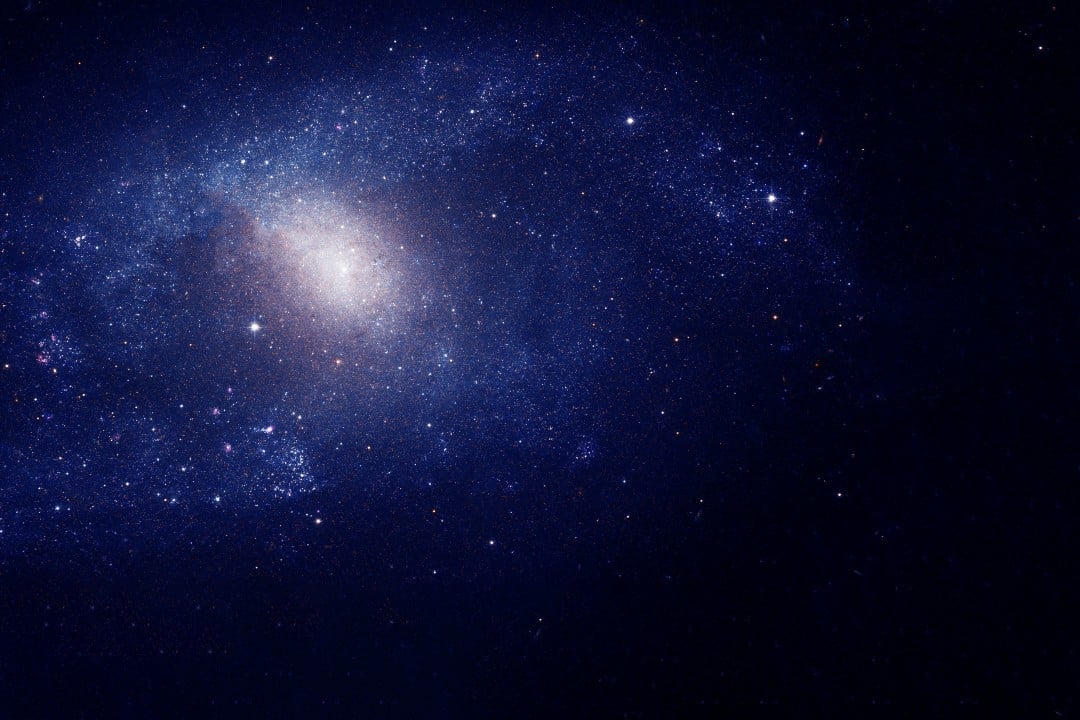
Astrophysicist Avi Loeb, from Harvard University, dedicated a day of reflection to the hypothesis of particles with negative mass as a possible explanation for dark matter and dark energy. The idea appears as an alternative to the standard cosmological model, which attributes 84% of the matter in the Universe to invisible components inferred only by gravitational effects.
Loeb departs from the current consensus. Ordinary matter represents only 5% of the cosmic mass-energy budget. The other 27% corresponds to dark matter, which exerts attractive gravity, while 68% comes from dark energy, associated with repulsive gravity that accelerates the expansion of the Universe. Both are detected indirectly, without direct observation.
Known particles and potential instability
All particles observed to date have positive mass. If there were negatively mass particles strongly coupled to them, known matter could decay to lower energy states. This would make matter unstable on cosmological timescales.
The author considers, however, a coupling weak enough to maintain the stability of positive matter throughout the age of the Universe. In this scenario, a cosmic sea of negative particles would influence concentrations of positive mass, such as galaxies and large-scale structures.
Analogy with electrical shielding
Loeb turns to plasma physics to illustrate the concept. In a plasma with positive and negative charges, an extra charge undergoes exponential shielding with distance, as per the Debye length described by Peter Debye in 1923. The electrical influence decreases significantly beyond this range.
In gravity, behavior differs because the force attracts masses of the same sign. A positive mass concentration would attract both positive and negative masses. The resulting negative particles would generate negative inertia, which could partially cancel out the positive mass and simulate gravitational shielding.
This shielding would be effective at low accelerations, similar to the regime where Modified Newtonian Dynamics (MOND) proposes changes in inertia or gravity. The MOND theory, developed by Moti Milgrom, modifies behavior at low accelerations, close to a cosmological threshold related to the speed of light divided by the age of the Universe.
- Positive mass concentrations attract negative particles
- Negative particles reduce observed net inertia
- Effect simulates shielding similar to electrical plasma
- Low accelerations make the phenomenon more pronounced
Hypothetical scenarios and limitations
The astrophysicist outlined scenarios where dark matter appears as an effect of reduced inertia below the MOND threshold. Negative mass particles could also contribute to the negative pressure associated with dark energy, explaining the temporal coincidence between structure formation and accelerated expansion observed in the second half of cosmic history.
He recognizes, however, fundamental problems in quantum field theory for particles of negative mass. The scenarios explored are probably not physically viable. Still, the intellectual exercise highlighted interesting practical implications.
Theoretical applications in propulsion
Matter with negative mass could cancel out the positive mass of a payload. The combined system would have zero net mass and would not need fuel to escape Earth’s gravity well. Loeb mentions the hypothetical possibility of alien engineering using this technology in spacecraft.
He links the topic to discussions about Unidentified Anomalous Phenomena (UAP). Future release of files by the Pentagon could offer clues about vehicles that operate without conventional propulsion.
Limits imposed by black holes
In a complementary reflection, Loeb observed in another text that astrophysical black holes impose restrictions on the existence of particles with negative mass. If they existed, the accretion process would lead to rapid divergence in the observed masses, which contradicts current data.
This analysis reinforces that particles with negative mass at significant magnitudes do not exist in nature, at least not in a way that would violate observations of black holes.
The debate over the nature of dark matter and dark energy remains open. The scientific community continues to search for explanations that preserve Einstein’s equations or propose modifications on cosmological scales.





