
Geomagnetic storm G3 is expected to hit Earth this Monday

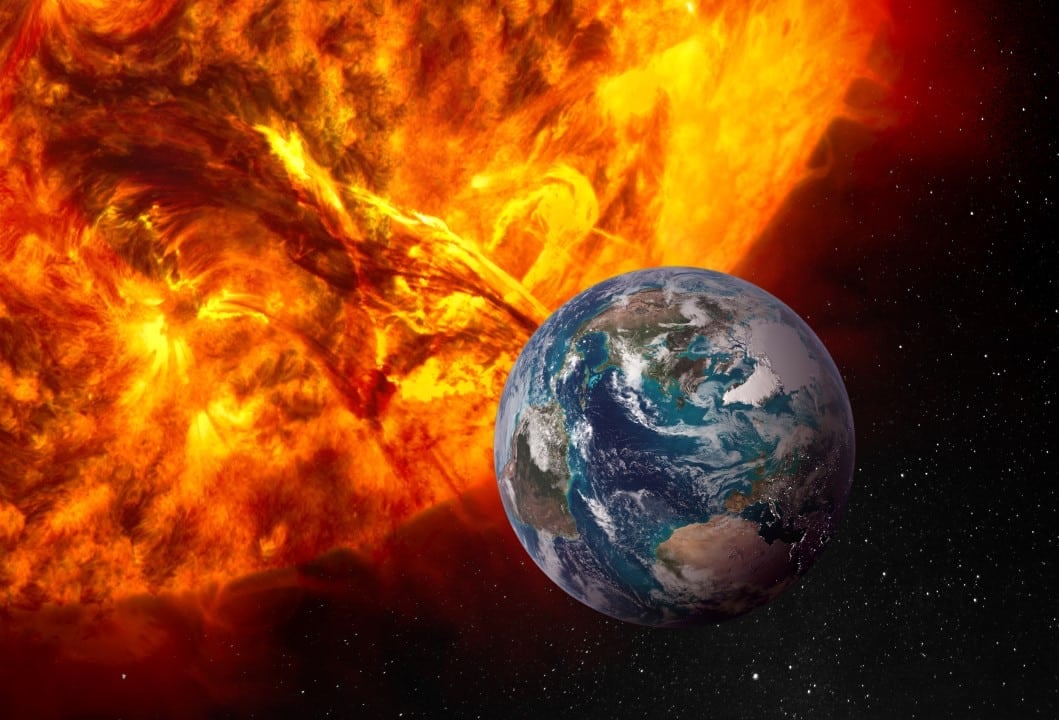
A G3 level geomagnetic storm is expected to impact Terra’s magnetic field this Monday. The phenomenon arises from the arrival of a coronal mass ejection released by Sol on June 6th. NOAA’s Centro of Previsão of Clima Espacial issued the corresponding alert.
The event could generate aurora borealis visible at lower latitudes than usual. Especialistas monitor developments in real time.
CME released on June 6 arrives on the planet
An M1.8 class solar flare caused the coronal mass ejection that is now approaching. The material traveled through interplanetary space and is expected to interact with the Earth’s magnetosphere starting at noon, Brasília time. Modelos indicate the possibility of severe thunderstorm conditions.
The speed and orientation of the cloud’s magnetic field will determine the exact strength. If the Bz component turns sharply to the south, the Kp index may rise and reach values associated with the G3 level.
- The ejection came from Região 4461 of Sol
- Initial arrival Previsão around noon UTC
- Possibilidade climbing to G3 later in the day
- G2 still expected for June 9th
Efeitos expected in infrastructure and sky
Tempestades G3 geomagnetic signals can cause voltage corrections in electrical power systems. Satélites navigation and low-frequency radio communications experience intermittent interference. Operadores from satellites and energy companies monitor the impacts.
In the Northern Hemisphere, auroras may appear in regions such as northern Estados Unidos and parts of Europa. In the southern hemisphere, observers in Nova Zelândia and in the south of Austrália also have a chance to record the phenomenon.
Como or Sol produces these events
The current solar cycle, close to maximum, increases the frequency of flares and ejections. Região 4461 released M1.8 which generated the current CME. Similar Atividade occurred recently and generated previous alerts.
Cientistas uses data from satellites like SOHO and SDO to track eruptions. Previsões combines observations with numerical models that simulate solar wind propagation.
Riscos and recommendations for observation
Pessoas sensitive to geomagnetic variations report symptoms such as headache or changes in sleep during strong events. Não There is robust scientific evidence of widespread effects on human health, but monitoring continues.
Para If you want to see auroras, the ideal is to look for places with dark and clear skies. Aplicativos and space forecast websites update the probability in real time. Fotógrafos must prepare cameras with long exposure settings.
Previsão for the next few days
The G3 alert is mainly valid for this Monday. A G2 remains active for Tuesday. Depois In addition, activity should return to calmer levels.
Equipes from NOAA and other international centers continue to monitor the data. Novas updates come out as the impact evolves.





