Maruti Suzuki introduces Wagon R Flex Fuel and makes India second country with flex technology

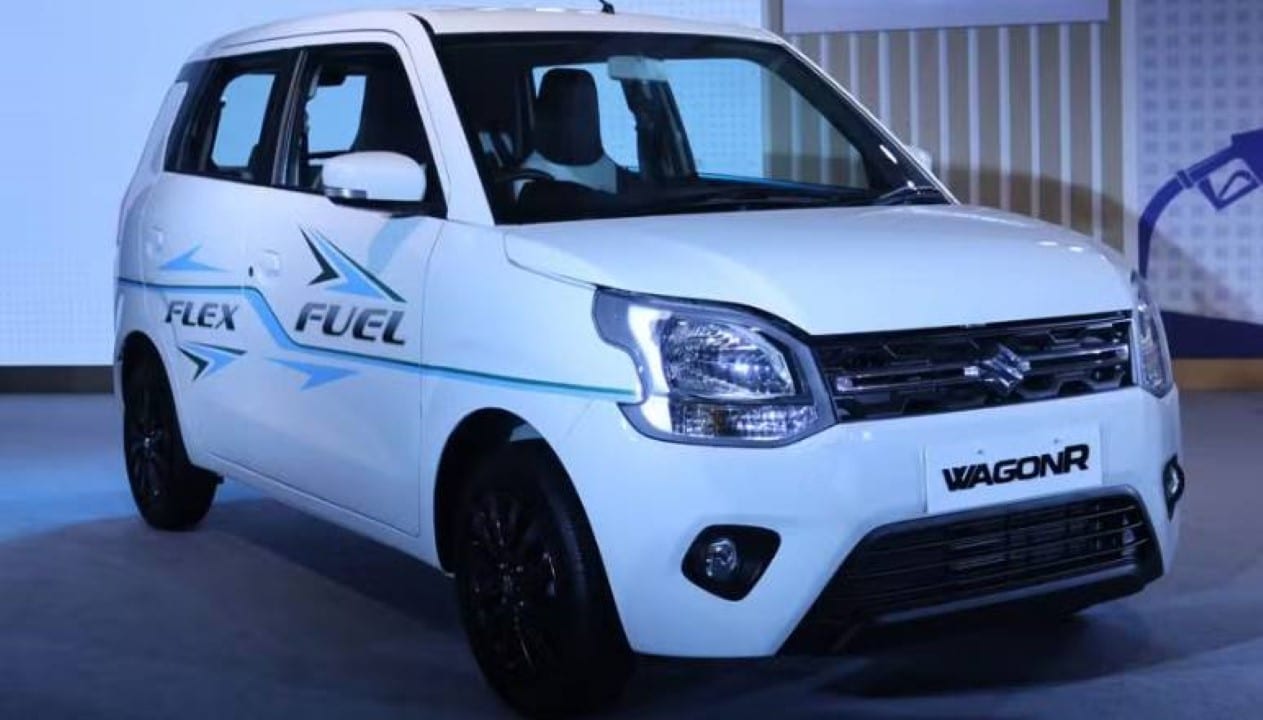
Maruti Suzuki has introduced the Wagon R Flex Fuel. The model represents the first series production flexible car in Indian history. The announcement took place this week in New Delhi. The initiative positions the Asian country as the second in the world to adopt the technology, more than two decades after the Brazilian pioneer.
The vehicle initially arrives aimed at the commercial segment. It serves as an initial test for the new technology in the Indian market. Maruti Suzuki leads local sales and decided to anticipate competitors like Toyota and Tata Motors, who are still working on prototypes. The urban compact maintains its familiar look, with no visible external changes in the gasoline or CNG versions.
Adapted engine receives reinforced components for ethanol
The Wagon R Flex Fuel uses the 1.2 liter K12N engine. The four-cylinder unit has undergone specific modifications. These include a reinforced fuel pump, new injectors, corrosion-resistant lines and a recalibrated electronic control unit. The system includes real-time fuel sensing.
This configuration allows operation with mixtures of E20, the current standard in India, up to approved E85 and compatibility with E100, or pure ethanol. Maruti Suzuki is yet to release exact performance, fuel consumption or pricing figures. Experts expect additional details in the coming weeks. The current combustion model varies between 490 thousand and 695 thousand Indian rupees, the approximate equivalent of R$26 thousand to R$36 thousand.
- K12N 1.2 liter engine with flex adaptations
- Compatibility with ethanol blends from E20 to E100
- Maintained dimensions: 3.65 m long and 2.43 m wheelbase
- Initial focus on commercial fleet before expanding into retail
- No changes to the external design compared to conventional versions
India imports around 87% of the oil it consumes. The government seeks to reduce this dependence through locally produced biofuels. The strategy involves crops such as sugar cane and corn. The flex project adds to electrification goals, with the objective of 30% of electric passenger cars by 2030.
Indian government plans supply network for E85
The biggest challenge involves infrastructure. Stations with E85 are still rare in the country. The Ministry of Petroleum, under Hardeep Singh Puri, has defined a plan to create supply corridors between major centers like Delhi, Mumbai and Pune. The goal is to reach 500 positions this year. By the end of 2027, the number should exceed 5 thousand points in the main cities.
Fuel with a higher ethanol content should cost significantly less than conventional gasoline. This price difference seeks to encourage adoption by drivers. Current gasoline already contains 20% ethanol. The new flex-fuel car expands options without requiring an immediate fleet change.
Transport Minister Nitin Gadkari attended the launch. He reinforced the commitment to multiple solutions for sustainable mobility. Fuel flexibility complements the advancement of electric vehicles, especially on two and three wheels, where the target reaches 80% by 2030.
Brazilian pioneering spirit serves as a reference for Indian strategy
Brazil launched the first flex car in 2003 with the Volkswagen Gol Total Flex. Since then, the technology has become popular and influenced biofuel policies. India has observed this path to strengthen energy security and reduce emissions. Maruti Suzuki, part of the Suzuki group, takes advantage of regional experience with CNG to accelerate the flex project.
The Wagon R is one of the best-selling models in India. Its compact and urban proposal facilitates the introduction of new technology. The 2.43 meter wheelbase and high height guarantee adequate internal space for commercial or family use. The expectation is that the initial success will encourage other automakers to follow the same path.
Ethanol expansion seeks to balance economy and environment
Local ethanol production generates benefits for farmers and industry. The Indian government sees the high ethanol blend as a way to ease the trade balance and improve air quality. Reductions in particle pollutant emissions are part of the official arguments. At the same time, the country maintains heavy investments in electric vehicles.
Maruti Suzuki highlighted that the Wagon R Flex Fuel marks a new chapter in the Indian energy journey. Full technical details, such as exact power and consumption in the different mixtures, should appear soon. Analysts monitor actual performance on the roads to assess viability on a larger scale.
The launch takes place at a time of global transition in the automotive industry. Countries seek alternatives to oil in the face of geopolitical volatility and climate goals. The Indian experience with flex can inspire other emerging markets facing similar energy dependency challenges.
Commercial sector tests technology before reaching the end consumer
Choosing commercial fleets at the outset reduces risks. Logistics and service companies can validate the technology in intensive use. Positive results would pave the way for versions aimed at individuals. Maruti Suzuki accumulates know-how with CNG vehicles, which facilitates the transition to flex.
Experts note that the competitive price of ethanol will be decisive for acceptance. Differences in range and performance compared to traditional gasoline need to be clearly communicated. The expanding supply network represents significant investment from the government and private sector.
The compact maintains the characteristics that make it popular: urban practicality, low maintenance costs and good internal space. These qualities, combined with fuel flexibility, can strengthen Maruti Suzuki’s position in the increasingly sustainability-conscious Indian market.
Technical and regulatory challenges still demand attention
Homologation for E85 and compatibility with E100 required precise engineering. Components exposed to pure ethanol must resist corrosion. The recalibrated ECU manages injection and ignition according to the mixture detected. Extensive testing ensures reliability in varying weather and usage conditions.
India moves forward in parallel with regulations for biofuels. Ethanol quality standards and distribution infrastructure receive special attention. The success of the Wagon R Flex Fuel could accelerate the approval of tax incentives or benefits for buyers of flex fuel vehicles.
Other automakers monitor the launch. Toyota and Tata Motors, mentioned in concept development, may accelerate their own plans. Competition should benefit consumers with more options and potentially lower prices in the medium term.